
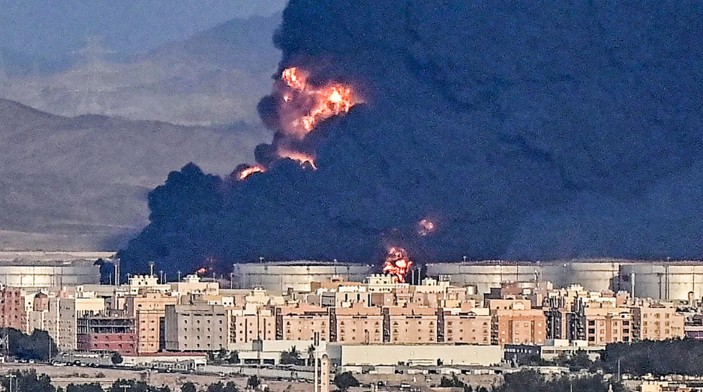
Yemen’s Houthi rebels launched a drone strike against a major Saudi Aramco refinery in Jizan on Sunday. Saudi emergency crews extinguished the dawn blaze before flames spread across the 400,000-barrel complex. The strike came just two days after Riyadh signed a trilateral security pact with Turkey and Pakistan. Houthi military spokesman Yahya Saree claimed full responsibility for the precision attack on social media. New defence pacts fail to deter regional drones. Cheap aerial weapons easily bypass local air defences.
The Yemeni group justified the raid as retaliation for recent Saudi incursions into northern Yemen. Escalating skirmishes across the border threaten to collapse the fragile four-year truce entirely. Houthi forces recently imposed a naval blockade against Saudi vessels inside the Red Sea. Iranian proxy networks coordinate strikes to stretch regional security resources thin across several fronts. Assailants target economic engines rather than military posts. Energy infrastructure stays atop the enemy targeting list.
Riyadh signed the landmark Mecca Joint Defence Agreement to strengthen collective deterrence on Friday. The treaty treats an attack against any member state as an attack against all three nations. Yet diplomatic handshakes in holy cities offer little real protection against low-altitude suicide drones. Cross-border missile strikes expose the limits of traditional military treaties during asymmetric conflicts. Saudi officials prefer to minimize reported damages to protect foreign investor confidence. Operational silence rarely masks persistent security risks.
Reports of simultaneous explosions at the Jubail gas complex heightened broader market anxieties. Eastern Saudi industrial hubs face growing exposure as long-range regional conflicts widen. Global crude markets react nervously to every fresh threat against Gulf energy assets. Disrupted refining capacity threatens fuel deliveries across Asian and European supply chains. Escalating regional hostilities push global energy prices steadily higher. Unstable supply lines punish energy buyers worldwide.
Washington continues to struggle with shrinking stocks of key missile interceptors in the region. US military planners now push defence suppliers to speed up ammunition production cycles. High consumption rates during the five-month conflict deplete Western armouries faster than factories produce replacements. Prolonged battles test factories more than battlefield tactics. Regional proxies exploit these supply bottlenecks to pressure Western allies. Supply shortages complicate allied defence plans in the Gulf.
The attack coincides with tense negotiations over the blocked Strait of Hormuz waterway. Iranian officials demand full compensation and sanctions relief before reopening the vital trade passage. Mediation efforts by Oman offer fragile hope, but military commanders hold real veto power. Saudi Arabia finds itself caught between broader Iranian ambitions and local rebel pressure. Lasting security requires genuine political solutions rather than military pacts. Peace remains distant while drones continue to fly.