
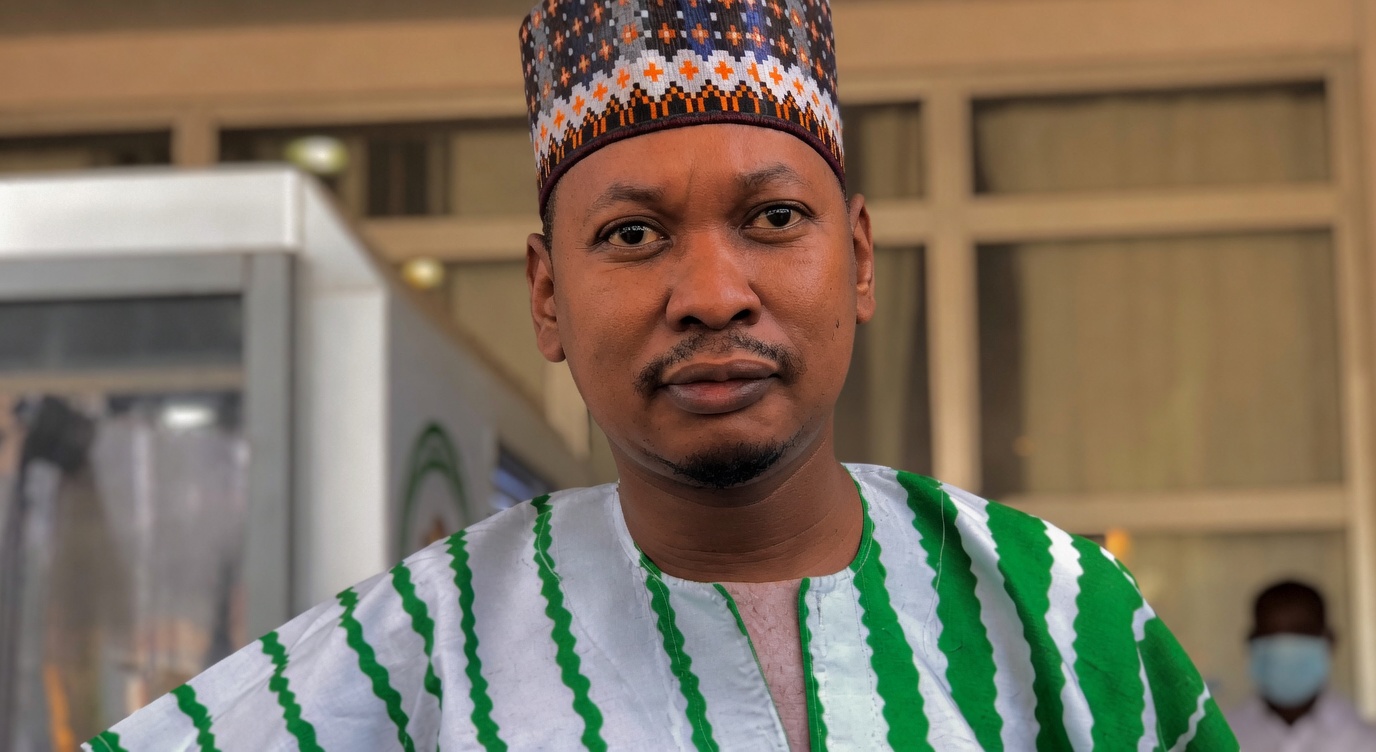
Abdulaziz Umar Ganduje, eldest son of former All Progressives Congress (APC) National Chairman, Abdullahi Umar Ganduje, has returned to the ruling party after roughly three months in the opposition National Democratic Congress (NDC), the platform now associated with former Kano State governor, Rabiu Musa Kwankwaso.
Abdulaziz was formally received back into the APC on Sunday at the party’s ward office in Ganduje, his hometown in Dawakin Tofa Local Government Area of Kano State, where he registered and obtained his membership card. He is expected to make a more formal appearance at the APC secretariat in Dawanau, Dawakin Tofa, in the coming days. Photographs of the reception showed him dressed in a cream coloured kaftan with a matching red cap, alongside party supporters, as he collected what appeared to be a fresh registration form.
Party officials in Kano told journalists that Abdulaziz had reaffirmed his loyalty to the APC, describing his return as coming back to the political home he had helped build.
Abdulaziz’s journey out of the APC began in May 2026, when he obtained a nomination form from the NDC to contest the Dawakin Tofa/Tofa/Rimin Gado Federal Constituency seat in the House of Representatives ahead of the 2027 general election. The move was widely read as a significant realignment, given his long standing personal association with the Kwankwasiyya movement despite his father’s prominence in the APC. A video that circulated at the time showed him in a private meeting with Kwankwaso shortly after picking up the form, fuelling speculation about a deeper alliance between him and the opposition camp.
That ambition, however, did not survive the NDC’s internal congress process. Multiple reports indicate that Kwankwaso, who presided over the party’s consensus arrangements, endorsed Muktar Mustapha Balarabe rather than Abdulaziz for the House of Representatives ticket. Abdulaziz is said to have felt sidelined by the decision, a development that preceded his exit from the party. Notably, his return to the APC comes after the deadline for obtaining nomination forms for the 2027 cycle had already closed, meaning the move is, for now, more symbolic than an immediate route back into electoral contention.
Abdulaziz’s exit from the NDC is not an isolated case. It follows the earlier defections of two prominent Kwankwaso loyalists, the Senator representing Kano Central, Rufai Sani Hanga, and a former Senator representing Kano South, Kabiru Gaya, both of whom left the NDC after also being denied tickets in the party’s consensus arrangements. Their departures were seen at the time as a blow to Kwankwaso’s grip on Kano’s political structure ahead of 2027.
The Ganduje and Kwankwaso camps have shaped much of Kano’s political rivalry for close to two decades, dating back to when both men were allies before their relationship broke down. That rivalry resurfaced publicly in July, when the elder Ganduje was compelled to deny reports and circulating posters suggesting he too was decamping to the NDC, insisting instead that the APC remained Nigeria’s most formidable political platform.
Political analysts in Kano see Abdulaziz’s return, alongside the earlier defections of Hanga and Gaya, as part of a broader pattern of attrition within the Kwankwasiyya movement’s newer NDC platform, even as the party continues to position itself as a vehicle for opposition realignment ahead of the 2027 general election. Whether these individual moves translate into a measurable shift in voter support in Kano remains to be tested at the polls, since defections by political office holders do not always carry their support base with them.
For the APC, the return of Abdulaziz, along with two sitting and former lawmakers, strengthens its numbers in Kano’s political establishment and offers the party a talking point about its resilience against opposition inroads in the state. For the NDC and Kwankwaso, the exits raise questions about how the party manages internal ticket disputes without haemorrhaging prominent members, a challenge that could resurface as more constituencies finalise their candidates ahead of next year’s polls.
Neither Abdulaziz Ganduje nor officials of the NDC had issued a detailed public statement responding to the circumstances of his exit as at the time of filing this report.