
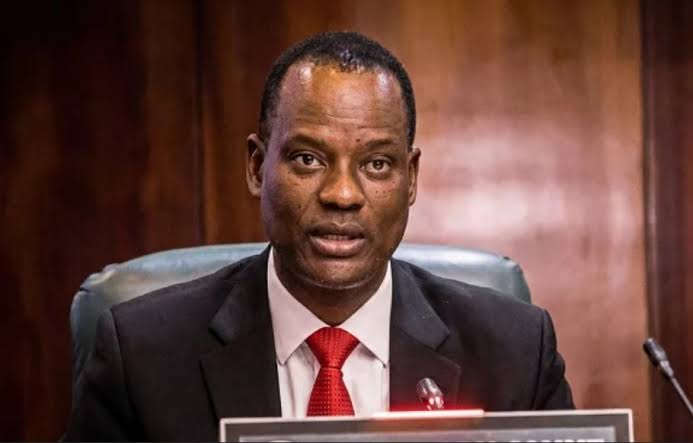
The Minister of Finance and Coordinating Minister of the Economy, Taiwo Oyedele, has rejected calls for the Federal Government to publish specific details of how it will spend funds from its $5 billion financing facility with First Abu Dhabi Bank, insisting the arrangement is not unique and has already received full legislative approval.
Speaking at a media briefing in Abuja on Wednesday, Oyedele said the government would continue to publish information on public spending in the normal course but questioned the special attention given to this particular transaction. “We will not publish how we are spending it. We will publish how we spend government money. There’s nothing special about that loan,” he stated. He noted that similar demands had not been made for World Bank loans, Eurobonds or Sukuk issuances.
The $5 billion facility is structured as a Total Return Swap with First Abu Dhabi Bank, the largest bank in the United Arab Emirates. The National Assembly approved it on 31 March 2026 as part of a wider external borrowing request of up to $6 billion. The arrangement allows Nigeria to access hard-currency liquidity by pledging naira-denominated federal government securities as collateral, valued at about 133 per cent of the amount drawn. Proceeds are intended for 2026 budget support, priority infrastructure and the refinancing of more expensive domestic and external debt.
Nigeria drew the first tranche of approximately $1.5 billion around June 2026. Oyedele confirmed the phased approach, explaining that taking the full amount at once would generate unnecessary interest costs on unspent funds. “We’re assessing it in phases. You don’t want to take all the money at once because if you don’t spend it at once, you incur cost on the extra amount you’ve taken,” he said.
Unlike traditional fixed-rate Eurobonds, the facility carries a flexible interest rate linked to the Secured Overnight Financing Rate plus a margin of around 395 to 400 basis points. Oyedele said the all-in cost is lower than the average for Nigeria’s existing debt portfolio. “This First Abu Dhabi Bank transaction is flexible rates. It means if rates go up, we pay more. If rates come down, we benefit more,” he explained. The primary goal, he added, is to refinance costly obligations and reduce overall borrowing costs.
The structure has drawn scrutiny from international institutions. The International Monetary Fund has cautioned that derivative instruments such as total return swaps can be opaque, difficult to track and value in real time, and may obscure the full extent of a country’s financial obligations. Fitch Ratings has similarly warned that such arrangements can reduce transparency in public debt reporting, create contingent liabilities through margin calls and complicate any future debt restructuring. Under the Nigerian deal, margin payments, if triggered by movements in bond prices or the exchange rate, would be required in US dollars.
At the time of the National Assembly request, Nigeria’s public debt stock stood at about $110.3 billion as of 31 December 2025. The government has argued that the facility diversifies funding sources at a time when traditional Eurobond markets remain costly for many emerging economies. Angola and Senegal have used similar structures with the same lender.
Oyedele said the Ministry of Finance and the Debt Management Office would shortly publish frequently asked questions on their websites to provide further clarification. He maintained that the transaction had been presented to both the Federal Executive Council and the National Assembly, describing the legislative process as the ultimate form of public scrutiny.
The debate over the facility reflects wider tensions in Nigeria’s debt management strategy: the search for cheaper, more flexible financing on one hand, and the need for clear disclosure and risk assessment on the other. While revenue performance has strengthened under recent reforms, the cost and structure of external borrowing remain central to fiscal sustainability. The government’s decision to proceed with phased drawdowns and its forthcoming explanatory materials will determine how much additional clarity is provided to the public and markets.