
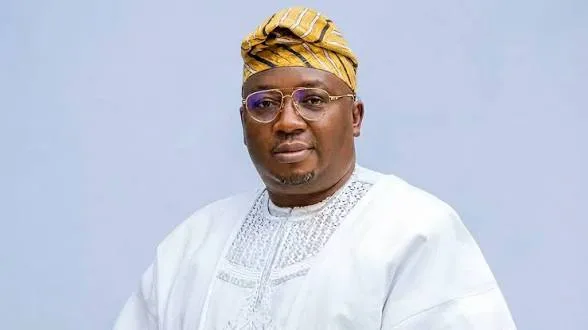
Adebayo Adelabu’s decision to abandon any internal appeal or court challenge over the All Progressives Congress governorship nomination in Oyo State has removed one immediate threat to the party’s unity, but it has not erased the political questions raised by the contest.
The former Minister of Power announced on August 27 that he would no longer pursue the dispute over the process that produced Senator Sharafadeen Alli as the APC candidate for the 2027 Oyo governorship election. Adelabu said the decision followed consultations with party leaders, loyalists and supporters across the state’s 33 local government areas and 351 wards.
He nevertheless maintained that withdrawing from the contest should not be interpreted as accepting what he described as injustice in the nomination process.
The development is significant because the APC has spent much of the period since its governorship primary trying to prevent internal disagreements from becoming a larger electoral problem.
The APC’s 2027 Oyo governorship primary was contested by 11 aspirants, according to the party’s reconciliation committee. Senator Sharafadeen Alli emerged as the candidate, while Adelabu was among those who questioned aspects of the process.
The figures surrounding the primary themselves became a source of controversy. After unofficial results circulated on social media claiming that Alli had scored 578,143 votes, the Oyo APC publicly dismissed those figures as unauthorised and misleading. The party said the national secretariat had not yet released an official result.
A later result attributed to a senior APC official gave Alli 91,824 votes, Adelabu 7,532 and Senator Abdulfatai Buhari 6,963. The same account put total participation at 109,978 out of 157,266 registered APC members in the state. Those figures were subsequently reported by Nigerian media as the result that produced Alli.
The controversy matters because political primaries are internal party exercises, but the outcome determines who eventually appears on the general election ballot. Questions about how candidates emerge can therefore affect the willingness of unsuccessful aspirants and their supporters to campaign for the eventual flag bearer.
The APC subsequently began a reconciliation process. Four former aspirants, including former Deputy Governor Rauf Olaniyan, Oyedele Alao, Musbau Asanike and Ololade Bakare, reconciled with Alli in August and pledged to support the party ahead of the 2027 election. The reconciliation committee said 11 aspirants had contested the primary.
But Adelabu and some other prominent figures were absent when the reconciliation committee presented its report to APC National Chairman Nentawe Yilwatda in Ibadan on August 19.
Yilwatda later publicly apologised to aggrieved members over perceived wrongs arising from the party’s primary processes and urged them to remain united.
Adelabu’s latest decision therefore comes after several weeks of attempted reconciliation rather than as an isolated political announcement.
In 2019, he was the APC candidate against Seyi Makinde of the Peoples Democratic Party. Official INEC figures show Makinde won with 515,621 votes against Adelabu’s 357,982. The election had 2.93 million registered voters and 916,860 valid votes.
Four years later, Adelabu contested again, this time on the Accord platform. He finished third in the 2023 governorship election with 38,357 votes, while Makinde secured 563,756 and APC candidate Teslim Folarin polled 256,685. Makinde won 31 of the state’s 33 local government areas.
Adelabu returned to the APC contest in 2026 after serving as Minister of Power. He formally declared his 2027 ambition in May, presenting the bid as another attempt to govern the state.
His withdrawal therefore closes, at least for now, another chapter in a political journey that has included two previous unsuccessful attempts at the governorship.
The historical results also explain why reconciliation matters to the APC.
Makinde’s 2023 victory was substantially larger than his 2019 win. His vote increased from 515,621 in 2019 to 563,756 in 2023, a rise of 48,135 votes, or about 9.3 per cent.
By contrast, the APC’s governorship vote fell from Adelabu’s 357,982 in 2019 to Folarin’s 256,685 in 2023, a decline of 101,297 votes, or about 28.3 per cent.
The comparison should not be read as a direct measure of party strength because Adelabu contested for Accord in 2023 and different candidates, political alliances and election conditions were involved. It nevertheless shows the scale of the task facing the APC if it hopes to defeat the incumbent PDP administration in 2027.
The APC is now presenting Alli as the candidate who can lead that effort. The party formally unveiled Alli and his running mate, Adesoji Adedeji, in July and has since moved into campaign organisation and reconciliation.
Adelabu’s decision removes the immediate possibility of another legal battle over the APC nomination, but the deeper test is whether reconciliation produces active cooperation at ward and local government levels.
That will be particularly important because the APC’s challenge is not simply to secure a governorship candidate. It must build a statewide campaign capable of competing against a PDP administration that won 31 of 33 local government areas in 2023.
Adelabu has said he will remain in the APC and that his withdrawal is intended to protect party stability rather than signal surrender. Whether that translates into active support for Alli will become clearer as the 2027 campaign develops.
For the APC, the central question has consequently shifted. It is no longer simply who won the primary. It is whether the party can turn a contested nomination into a united electoral structure before Oyo voters decide who should govern the state from 2027.