
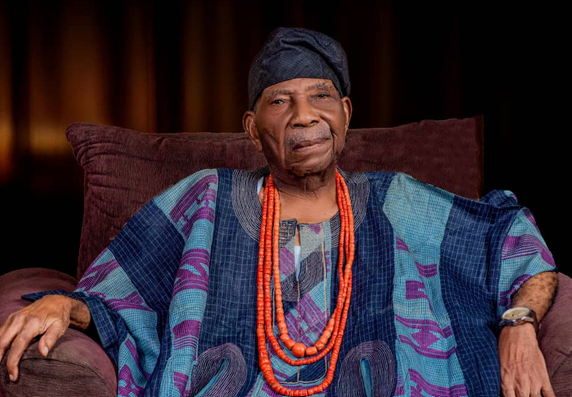
Political leaders, traditional rulers, and elder statesmen gathered in Akure on Friday, 28 August 2026, to celebrate the centenary of Afenifere leader Reuben Fasoranti. The gathering drew figures from across the political aisle, including Ondo State Governor Lucky Aiyedatiwa and former governors Olusegun Osoba and Olusegun Mimiko. President Bola Tinubu sent Minister of Interior Olubunmi Tunji-Ojo to deliver his personal tributes. Presidential Chief of Staff Femi Gbajabiamila and former trade minister Niyi Adebayo joined the ranks of federal and regional delegates. Royal fathers, led by Oba Olu Falae and the Olowo of Owo, Oba Ajibade Gbadegesin Ogunoye III, occupied pride of place in the hall. Speakers took turns to praise the centenarian for his decades of steadfast public advocacy and unyielding moral courage. Reaching one hundred years offers a rare vantage point over a turbulent republic. Fasoranti stands as the last titan of Nigeria’s first-generation progressive politics.
The centenarian built his public reputation during the Second Republic when he served as the commissioner for finance in old Ondo State. He worked closely alongside the late Michael Adekunle Ajasin to deliver free education and rural development schemes. That administration proved that regional governments could run lean budgets without drowning in public debt. Fasoranti managed public money with strict frugality and zero tolerance for official graft. His austere record in office established a gold standard for regional public service that modern governors struggle to match. He demonstrated that public office should enrich the community rather than private bank accounts. Modern politicians now offer lavish praise for a standard of governance they rarely practice. Genuine integrity remains a scarce commodity in contemporary statecraft.
In his formal address, Governor Lucky Aiyedatiwa described Fasoranti as an institution who anchored regional stability through severe national crises. Aiyedatiwa noted that the elder statesman guided the Yoruba socio-political movement through military dictatorships and fragile democratic transitions. Former Ogun State governor Olusegun Osoba praised his enduring legacy of principled defiance against authoritarian misrule. Osoba reminded the audience of the heavy personal price Fasoranti paid during the democratic struggles of the nineties. Military juntas repeatedly arrested, harassed, and intimidated progressive leaders who demanded the restoration of popular sovereignty. Fasoranti opened his Akure residence as a refuge for pro-democracy activists fleeing state repression. True conviction reveals itself when state power threatens personal liberty. The centenarian chose the lonely path of resistance over comfortable silence.
Beyond partisan politics, traditional rulers highlighted the centenarian’s role as a moral compass for a divided nation. Oba Olu Falae noted that Fasoranti never used his ethnic platform to promote sectarian hatred or violent regional exclusion. The Olowo of Owo commended him for defending the dignity of the Yoruba nation while building bridges to northern and eastern leaders. Fasoranti used his cultural authority to broker peace during volatile regional disputes. His longevity preserves a living link to the foundational debates that shaped Nigeria’s federal constitution. He witnessed the optimistic dawn of independence, the agony of civil war, and repeated democratic experiments. Memory serves as a vital safeguard against repeating historic national blunders. Elders remind volatile republics of the high cost of ethnic chauvinism.
The celebration also cast a quiet light on the recent factional fissures that have troubled the Afenifere movement. Competing political interests in recent election cycles split the pan-Yoruba group into rival camps. Younger political actors frequently tried to hijack the respected brand to endorse partisan candidates for cash. Fasoranti fought hard to maintain the moral independence of the organisation against aggressive political encroachment. He insisted that Afenifere must remain an advocate for true federalism rather than a campaign wing for any political party. The Akure meeting provided a rare moment of unity among political factions that usually exchange bitter media attacks. Cultural authority often commands a deference that raw political power cannot buy. Unity remains essential if regional groups wish to influence national policy.
Taking the floor, Fasoranti delivered a brief but pointed message that cut through the ceremonial pleasantries of the day. He urged political leaders to restore basic moral values, honesty, and civic discipline to public life. The centenarian warned that no nation can build enduring prosperity on a foundation of greed and tribal bigotry. He reminded the political class that public office carries a sacred trust to protect the poor and vulnerable. His simple prayer called for peace, fair governance, and rapid economic progress across the country. The audience listened in absolute silence to words forged across a century of lived experience. Plain truths carry immense weight when spoken by a hundred-year-old patriot. Nigeria needs moral rebirth far more than fresh political slogans.
The gathering in Akure delivered a timely reminder that character outlasts the fleeting glamour of state power. Governors, ministers, and party chieftains will eventually vacate their official mansions and return to private life. History remembers leaders for the public good they created rather than the state resources they consumed. Fasoranti leaves an indelible mark on Nigerian politics without amassing corporate empires or private jet fleets. His legacy lives in the schools he built, the democratic freedoms he defended, and the standards he set. The political elite must now decide whether to emulate his life or merely applaud his longevity. Respect for elders requires following their counsel rather than printing glossy birthday programmes. A hundred years of integrity demands more than polite ceremonial homage.