
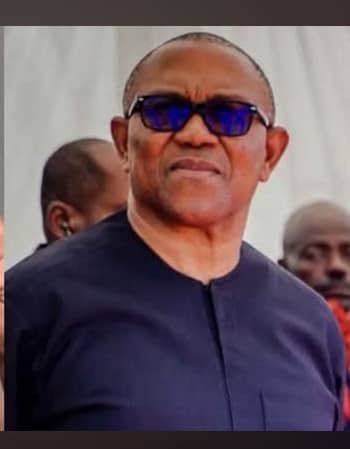
Peter Obi has given his consent for the University of Nigeria, Nsukka, to release his academic records, moving to defuse a documentary dispute that has now produced three separate court actions and reopened a wider argument about how far scrutiny of candidates should reach before the 2027 election.
In a statement posted on his X account on Tuesday, 15 September 2026, the presidential candidate of the Nigeria Democratic Congress said he had no objection to the disclosure and asked the university, within the limits permitted by law, to make available his certificates, admission records and other official documents relating to his studies. He extended the same position to other institutions he attended in Nigeria and abroad. In a separate video the same day, he went further, calling on UNN to publish the documents to the public rather than release them privately.
The trigger is a set of Freedom of Information suits filed at the Federal High Court in Abuja by Abayomi Arabambi, described in the court papers as a chieftain of the Labour Party and a former national publicity secretary of the party’s Lamidi Apapa faction. The action against UNN, marked FHC/ABJ/CS/2144/2026, was filed on 9 September through his counsel, Anderson Asemota. It seeks an order of mandamus compelling the university and its vice chancellor to respond to a request, dated 16 July 2026, for a certified true copy of certificate number D000198, said to have been issued in 1984 for a Bachelor of Arts degree in Philosophy in the name Gregory Peter Onwubuasi Obi, along with the underlying academic records. According to the affidavit, the request was received on 6 August and a reminder was served on 1 September, but the university neither supplied the documents nor issued a formal notice of refusal. The applicant sought nineteen reliefs.
Two related suits were lodged on 1 September. One, marked FHC/ABJ/CS/2064/2026, targets the West African Examinations Council over certificate number SC042560, said to have been issued in June 1978. The other, marked FHC/ABJ/CS/2063/2026, targets the National Youth Service Corps over certificate number 203495, said to have been issued on 1 May 1986. In the court documents, Arabambi states that WAEC declined his request, while UNN and NYSC neither granted it nor gave reasons. He is explicit that the suits do not ask the court to rule on whether the certificates are genuine or forged, but only to grant access to the institutions’ own records so that their contents can be ascertained.
The Labour Party has distanced itself from the litigant. In a statement on Tuesday, the party said any presentation of Arabambi as its chieftain or representative was unauthorised and, on the face of it, amounted to impersonation. It declined to comment on the substance of the suits and noted that Obi is no longer a member of the party. The party’s national chairman, Nenadi Usman, has separately stated that Obi could not contest the 2027 election on the Labour Party platform.
That distance reflects a changed political map. Obi contested the 2023 election as the Labour Party candidate, finishing third with 6,101,533 votes in the poll won by Bola Tinubu of the All Progressives Congress. He resigned from the party on 31 December 2025 to join the African Democratic Congress coalition, then left the ADC in early May 2026, citing internal disputes, and was ratified as the NDC candidate on 29 May 2026. His campaign has since said he will respond only to fellow presidential candidates, not to what it describes as surrogates.
Obi framed his consent as a matter of principle rather than a response to any single accusation. He said he welcomed legitimate public interest in his background and was prepared to face the level of scrutiny reasonably expected of anyone seeking the highest office, provided such scrutiny was fair, lawful and applied consistently to every candidate. On that basis he challenged other contenders to make their own qualifications available, arguing that openness should be treated as an opportunity to rebuild public trust rather than an inconvenience.
The consistency he calls for cuts across the field, and the record shows why the issue resonates. Questions over candidates’ documents have shadowed Nigerian presidential politics for years. In September 2023, a United States magistrate judge ordered Chicago State University to release Tinubu’s academic records to Atiku Abubakar, who was then contesting the election result and questioning the authenticity of the diploma submitted to the Independent National Electoral Commission. Those proceedings did not overturn the outcome. More recently, Atiku and the ADC filed a suit, marked FHC/ABJ/CS/1888/2026, asking the Federal High Court to determine whether Tinubu is qualified to contest in 2027 over the name on an NYSC certificate submitted to INEC. That matter was adjourned to 28 September 2026 after a disagreement over service of the court papers, and the claims have not been tested in evidence. Obi himself has criticised reported efforts to block the release of records held by US agencies, while a presidential surrogate, Reno Omokri, has challenged Obi to disclose records he alleges are held abroad. None of those competing allegations has been established in any court.
For the immediate dispute, several points are settled. Obi has publicly consented to disclosure and asked for publication. The suits are pending and, by the applicant’s own account, seek access to records rather than a finding of forgery. The Labour Party has rejected any association with the litigant. What remains open is procedural and consequential: whether the institutions will release the documents, whether they will do so through the courts or directly, and how the Federal High Court treats FoI requests concerning a serving or aspiring public figure. The next dates on the UNN, WAEC and NYSC files, and the response of each institution, will show whether Obi’s consent settles the matter or simply moves it into open court.