
Nigeria’s latest petrol price surge is more than another painful increase at the filling station. It is a warning that the country’s post-subsidy fuel-pricing system remains highly exposed to international oil prices, exchange-rate movements and domestic supply-chain costs.
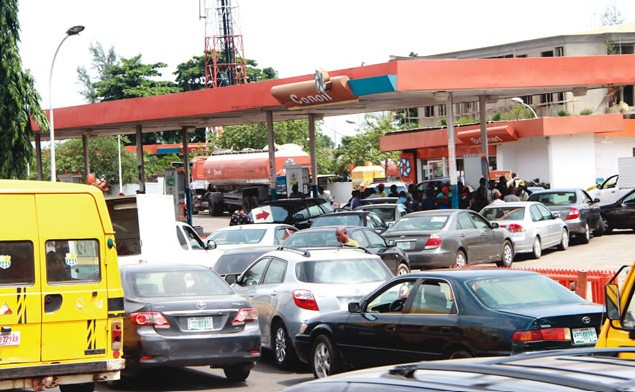
Across several states, according to media reports, motorists are now paying around N1,400–N1,500 per litre, with prices even higher in some less accessible locations. In parts of Taraba, for example, consumers reportedly faced prices of up to N1,700, while black-market prices in parts of Jigawa reached N2,000 and above.
The immediate trigger is familiar. Dangote Petroleum Refinery raised its petrol gantry price from N1,265 to N1,350 per litre on September 12, the fourth increase since August 21. In just 22 days, its gantry price had risen by N185, or about 15.9 per cent.
But the deeper issue is what happens when an oil-producing country cannot protect its consumers from an international oil-price shock. That is the question the Federal Government must now confront.
Nigeria cannot export crude and import vulnerability
The irony is difficult to miss. Nigeria is one of the world’s major oil-producing countries. Yet when international crude prices rise, Nigerian consumers immediately feel the impact through the price of petrol, transportation, food, logistics and virtually every other commodity.
As reported in the media, the Nigeria Labour Congress has therefore called for emergency measures, including reasonable wage awards, greater supplies of crude to domestic refineries in naira and an expansion of national petroleum storage capacity. The union has also argued that government should not completely rule out temporary intervention in an emergency.
Whatever one’s position on subsidies, the central economic problem is clear: Nigeria needs a mechanism that prevents every international oil-price movement from being transmitted immediately and completely to domestic consumers.
That does not necessarily mean returning to the old petrol subsidy regime. Indeed, a return to an opaque, open-ended subsidy would recreate many of the fiscal problems that accompanied the old system. The better question is whether Nigeria can design a transparent, targeted and temporary stabilisation mechanism.
The proposal from fuel marketers offers one possible direction. The Independent Petroleum Marketers Association of Nigeria has suggested that domestic refineries should have access to crude supplies sufficient for 60 to 90 days at a relatively stable or locked-in price. The idea is that refiners could plan production without being forced to pass every short-term movement in international crude prices immediately to the domestic market.
That proposal deserves serious economic examination.
Create a strategic crude buffer
Rather than subsidising every litre of petrol consumed in Nigeria, the government could explore creating a strategic domestic crude-stock arrangement. The principle would be straightforward. Domestic refineries would have access to a predetermined volume of crude for a defined period—perhaps 60 or 90 days—under transparent pricing rules. When international prices spike sharply, the buffer would moderate the immediate impact. When prices normalise, the mechanism could replenish itself.
Such a system would not eliminate market pricing. It would simply introduce a degree of stability into a market that currently transmits external shocks rapidly to households and businesses. But this would have to be designed carefully. The government must avoid creating another subsidy regime disguised as something else. The formula for the price, the quantity of crude available, eligibility of refineries and financing arrangements should all be publicly disclosed.
Otherwise, what begins as an emergency stabilisation mechanism could become another avenue for rent-seeking. There is also an important development already taking place. Reuters reported last week that Dangote Refinery had secured at least 16 million barrels of Nigerian crude for October deliveries, equivalent to about 520,000 barrels per day and a substantial portion of its 700,000-barrel-per-day capacity.
This demonstrates that domestic crude availability is becoming increasingly important to the refinery’s operations. The government should therefore focus not merely on how much crude Nigeria produces, but on how reliably domestic refineries can access it and at what transparent commercial terms.
Competition is more important than price control
The most politically tempting response to the current crisis would be to attack the dominant supplier or impose a price ceiling. Neither is necessarily the sustainable answer. The real solution is competition. The NLC has expressed concern about the growing influence of Dangote Refinery in the domestic market and has called for public refineries to be revived as an alternative source of supply.
Those concerns should be separated from allegations about the refinery’s conduct that are not independently established. The economic principle, however, is straightforward: Nigeria should never allow its entire downstream security to depend on a single major supplier.
Dangote Refinery is a major industrial investment and an important addition to Nigeria’s refining capacity. Its emergence has already changed the structure of the domestic petroleum market. Reuters recently reported that the refinery has become a significant supplier not only to Nigeria but also to international markets.
That success should not be undermined. But neither should government abandon the principle of competitive markets. Nigeria needs several commercially viable refineries, reliable crude supplies, functioning storage infrastructure and efficient distribution networks. That is what competition should mean in practice.
Fix the refineries—but do it differently this time
For decades, Nigerians have heard promises about the rehabilitation of the state-owned refineries. The government should now establish a clear test: if a public refinery can operate commercially, rehabilitate it; if it cannot, stop throwing money into an unviable structure.
The objective should not be government ownership for its own sake. The objective should be additional refining capacity and competition. A functioning public refinery would give Nigeria another source of supply. A private refinery gives the market another source. Multiple independent suppliers create competitive pressure.
But government must also resist the temptation to protect inefficient refineries simply because they are government-owned. The lesson from Nigeria’s petroleum history is that ownership alone does not guarantee efficiency.
Build strategic fuel reserves
The NLC’s call for expanded petroleum storage also deserves attention. Nigeria cannot build energy security solely around refineries. It must also have sufficient strategic storage to withstand disruptions. The current situation illustrates why.
When international markets are disrupted, shipping becomes more expensive or crude prices rise sharply; countries with strategic reserves have some breathing space. Countries without sufficient buffers are forced to absorb the shock immediately.
Nigeria needs a national petroleum-reserve strategy covering crude and refined products, with clearly defined minimum stock levels and emergency-release procedures. Such reserves would be particularly valuable during geopolitical crises.
Do not ignore the exchange rate
Oil is traded internationally in dollars. Nigeria’s consumers, however, earn most of their income in naira. That creates a second transmission mechanism. Even if crude prices stabilise, a sharp depreciation of the naira can increase domestic fuel costs. This means petrol policy cannot be separated completely from broader macroeconomic policy.
If the government wants cheaper and more stable fuel, it must also pursue policies that improve foreign-exchange liquidity, strengthen the naira’s stability and increase non-oil foreign-exchange earnings. The solution therefore lies partly outside the petroleum ministry.
Protect workers without recreating the subsidy regime
The social consequences of the latest increase are already visible. In Kano, some tricycle fares reportedly increased by about 50 per cent. In Benue, a journey that previously cost N400 was reported to have risen to N600. This is how a fuel-price increase becomes an inflation problem.
Higher transport costs raise the cost of moving food from farms to markets. They raise distribution costs for manufacturers. They increase commuting expenses for workers. Businesses then adjust their prices to survive. The government therefore needs targeted relief rather than a blanket fuel subsidy.
Temporary wage awards, transport support for vulnerable workers, targeted social transfers and assistance to small businesses could cushion the immediate shock while longer-term energy reforms take effect. The critical requirement is targeting. Nigeria cannot afford another subsidy system whose beneficiaries are difficult to identify and whose total cost is difficult to control.
The government must act before N2,000 becomes normal
The warning from marketers that petrol could reach N2,000 per litre if international crude prices remain elevated should not be treated as a prediction. It is a scenario that illustrates the vulnerability of the present system.
The government’s response should therefore be preventive rather than reactive. Nigeria needs a five-part emergency strategy:
First, establish a transparent 60–90-day crude or refined-product buffer for domestic consumption. Second, guarantee predictable crude supplies to qualifying domestic refineries under transparent commercial arrangements.
Third, accelerate the rehabilitation or commercial restructuring of viable public refineries while encouraging additional private refining capacity. Fourth, expand strategic petroleum storage and establish clearly defined emergency-release rules.
Fifth, deploy targeted temporary relief for workers and vulnerable households rather than returning to an uncontrolled nationwide subsidy. The most important lesson from the current crisis is that deregulation does not mean government has no role.
A functioning market still requires rules, competition, infrastructure and protection against exceptional shocks. Nigeria removed the petrol subsidy in 2023 because the old system had become fiscally unsustainable. That decision does not mean Nigerians must now be left completely exposed to every movement in global oil markets.
The choice before government is not simply subsidy versus no subsidy. It is whether Nigeria can finally build an energy market capable of absorbing shocks without transferring the entire burden to citizens. The country has the crude. It now has substantial refining capacity. What it still urgently needs is the strategic buffer, competitive structure and policy discipline to turn those assets into genuine energy security.
Otherwise, every crisis in the Gulf will continue to become a crisis at the Nigerian filling station. And every increase at the pump will become another increase in the cost of living.