
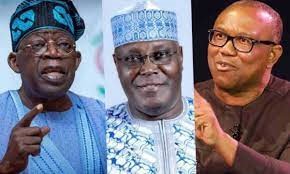
Opposition leaders have pushed back hard against President Bola Tinubu’s Independence Day declaration that Nigeria has entered an “age of prosperity”, insisting that the prices Nigerians pay for food, fuel and transport tell a different story from the one told at Aso Rock.
In his 1 October address marking the country’s 66th anniversary, Tinubu said the hardest phase of his economic reforms was behind the nation. “The age of reform has done its work. Now begins the age of prosperity,” he said, adding that government’s focus had shifted from correcting the economy to delivering shared and widespread gains.
Atiku Abubakar, presidential candidate of the African Democratic Congress, used his own state-of-the-nation address to reject that framing. He argued that lower inflation only meant prices were climbing more slowly, not that life had become affordable, and pressed the point directly: “Bola, where is this prosperity?”
Atiku tied the hardship squarely to the removal of petrol subsidy in 2023. He said fuel, transport and the cost of moving food all rose after the announcement, with no credible cushion for ordinary families. “Three years later, the pain has an address in every home,” he said.
To make the squeeze concrete, he compared what a minimum wage could buy before and after. By his account, the old N30,000 wage bought roughly 118 litres of petrol in April 2023, while the N70,000 wage now covers about 50 litres. He also put the price of an egg at around N88 in April 2023 against N261 by May 2026, and a sliced loaf at about N500 then against N2,000 for a smaller loaf now. Those household comparisons come from Atiku’s own figures rather than an independent price survey, though the direction of travel is not in dispute.
On what he would do differently, Atiku repeated his proposal for a capped and budgeted production subsidy tied only to petrol verified as refined in Nigeria, covering output from modular refineries while excluding imported fuel, with costs published and payments independently audited. “Produce here, refine here, create jobs here and pay less here,” he said. He also promised free education from primary to secondary level and tougher action on insecurity, arguing that a government unable to make life affordable or keep citizens safe had failed its two most basic tests.
The criticism was not Atiku’s alone. The Makinde/Daura Presidential Campaign Organisation, in a statement by its Director of Strategic Communications, Richard Ihediwa, faulted the speech for lacking specific, measurable and binding commitments on the economy and security. It said subsidy removal and the floating of the naira had driven up living costs, contributed to business closures and the exit of some multinationals, and urged Nigerians to back the Allied Peoples Movement candidate, Seyi Makinde, in 2027.
The Lagos State chapter of the Peoples Democratic Party struck a similar note. In a statement by its publicity secretary, Christopher Odianarewo, the party described the address as a long list of promises that skirted present realities, and asked when improvement would actually reach households, pockets and communities.
The Lagos PDP anchored its case in the World Bank’s own numbers. Nigeria’s real gross domestic product grew by 4.2 per cent in the first half of 2026, up from 3.9 per cent a year earlier, but the Bank has said that pace is still too slow to create enough productive jobs or meaningfully cut poverty. It also estimates that 69.6 per cent of Nigerians lived below the 4.20 dollar-a-day lower-middle-income poverty line in 2025, with 50.8 per cent, about 123 million people, in extreme poverty. “Prosperity cannot remain a speech. It must become measurable improvement in the lives of citizens,” the party said.
The PDP pressed for timelines and targets: how many jobs, by when, how far food and transport costs would fall, and what would stop the benefits from staying trapped in official statistics. It also faulted Tinubu’s habit of explaining today’s hardship through the failures of past administrations, arguing that after more than three years the government must own the outcomes of its own policies. On security, it pointed to the deadly unrest that followed the deaths of detainees in Niger State in September 2026, which led to investigations and the suspension of senior Civil Defence officials, as evidence of why accountable institutions matter.
A security analyst, Dr Kabir Adamu, managing director of Beacon Security and Innovations Limited, offered a way to settle the argument with evidence. Writing after the address, he called on the government to publish a quarterly and yearly National Security Performance Scorecard measuring whether rising security spending was actually producing safer communities, fewer kidnappings, weakened terrorist groups and protected schools and farms.
Adamu argued that security and prosperity reinforce each other, noting that farmers cannot expand food production where they cannot safely reach their land. He warned, though, against treating economic development as a substitute for genuine security reform, listing unemployment, weak local governance and ineffective justice systems among the drivers of insecurity that spending alone will not fix.
The exchanges set the terms of a contest that will run to the 2027 general election. Tinubu is asking Nigerians to judge his record by the foundation he says has been laid; his opponents want it judged by what families can see and feel. Both the World Bank’s projected slow decline in poverty and the government’s own promised relief on fuel and transport remain forecasts rather than settled outcomes, and the coming months of price and security data will show which account holds.