
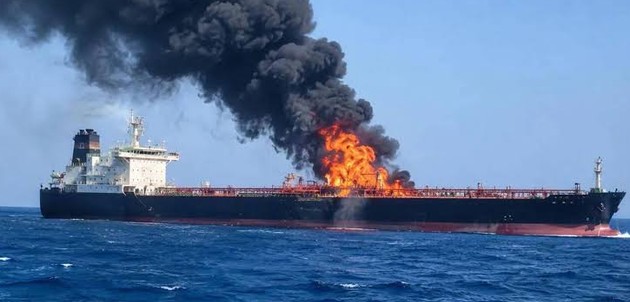
Iran’s Islamic Revolutionary Guard Corps struck a commercial gas tanker south of the Strait of Hormuz on Friday, 9 October, triggering an inferno in the vessel’s propulsion system and escalating an undeclared naval siege. Iranian state media identified the stricken carrier as the NV Sunshine, asserting that naval units attacked the craft because it navigated an unauthorised southern corridor. Chokepoints invite extortion. Tehran now warns that its coastal batteries and fast-attack craft will hunt down any merchant vessel that bypasses Iranian navigation channels across regional waters.
The assault follows a coordinated projectile strike on the chemical tanker Acers north of Qatar, proving that Tehran intends to squeeze Gulf maritime lanes regardless of foreign naval patrols. The United Kingdom Maritime Trade Operations tracked the Qatari attack fifty-one nautical miles off Madinat al-Shamal, confirming multiple civilian casualties on board. Risk premiums will soar overnight. Western naval escorts face a dispersed theatre where small drones and shore-launched missiles routinely evade multi-billion-dollar air defence shields.
Tehran claims total administrative control over Hormuz transit lanes after striking bilateral waterway accords with neighbouring Oman earlier this year. Sovereign borders dissolve under naval gunfire. The Islamic Republic uses arbitrary navigation decrees to penalise Western allies, forcing energy tankers to queue for Iranian clearance or run gauntlets of naval drones. Shippers must either pay tribute or burn. While Gulf exporters pump oil through overland pipelines to bypass the strait, bulk gas shipments cannot escape this geographic trap.
The timing carries precise political calculations aimed directly across the Atlantic. Donald Trump declared this week that Washington will hold back fresh strikes on Iranian mainland targets until after the November midterm elections, giving Tehran room to press its tactical advantage. Strategic restraint invites immediate escalation. Sensing hesitation in the White House, the Guard Corps tests how much economic pain global oil markets can absorb before American voters go to the polls.
Tehran’s aggressive blockade turns the world’s most vital energy artery into a private toll booth. Asian manufacturers and European utilities face severe winter fuel shortages if gas carriers abandon the Persian Gulf entirely. Global trade cannot endure maritime anarchy. Unless foreign powers establish unified naval convoys with strict rules of engagement, Iranian gunboats will continue to dictate who sails and who sinks.