
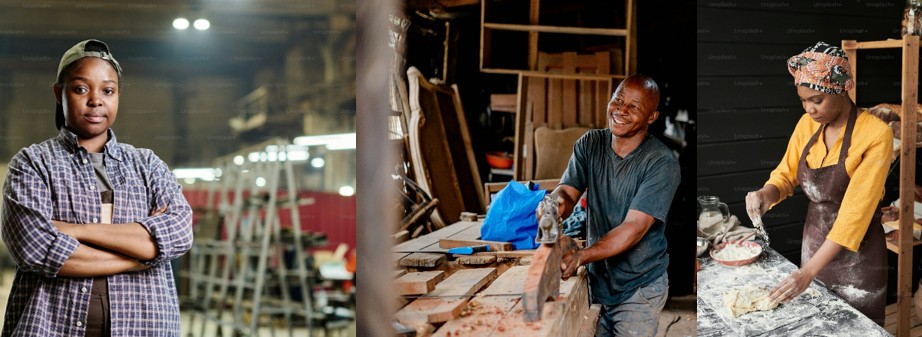
By N’Mazi Obiomah O. Igbokwe
Why bakers, butchers, mechanics and other skilled workers must become an integral part of Nigeria’s educational and economic development.
Nigeria’s educational crisis is often discussed in terms of inadequate classrooms, overcrowded universities, unemployment among graduates and the growing number of young people who struggle to find meaningful work after leaving school. Yet, beneath these familiar problems lies a fundamental question that policymakers have not adequately addressed. Must every Nigerian child pursue a conventional academic education to achieve economic dignity, or can a well-structured apprenticeship system provide an equally respectable and productive pathway to success?
A visit to the philosophy underpinning Switzerland’s vocational education and training system offers an important perspective. In Switzerland, the development of a skilled workforce is not left entirely to informal arrangements between a master craftsman and an apprentice. It is supported by a structured system that connects education, industry, practical training and recognised qualifications.
Nigeria, with its enormous youth population, expanding informal economy and pressing need for productive employment, has much to learn from this approach.
Beyond the classroom, learning a trade as a profession
In many Nigerian communities, apprenticeship has existed for generations. Young people learn tailoring, carpentry, automobile repairs, electrical installation, hairdressing, catering, trading and other occupations under experienced practitioners. In South Eastern Nigeria, the Igbo apprenticeship tradition, often associated with Igba Boy, has enabled many young people to acquire business skills, build commercial networks and establish independent enterprises.
This indigenous system deserves recognition. It has created entrepreneurs, strengthened communities and offered opportunities to young people who might otherwise have been excluded from formal education or employment.
However, a major weakness remains. The quality of training, duration of apprenticeship and competence of graduates can vary considerably. In many trades, there is no consistent national standard defining what an apprentice must know, what practical tasks the apprentice must perform or what qualification should be awarded upon completion.
Consequently, a young person may spend several years learning a trade without possessing a portable, independently recognised certificate that proves competence to employers, financial institutions or customers.
This is where the Swiss experience becomes instructive.
The Swiss model: where education meets industry
Switzerland operates a dual-track vocational education and training system in which many young people undertake apprenticeship programmes that combine practical workplace experience with classroom instruction at a vocational school. Employers provide training in real working environments, while schools teach occupational theory and broader educational subjects.
Depending on the occupation, programmes commonly last two to four years. At the end, apprentices can obtain nationally recognised vocational qualifications, including the Federal VET Diploma or the Federal VET Certificate for shorter programmes.
The important distinction is that the apprentice is not merely learning by observation. The training follows defined occupational standards, practical competencies are assessed, and the resulting qualification has recognised value in the labour market.
A young person training to become a baker, butcher, electrician, mechanic, chef or specialist technician is therefore being prepared for a defined occupation within a wider economic system.
The Swiss approach also provides opportunities for further education and career progression. Vocational training is not necessarily a dead end; it can serve as a foundation for advanced professional qualifications or, under appropriate conditions, further study.
This sends a powerful message to our society and the managers of our educational systems at the federal and state levels that a skilled professional is not an educational failure. A competent baker who can manage food safety, production costs, machinery, quality control and a profitable business possesses valuable knowledge that the economy needs. The framework provides occupational standards, practical assessments and qualifications that can support progression from basic skills to higher levels of professional competence. In Nigeria, the National Board for Technical Education NBTE also has responsibilities relating to informal and apprenticeship-based technical education.
This is an important starting point. The challenge is to ensure that the framework reaches the millions of Nigerians learning trades outside conventional institutions.
Nigeria should not waste resources inventing an entirely new system when an existing foundation can be strengthened. Instead, government should bring together the NBTE, state governments, technical colleges, employers, trade associations, master artisans, and professional bodies to establish an apprenticeship system that is accessible, properly funded and nationally recognised.The baker, butcher, mechanic, electrician, and carpenter should be able to earn a qualification that reflects genuine competence and commands public respect. Our children should be able to build upon those qualifications, progress professionally and aspire to higher education if they choose.
The ultimate objective is not to make every Nigerian a university graduate. It is to ensure that every Nigerian has a fair opportunity to become educated, skilled, productive and economically independent.
That is the promise of a modern apprenticeship system. And Nigeria can no longer afford to postpone it.