
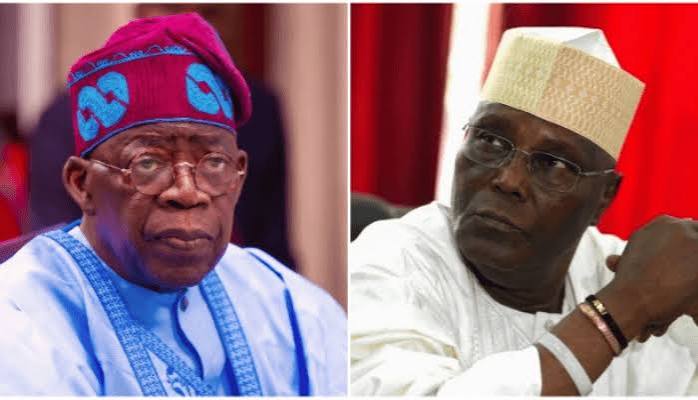
A decades old United States forfeiture matter that has shadowed President Bola Ahmed Tinubu since his years as a private businessman has been thrust back into the centre of Nigeria’s political contest, this time through the corridors of power in Washington rather than the courtrooms of Abuja.
Von Batten-Montague-York, L.C., a Washington based lobbying firm retained by former Vice President Atiku Abubakar, announced on Tuesday, July 21, 2026, that it had begun circulating more than 60 pages of United States Department of Justice records concerning allegations against Tinubu to officials in President Donald Trump’s administration, members of Congress and senior congressional staff.
In a statement posted on its official X account, the firm said the materials related to what it described as the President’s “alleged involvement in a heroin trafficking investigation spanning the late 1980s and early 1990s.” It added that “many within the U.S. government were previously unaware” of the case, and that its aim was to place the full set of court filings, a supporting affidavit and related federal decisions before American policymakers for what it called “informational and oversight purposes.”
The centrepiece of the disclosure is a document titled “Background and Chronology of the 1993 U.S. Department of Justice Heroin Proceeds Forfeiture Case and the 2023 FOIA Litigation Concerning Alleged Heroin Trafficking from Nigeria to the United States Involving Bola Ahmed Tinubu, the current President of the Federal Republic of Nigeria.”
The lobbying engagement is not concealed. Filings lodged with the United States Justice Department under the Foreign Agents Registration Act show that the contract was signed on March 9 and 10, 2026, by the firm’s managing partner, Karl Von Batten, and a Nigerian politician, Fabiyi Oladimeji, acting on Atiku’s behalf. The agreement runs for 12 months, is valued at $1.2 million and is payable in six instalments.
According to those filings, the firm’s mandate is to strengthen Atiku’s “reputational standing” in the United States, arrange meetings between the former Vice President and American officials, and “counterbalance” what the contract terms the Nigerian government’s “lobbying narratives.” Atiku, a two time presidential contender and now the standard bearer of the African Democratic Congress ahead of the 2027 election, has made the reordering of Nigeria and United States relations a recurring theme of his political messaging.
The chronology asserts that federal investigators in Chicago examined the activities of an alleged narcotics network between 1988 and 1991, and claimed that proceeds from the operation were routed into United States bank accounts said to be owned or controlled by Tinubu.
The government’s case named three individuals: Tinubu, Adegboyega Mueez Akande, described as a leader of the organisation, and Abiodun Agbele, an associate who was arrested after allegedly selling white heroin to an undercover agent and who later cooperated with investigators. Tinubu has said he knew Agbele through Akande.
Court records that entered the public domain over the years include an affidavit sworn by Kevin Moss, at the time a Special Agent with the United States Internal Revenue Service, who set out the workings of the heroin ring and the financial trail investigators said they followed. The affidavit stated there was “probable cause to believe that funds in certain bank accounts controlled by Bola Tinubu were involved in financial transactions” that represented proceeds of drug trafficking.
The numbers at the heart of the matter have long been documented. Investigators noted that Tinubu, then earning a reported salary of about $2,400 a month at Mobil Oil Nigeria, held United States bank deposits totalling roughly $661,000 in 1990 and more than $1.2 million the following year, with over $2 million ultimately linked across several accounts.
The distinction that has consistently shaped the legal and political interpretation of this affair is the nature of the 1993 outcome. The Justice Department filed a civil forfeiture action, docketed as Case No. 93C4483, at the United States District Court for the Northern District of Illinois, seeking to seize funds it alleged were tainted. The matter was resolved by settlement, with $460,000 held in a Citibank account forfeited to the American government while other funds were retained.
Civil forfeiture, as United States law defines it, targets the property rather than the person and does not require a criminal charge or conviction. Tinubu was never indicted, never charged and never convicted in connection with the investigation, and the case was closed. He has consistently denied any wrongdoing throughout the years the allegations have circulated.
The forfeiture surfaced with full force during the litigation that followed the February 25, 2023 presidential election. Atiku, then of the Peoples Democratic Party, and Peter Obi of the Labour Party both argued before the Presidential Election Petition Court that the forfeiture rendered Tinubu ineligible to contest, and that his failure to disclose it amounted to false information to the Independent National Electoral Commission.
The court rejected the argument. It held that the petitioners had failed to establish that Tinubu was indicted, arraigned, tried, convicted or sentenced for any offence, and stressed that a civil forfeiture “does not require conviction or even a criminal charge against the owner.” The ruling party, the All Progressives Congress, had told the same court that Tinubu merely surrendered funds held in accounts linked to his name and to a company, Compass Finance and Investment, and that a matter concluded three decades earlier could not disqualify him. The Supreme Court affirmed the outcome later in 2023.
The most recent chapter unfolded in the United States. In 2023, the transparency campaigner and journalist Aaron Greenspan filed a Freedom of Information Act suit seeking records from several federal agencies, among them the Federal Bureau of Investigation, the Drug Enforcement Administration, the IRS, the State Department and the Central Intelligence Agency. The agencies initially issued so called Glomar responses, declining to confirm or deny that responsive records existed.
In 2025, Judge Beryl Howell of the United States District Court for the District of Columbia ruled that most of the agencies could not rely on a blanket refusal and directed them to process parts of the request. “The public interest in learning about a sitting president’s possible connection to a major drug investigation is undeniably significant,” she wrote, though the court upheld the CIA’s separate position. The litigation remains ongoing.
The Presidency, responding to that 2025 development at the time, dismissed it as “nothing new,” maintaining that the President had committed no offence and had been fully cleared to hold office. Presidential aides have previously characterised repeated efforts to tie Tinubu to the old case as politically motivated.
The lobbying firm’s latest move has drawn sharp reactions within Nigeria. Supporters of the President have condemned the engagement of a foreign firm to advance the allegations abroad, framing it as an attempt to embarrass a sitting head of state on foreign soil rather than to contest him at the ballot. Critics of the government counter that the records are matters of public interest that voters are entitled to weigh.
For now, the substance of the case remains what it has been for years, a documented civil forfeiture unaccompanied by any criminal conviction, layered over an unresolved American records dispute and a Nigerian judicial verdict that settled the question of eligibility. What has changed is the arena. With the 2027 contest already taking shape, a file first opened in a Chicago courthouse more than three decades ago has become an instrument of twenty first century political lobbying, carried from the archives of the Justice Department to the desks of lawmakers on Capitol Hill.