
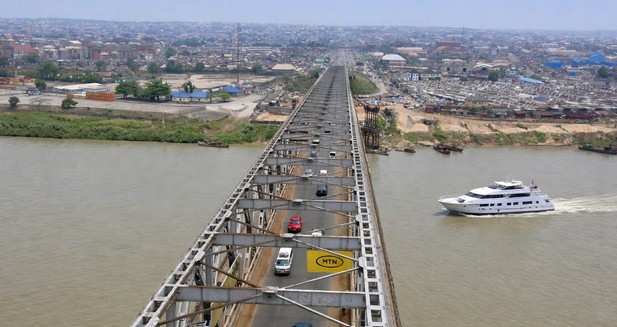
Nigeria reopened the First Niger Bridge on Thursday after a 38-day closure that forced interstate traffic onto the newer downstream crossing between Asaba and Onitsha. Works Minister David Umahi ordered emergency repairs following alarming reports that scavengers had stolen crucial steel bolts from the ageing crossing. Neglect and theft continuously endanger critical transport links across the country. Umahi installed solar streetlights, security cameras, and median barriers alongside observation posts at both ends of the bridge to deter thieves and monitor excessive axle loads. The engineering intervention also introduced three emergency turnaround points to prevent heavy lorries from breaking down and creating stationary bottlenecks on the historic crossing. Old steel bridges demand relentless surveillance to survive.
Vandals, however, represent only half the structural threat to the six-decade-old transit route between Delta and Anambra states. Unchecked commercial sand dredging directly under the structure now threatens to destabilise its riverbed foundations. Greed hollows out public assets quickly. Umahi ordered field controllers in both states to enforce a strict ten-kilometre dredging ban around all federal crossings immediately under threat of disciplinary dismissal. Yet Nigerian ministerial decrees rarely change riverine business practices without aggressive, round-the-clock physical enforcement by armed security patrols. Mining laws mean little without boots on the ground.
Traffic had moved across the six-lane Second Niger Bridge during the shutdown, but the surrounding regional road network remains fundamentally broken. Umahi confirmed that President Bola Tinubu scrapped an ongoing remedial contract on the first 11 kilometres of the cratered Benin-Asaba highway due to poor performance by the contractor. Bad contractors burn public funds without consequence. The federal government plans a total redesign of the entire corridor, alongside building a 17.5-kilometre bypass valued at N172bn to link traffic efficiently to the Second Niger Bridge. Grand plans mean little to haulage operators who still face axle-snapping craters on their daily commercial runs.
The reopening brings immediate relief to traders and commuters crossing between the South-South and the South-East geopolitical zones. Delta State Governor Sheriff Oborevwori noted through his Works Commissioner that allowing the bridge to fail would have crippled commerce throughout southern Nigeria. Connecting markets demands durable regional routes. Asaba monarch Obi Epiphany Azinge called the project the most thorough structural overhaul the pre-civil war facility has seen in decades. Maintaining public assets before they crumble remains an urgent test of state competence that Abuja rarely passes on schedule. Routine care beats belated panic every time.