
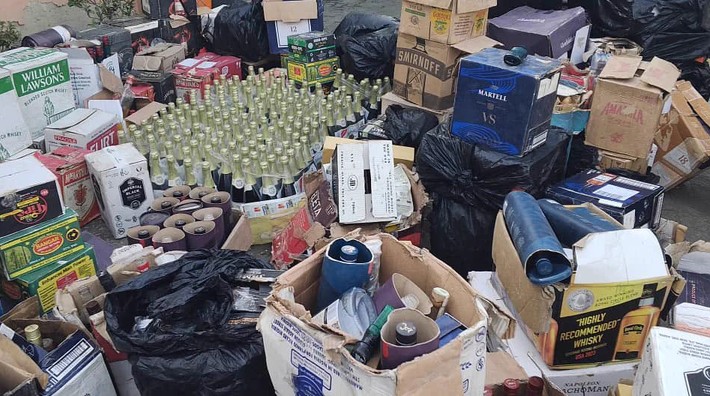
Regulatory operatives from the National Agency for Food and Drug Administration and Control (NAFDAC) set ablaze heaps of seized pharmaceuticals and adulterated consumables this week, incinerating fake, falsified, and expired products valued at over ₦5.3 billion. The towering black smoke at the disposal grounds staged a familiar ritual of state enforcement. Yet across public tertiary hospitals, internal medicine wards and pediatric intensive care units tell a grim story that incinerator fires cannot mask. Doctors face an unprecedented surge in clinical treatment failures: septic patients dying despite administration of heavy third-generation cephalosporins, hypertensive patients suffering intracranial haemorrhages while ostensibly taking daily antihypertensive regimens, and diabetic patients succumbing to ketoacidosis despite refrigerated insulin pens.
The bonfire of the fakes masks a terrifying macroeconomic and epidemiological convergence. Over the past three years, the naira’s steep depreciation and double-digit imported inflation caused multinational pharmaceutical firms to scale down domestic operations or exit the Nigerian market entirely. Legitimate, brand-name lifesaving medicines, specialised pediatric syrups, and packaged staples saw retail prices skyrocket by three hundred to eight hundred per cent. In a country where over seventy per cent of healthcare expenditure is out-of-pocket, ordinary citizens cannot afford certified ethical pharmaceuticals.
Illicit domestic and cross-border counterfeiting syndicates stepped into this purchasing void. They deploy chalk, industrial starch, unsterile tap water, and sub-potent active ingredients packaged in blister packs that mimic authentic barcodes and holograms. This trade is no longer just petty street hawking. It is a criminal enterprise that is overwhelming Nigeria’s tertiary hospitals with renal failure, toxic liver necrosis, and untreatable systemic infections.
The contagion’s source lies in Nigeria’s porous entry corridors and chaotic wholesale distribution nodes. More than seventy per cent of finished pharmaceutical products consumed in Nigeria originate abroad, primarily from ports in India and China. While NAFDAC enforces pre-shipment Clean Report of Inspection and Analysis regimes, the enforcement collapses at domestic maritime ports and overland borders. At the Apapa and Tin Can Island ports in Lagos, as well as Onne in Rivers State, container inspection relies on cumbersome physical searches or broken scanner infrastructure. Customs brokers exploit multi-agency friction and institutional corruption, clearing twenty- and forty-foot containers disguised under fraudulent customs declarations as general merchandise, automotive spares, or industrial textiles.
Once cleared, these consignments do not move to licensed, climate-controlled pharmaceutical distribution hubs. Instead, they vanish directly into the unregulated labyrinth of open commercial markets: the Idumota and Trade Fair complexes in Lagos, the Bridge Head Market in Onitsha, and the Sabon Gari Market in Kano. These open-air markets operate as autonomous, self-governing commercial republics. Inside poorly ventilated zinc stalls exposed to thirty-five-degree tropical heat and humidity, authentic products degrade while outright fakes mix freely with legitimate stock.
Because formal wholesalers cannot compete on price or credit terms with market barons who control informal credit unions, legitimate community pharmacies and patent medicine vendors across the country source their stock directly from these open hubs. The chain of custody breaks completely. When a rural clinic in Benue or a private hospital in Ikeja buys injectable antibiotics, they enter a lottery where neither the prescribing physician nor the dispensing nurse can verify whether the vial contains a therapeutic molecule or colored water.
The consequences go beyond individual poisoning. The wider danger is the silent destruction of national epidemiological security through antimicrobial resistance. Counterfeiting rings do not always manufacture pills made of inert chalk; their common practice involves diluting genuine active pharmaceutical ingredients to a fraction of the mandated dose. A counterfeit capsule of amoxicillin-clavulanic acid or ciprofloxacin may contain fifteen or twenty per cent of the therapeutic molecule—just enough to pass a casual colourimetric screening, but far too weak to clear a bacterial infection.
This steady under-dosing creates an ideal evolutionary breeding ground for superbugs. Pathogens in the human body mutate rapidly when exposed to sub-lethal concentrations of an antibiotic, developing plasmid-mediated resistance mechanisms. When treatment fails, clinical teams in under-resourced public hospitals switch to costlier second- and third-line antimicrobial agents, which are themselves frequently counterfeit. Pathogenic strains such as multidrug-resistant Klebsiella pneumoniae, methicillin-resistant Staphylococcus aureus, and resistant Salmonella now circulate through public wards. Routine appendectomies, emergency caesarean sections, and childhood pneumonia turn into death sentences. Nigeria risks entering a post-antibiotic era where simple bacterial infections resist every medical countermeasure available to science.
Despite periodic seizures and media-ready destruction ceremonies, the state response remains performative. Law enforcement systematically fails to secure deterrent convictions against the corporate financiers bankrolling the trade. The legal machinery governing counterfeit medicines remains an obsolete relic. Under the Counterfeit and Fake Drugs and Unwholesome Processed Foods (Miscellaneous Provisions) Act, convicted counterfeiters face penalties as low as ₦500,000 or options of modest prison terms. For cartels generating billions of naira in untaxed cash each quarter, these fines represent a negligible cost of doing business.
Enforcement sweeps target low-level store clerks, truck loaders, and roadside medicine hawkers. The shadowy logistics financiers, clearing agents, and warehouse landlords who direct the distribution syndicates remain insulated by deep political connections and regulatory capture. When NAFDAC or the Nigeria Police Force initiate criminal prosecutions, defence attorneys drag trials through the Federal High Court system for a decade using interlocutory appeals, missing case files, and jurisdictional challenges.
Arresting this crisis requires dismantling the open market distribution system and modernising criminal statutes. The Federal Ministry of Health and the Pharmacy Council of Nigeria must enforce the long-delayed transition of open markets into regulated Coordinated Wholesale Centres, stripping unlicensed market unions of their distribution power. The National Assembly must replace obsolete laws with statutes that classify the manufacturing, importation, and mass distribution of fake medicines as economic sabotage and homicide, accompanied by the mandatory asset forfeiture of shipping assets, real estate holdings, and bank accounts linked to convicted syndicates. Port security demands full digitisation, linking customs manifests directly to track-and-trace pharmaceutical registries based on unique mobile authentication technology.
Until the Nigerian state treats the sale of fake consumables not as an administrative trading infraction, but as a direct assault on national survival, the bonfires lit by regulators will remain hollow theatre. The cartels will continue to profit in the shadows, while the nation’s hospital wards become mortuaries for victims of an avoidable, man-made plague.