
By N’Mazi Obiomah O. Igbokwe
Some books outlive the circumstances of their birth. Professor Wole Soyinka’s The Man Died: Prison Notes, published in 1972, is one of them. Born from his imprisonment during Nigeria’s Civil War, it remains a powerful meditation on power, freedom, truth and the cost of silence. More than five decades later, it poses an uncomfortable question: can a nation remain democratically alive when its conscience is dying?
General Yakubu Gowon’s military government detained Soyinka between 1967 and 1969 after advocating dialogue during a national crisis. His experience exposed the dangers of state power confronting an independent mind. The book was more than an account of physical confinement; it affirmed the need to distinguish right from wrong even when authority demands submission.
Nigeria has since moved from military dictatorship to constitutional civilian government. Elections, parties, legislatures and constitutional guarantees are now part of its political life. Yet institutions alone cannot guarantee democratic values. A country may preserve democracy’s machinery while gradually losing its soul.
When political power loses its conscience
Democracy is more than voting at regular intervals. It is a covenant between leaders and citizens, built on accountability, transparency, human dignity and the understanding that public office is a trust, not a private entitlement.
The problem is a political culture that defends wrongdoing when it involves an ally, condemns corruption selectively and treats criticism as disloyalty. Truth becomes partisan, integrity negotiable and accountability something demanded only of opponents. Citizens are expected to defend leaders rather than leaders explain their decisions. Conscience erodes through small compromises that gradually become normal.
Selective outrage and the suffering citizen
Ethnic, regional and political identities constitute a plural society. The danger begins when identity becomes a shield against accountability. Citizens who condemn misconduct in one camp but excuse the same behaviour in another abandon the independent judgement democracy requires. The test of conscience is not whether we criticise people we dislike, but whether we can tell the truth about those we support.
The distance between government pronouncements and daily life is another measure of democratic failure. Families struggle with the cost of living, healthcare, inadequate infrastructure, unemployment and insecurity. Young people search for opportunities, while households make difficult choices between food, transport, medicine and school expenses.
Difficult reforms may not produce immediate relief, but citizens are entitled to ask whether their sacrifices are matched by measurable improvements. Economic growth must be accompanied by attention to how its benefits are shared; fiscal discipline must translate into better public services; and announcements must be followed by implementation. When people endure hardship without a credible explanation of the destination, timetable or expected benefits, trust weakens. Exhaustion may also make it harder to sustain civic pressure, but silence should not be mistaken for approval.
Institutions and the 2027 elections
A nation’s conscience is expressed through its institutions. Legislatures must scrutinise the executive; courts must administer justice impartially; security agencies must protect citizens within the law; electoral bodies must inspire confidence; and the media must investigate matters of public interest.
The 2026 Freedom House assessment of Nigeria, as cited in the original article, identifies continuing concerns about electoral irregularities, corruption, insecurity and abuses by security agencies, while acknowledging improvements in electoral quality since the return to civilian rule in 1999. The point is not that every institution has failed, but that unresolved failures can undermine confidence in the system.
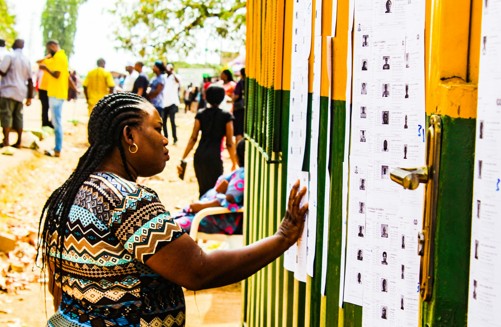
As the 2027 general elections approach, voters should treat the polls as an opportunity to assess records and policies, not as a ritual dominated by ethnic sentiment, patronage, financial inducements or manufactured divisions. What have candidates delivered? How have they used public resources? What progress have they made in security, education, healthcare, electricity, employment and infrastructure? What credible plans do they offer for the problems that remain?
These questions should apply to every candidate and party, regardless of region, religion or affiliation. The National Human Rights Commission’s September 2026 statement, referenced in the original article, stressed that democracy extends beyond elections to citizens’ dignity, rights, voice and ability to hold power accountable without fear. Voters must resist short-term inducements, while institutions ensure free participation and respect for electoral outcomes.
The burden of truth
Intellectuals, writers, journalists, universities, professional bodies and civil society must question official narratives and preserve inconvenient truths. That responsibility requires discipline: allegations must be supported by evidence, criticism distinguished from rumour, and free expression must not become a licence for incitement or fabricated claims.
Public debate should make room for reasoned disagreement and informed judgement. Conscience is weakened when discourse becomes a marketplace of propaganda where volume matters more than evidence. Nigeria needs citizens and institutions prepared to confront its problems honestly, even when doing so is uncomfortable or costly.
Nigeria must recover its conscience
Soyinka’s title invites a personal and political question: who is the man that dies? It may be the citizen who trades independent judgement for partisan loyalty, the official who abandons integrity for personal advantage, or the intellectual who knows the truth but chooses silence because speaking carries a price. Perhaps the man dies whenever conscience is sacrificed to convenience.
Nigeria today is not simply a repetition of the military era in which Soyinka was imprisoned. Constitutional rights, electoral competition, civil society and public debate provide avenues of participation that must be protected. These are achievements, not reasons for complacency. Democracy must be reflected in citizens’ daily lives, the fairness of institutions and leaders’ willingness to accept scrutiny.
A nation loses its conscience when dishonesty becomes acceptable, injustice is defended for political convenience, public suffering becomes an abstraction and people stop believing that speaking up can make a difference. But conscience can be recovered when citizens demand equal standards of allies and opponents, institutions apply the law fairly, journalists investigate without fear or favour, and elections become meaningful exercises in accountability.
Nigeria’s democratic journey should be judged not merely by the number of elections held or the length of civilian rule, but by justice, citizens’ dignity, institutional integrity and the extent to which public power serves the common good. The greatest danger is not simply that leaders may fail the people; it is that citizens, through exhaustion or indifference, may begin to regard failure as inevitable.
As another electoral season approaches, Nigeria must decide whether it can rebuild a political culture in which truth, integrity and accountability are non-negotiable. Renewal requires the courage to speak, question, scrutinise and resist injustice—and to refuse to excuse wrongdoing simply because it benefits our side. Administrations come and go; the moral principles by which they are judged must endure.
As Nigeria looks towards 2027, the question is greater than who will govern: will the country recover its conscience, or will the death of conscience become the price of its democratic survival? That is the question Soyinka’s book leaves before us, and one Nigerians must answer for themselves.
I come in Peace!!