
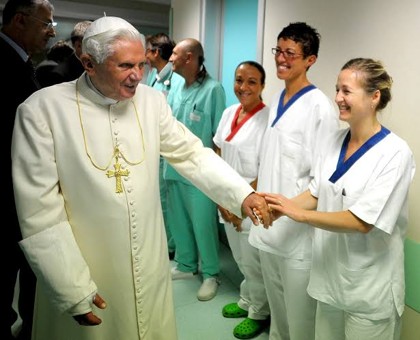
Pope Leo XIV has been discharged from Rome’s Gemelli Hospital four days after undergoing lung cancer surgery, walking unaided as he prepares to resume public duties and evaluate upcoming international travel.
Stepping through the sliding glass doors of Rome’s Gemelli Hospital four days after undergoing delicate thoracic surgery, Pope Leo XIV signalled a rapid resumption of his papal duties following the first major health emergency of his pontificate. The seventy-one-year-old leader of the Catholic Church walked out of the medical facility unaided on Saturday morning, pausing to acknowledge well-wishers and pause for a warm moment with a thirteen-year-old Ukrainian refugee who presented him with a stuffed toy.
The swift hospital release followed Tuesday’s surgical procedure, during which medical specialists successfully removed a pulmonary nodule confirmed to be adenocarcinoma, the primary diagnostic form of lung cancer. Attending physicians cleared the supreme pontiff for discharge after evaluating final diagnostic blood work and chest imaging, clearing the way for him to deliver his customary Sunday blessing from the papal apartments overlooking Saint Peter’s Square.
While the pontiff’s energetic departure offered immediate public reassurance, news of the sudden malignancy sent shockwaves through the Holy See, raising broader institutional questions regarding the physical demands facing the global church leadership. Elected in May 2025 at sixty-nine as the first American pope, Leo entered the papacy with a reputation for robust physical health, maintained through regular swimming, tennis, and cardiovascular training during his tenure as a cardinal in Rome.
Pastoral Duties and International Diplomacy From a Hospital Suite
Despite undergoing major surgery under general anaesthesia, the pontiff refused to suspend official statecraft during his brief hospital stay. Operating from a private suite at Gemelli, Leo maintained an active administrative schedule, holding private audiences with senior Vatican cardinals and conducting high-level diplomatic outreach with foreign heads of state.
During a direct telephone conversation with Russian President Vladimir Putin from his hospital room, the pope intervened on humanitarian grounds, raising urgent concerns regarding the welfare of trapped civilians in the southern Ukrainian city of Oleshky. The outreach demonstrated a determination to maintain the Holy See’s active diplomatic presence in global conflict zones regardless of personal health challenges.
The pontiff’s rapid recovery also reopens delicate discussions regarding an ambitious twelve-day pastoral tour of Latin America scheduled from November 6 to 17. The itinerary includes official state visits to Uruguay and Argentina, alongside a homecoming journey to Peru, where the former cardinal served for decades as a missionary and diocesan bishop.
Vatican Caution and Governance Continuity
Addressing international media on Friday, Holy See Secretary of State Cardinal Pietro Parolin urged measured expectations regarding the upcoming international travel schedule. Parolin clarified that while the medical procedure proceeded without complications, the pontiff would assess his stamina and clinical recovery following his return to the Apostolic Palace before finalising whether to maintain or modify the Latin American trip.
The secretary of state also dismissed public speculation concerning potential governance gaps or formal conditional resignation directives, noting that the surgical intervention required no emergency delegation of papal authority. Parolin emphasised that the pontiff’s swift recovery made administrative contingency measures unnecessary, affirming that executive governance over the universal church remained fully intact.
Nevertheless, institutional observers noted that days before entering the hospital, the pope completed an important administrative appointment by confirming sixty-nine-year-old Filipino Cardinal Luis Antonio Tagle as Dean of the College of Cardinals. As the official charged with presiding over pre-conclave assemblies and coordinating future papal elections, Tagle’s confirmation provided key leadership stability within the highest ranks of the Catholic hierarchy.
A Modern Papacy Facing Physical Reality
The rapid resolution of the pontiff’s first medical emergency highlights the intense public focus that surrounds the physical health of modern religious leaders. In an era of continuous global travel, complex diplomatic mediation, and demanding public appearances, the physical resilience of a pope remains central to the operational momentum of the Vatican.
As Catholic faithful gather at Saint Peter’s Square for the upcoming Sunday Angelus, the pontiff’s planned window appearance serves as a symbolic return to public ministry. For church administrators and observers worldwide, the episode underscores both the personal stamina of the American pontiff and the delicate balance between physical recovery and global spiritual governance.