
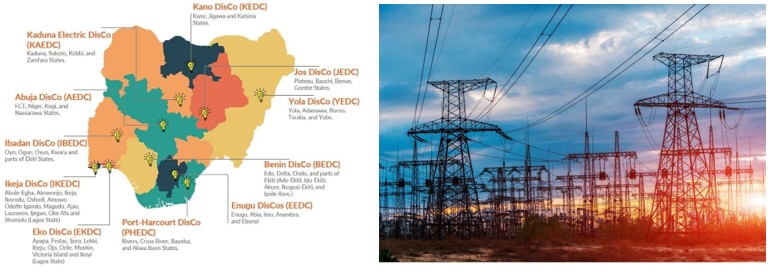
State governments across Nigeria are establishing their own independent electricity regulatory commissions, issuing state licences, and drafting bespoke sub-national power policies. This administrative cascade follows the fifth constitutional alteration and the enactment of the Electricity Act 2023, which formally stripped the central government of its exclusive hold over power markets. State capitals now project an image of regulatory emancipation. Commissioners unveil grand visions of uninterrupted supply, municipal grids, and state-backed distribution utilities ready to replace non-performing operators.
The celebration ignores a stubborn reality: amending the constitution does not rebuild obsolete transmission links, inject fresh capital into dilapidated distribution networks, or erase billions of dollars in historical debt. Sub-national governments are stepping into a market defined by decades of financial insolvency, weak contract enforcement, and physical decay. The devolution of regulatory authority, far from offering an immediate solution to chronic blackouts, is exposing the deep structural contradictions at the heart of Nigeria’s electricity architecture.
The primary battleground is the territorial boundary of legacy distribution companies. Under the 2013 privatisation exercise, distribution assets were carved into eleven regional geographic monopolies, structured around arbitrary boundaries that spanned multiple states. The Abuja Electricity Distribution Company covers the Federal Capital Territory, Niger, Kogi, and Nasarawa. The Benin Electricity Distribution Company spans four southern states. When a state asserts regulatory control and orders the DisCo operating within its territory to unbundle its operations into a state-domiciled corporate entity, it triggers an immediate legal and commercial crisis.
DisCos hold long-term licences, bilateral supply agreements, and vested asset-valuation claims. Their bank balance sheets are burdened with bad debts and stranded assets across municipal territories. If a state regulatory commission seeks to expropriate those assets, re-licence them to an independent concessionaire, or compel an unwilling DisCo to yield its highest-paying urban feeders to an embedded municipal generator, protracted litigation is inevitable. Valuation remains a major hurdle. The physical infrastructure—dilapidated transformers, aluminium conductors, and overloaded substations—often has book values that bear little relationship to economic reality. A DisCo will demand compensation for its historical capital expenditure, while an incoming private operator will find that the physical assets require complete reconstruction rather than simple takeover. Without a clear mechanism overseen by the Nigerian Electricity Regulatory Commission to value and unbundle these regional books, state market devolution will generate court injunctions instead of electricity.
Beyond territorial conflict lies the problem of project finance. Sub-national governments assume local mini-grids, off-grid distribution networks, and embedded generation projects will spontaneously attract institutional capital once state licensing processes replace federal bureaucracy. This calculation misinterprets the basis of infrastructure investment. Private financiers do not demand sovereign federal guarantees because they have an affection for the Federal Ministry of Finance; they require them because the Nigerian power sector is structurally illiquid, foreign exchange liquidity is unstable, and sub-national balance sheets are notoriously weak.
Few Nigerian states generate enough independent revenue to serve as guarantors for private power purchase agreements. If a state-licensed mini-grid developer signs an offtake agreement with a state water board or an industrial cluster, the developer’s lenders will demand credit enhancements, payment securities, and escrowed settlement arrangements. Without an intervention backed by the central bank or a multilateral development bank, state regulatory independence provides no financial de-risking. An independent regulatory commission cannot shield an offshore investor from exchange rate fluctuations when spare parts must be imported in foreign currency while local consumers pay in depreciated naira.
The commercial vulnerability of state markets highlights an even more acute socio-economic hazard: the complete collapse of universal service obligations. The existing distribution network relies on cross-subsidisation. Industrial customers and affluent residential clusters pay higher effective tariffs through structured feeder banding, which offsets the cost of maintaining supply to low-density, rural, and economically disadvantaged areas.
When sub-national markets open to private participation, capital behaves logically. Investors will direct their funds exclusively toward high-density commercial corridors, export processing zones, and wealthy neighbourhoods where meter compliance is high, and payment default is low. State regulators will find it difficult to resist this commercial cherry-picking, as early success stories in commercial hubs provide quick political capital. The rural periphery, however, will face abandonment. Private developers will not string medium-voltage lines through remote villages with low purchasing power without permanent, ring-fenced subsidies. The legacy DisCos, stripped of their most profitable urban feeders by municipal intervention, won’t have the financial capacity nor the commercial motivation to supply loss-making rural circuits. Decentralisation risks creating a two-tier society: a small minority of industrial and affluent consumers with reliable, premium-priced power, alongside a vast majority of rural and low-income populations abandoned to perpetual darkness.
State electricity markets cannot survive on statutory optimism. If sub-national governments want to avoid creating thirty-six fragmented, bankrupt jurisdictions, they must abandon political grandstanding and focus on commercial realities. State regulatory commissions must negotiate formal transition frameworks with legacy DisCos rather than attempting forced unbundling through administrative decree. State governments must structure viable, ring-fenced rural electrification funds supported by budgetary allocations to guarantee universal access, rather than expecting private off-grid investors to provide non-viable public services. Without these structural safeguards, devolution will only distribute bankruptcy to provinces.