
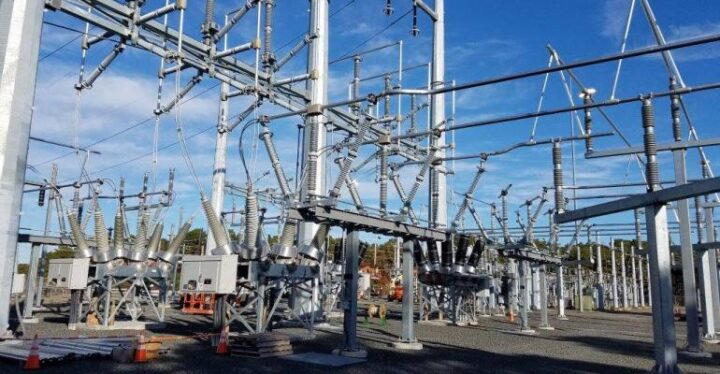
Across commercial hubs and gated residential communities in Lagos, Abuja, Port Harcourt, and Ibadan, a quiet infrastructure divorce is underway. Commercial clusters, private housing estates, and small manufacturing firms are systematically disconnecting their primary operations from the national grid. Spurred by relentless grid collapses, steep distribution company (DisCo) tariff revisions, and the erratic delivery of promised supply hours under the Band A regime, private actors are building their own captive power networks. Rooftop solar arrays, modular battery storage banks, and isolated mini-grids are no longer backup luxuries. They have become the primary source of operational baseload energy.
This shift represents an uncoordinated, bottom-up clean energy transition. While federal power authorities pursue centralised grid upgrades and debate liquidity shortfalls in the multi-trillion naira electricity market, commercial and residential consumers are voting with their capital. This migration is driven not by environmental commitments or multilateral climate treaties, but by sheer balance sheet survival. Nigerian businesses cannot afford the twin burdens of surging electricity tariffs and parallel expenditure on diesel generation when the centralised transmission network fails. Yet, as private capital builds a parallel utility sector, this grassroots secession threatens the financial foundation of the conventional power market, introducing new economic and regulatory fractures.
The Utility Death Spiral and the DisCo Revenue Deficit
The rapid exit of premium commercial and industrial consumers poses a direct threat to the solvency of distribution companies. Under the tariff architecture approved by the Nigerian Electricity Regulatory Commission (NERC), DisCos rely heavily on cross-subsidies. High-consuming Band A industrial and commercial customers pay premium cost-reflective tariffs exceeding ₦200 per kilowatt-hour. This revenue covers the substantial distribution shortfalls incurred in serving lower-band residential consumers and unmetered rural feeders.
When blue-chip commercial properties, medical facilities, tech hubs, and wealthy residential associations migrate to private solar-hybrid setups, the DisCos lose their most creditworthy off-takers. The remaining consumer base consists disproportionately of low-income households, high-loss distribution feeders, and consumers subject to estimated billing caps. This triggers a textbook utility death spiral. As top-tier payers leave the network, DisCo revenue collections contract.
To recover their revenue approved under Multi-Year Tariff Orders, DisCos must either petition for further tariff increases on remaining consumers or cut capital expenditure on network repairs. Higher tariffs on an impoverished customer base accelerate non-payment, energy theft, and further disconnections, while deferred maintenance leads to frequent transformer burnouts and protracted blackouts. The national distribution infrastructure risks becoming an abandoned network catering exclusively to those too poor to finance an alternative.
Financing Captive Energy Amid Foreign Exchange Headwinds
The economic rationale for self-generation remains compelling, yet the financial mechanics of deploying decentralised clean power face severe pressures. Solar panels, lithium-iron-phosphate battery cells, and high-capacity hybrid inverters are imported commodities priced in foreign currencies. The persistent depreciation of the naira has made local equipment costs soar, quadrupling the upfront capital required for a standard commercial solar-plus-storage installation within two years.
In response, local clean energy developers and specialised financiers have been forced to rethink their business models. Traditional cash-and-carry installation services have collapsed. In their place, providers are deploying structured Power-as-a-Service (PaaS) and long-term lease-to-own arrangements denominated in local currency. Under these frameworks, commercial off-takers avoid prohibitive capital expenditure, paying instead a fixed monthly capacity fee or a per-kilowatt-hour rate indexed to local inflation metrics rather than direct spot foreign exchange rates.
Read Also: Beyond Grid Expansion: Assessing Nigeria’s Entry into the World Energy Council
To hedge against currency volatility, local developers are securitising equipment assets through domestic debt instruments, blended finance facilities from development finance institutions, and commercial paper backed by customer receivables. Energy service companies also extend battery life cycles by introducing remote management software and modular expansion options. This allows estates and business clusters to stage their capital commitments over multiple budget cycles. Despite these financial adaptations, the foreign exchange exposure of replacement hardware remains a persistent vulnerability for long-term power purchase contracts.
Subnational Regulation and the Integration Challenge
The Electricity Act of 2023 removed the federal monopoly over power regulation, granting state governments the constitutional authority to establish their own electricity markets and regulatory bodies. This decentralised legal framework gives State Electricity Regulatory Commissions (SERCs) an avenue to rationalise the growth of private power. Rather than allowing captive systems to operate as isolated energy islands, progressive state regulators must build frameworks that integrate these private assets into subnational distribution networks.
A primary regulatory priority is to open-access and net-billing regulations at the state level. Commercial estates and industrial clusters with massive rooftop solar arrays generate substantial surplus electricity during peak midday hours. State regulators should establish clear technical grid codes and interconnection standards that permit these captive producers to feed excess power back into the local distribution network in exchange for energy credits or cash settlements.
SERCs must also structure franchised mini-grid concessions. Under this model, private developers lease underperforming distribution assets from existing DisCos, upgrade the local medium-voltage infrastructure, and supply mixed solar-thermal power directly to defined commercial districts. This arrangement secures reliable power for enterprises, provides guaranteed wheeling revenue for traditional utilities, and prevents the complete stranding of public distribution assets.
State regulators must resist the temptation to treat off-grid self-generation as an unregulated tax base. Imposing punitive licensing fees, duplicate environmental permits, or arbitrary generation levies on private solar operators will only drive captive installations underground, depriving state planning agencies of critical energy data.
The Path Forward for Nigerian Energy Governance
The divorce between productive capital and the national grid is an irreversible economic reality. Decades of delayed transmission investments, gas supply debts, and inefficient utility governance have forced Nigerian commerce to construct its own energy security. The national grid will not regain its historical client base simply by issuing regulatory directives or raising nominal supply targets.
Federal and state authorities must abandon the illusion that a single centralised grid can single-handedly power the entire Nigerian economy. The future of the nation’s energy security lies in an integrated, multi-tier system where utility-scale transmission corridors operate alongside decentralised municipal grids, commercial solar networks, and private storage hubs. Energy planners must treat private captive power networks not as regulatory competitors, but as essential building blocks of a resilient subnational power architecture. Without deliberate policy integration, the ongoing capital flight from the national grid will leave public infrastructure bankrupt, while the real sector shoulders the immense cost of electrifying itself.