
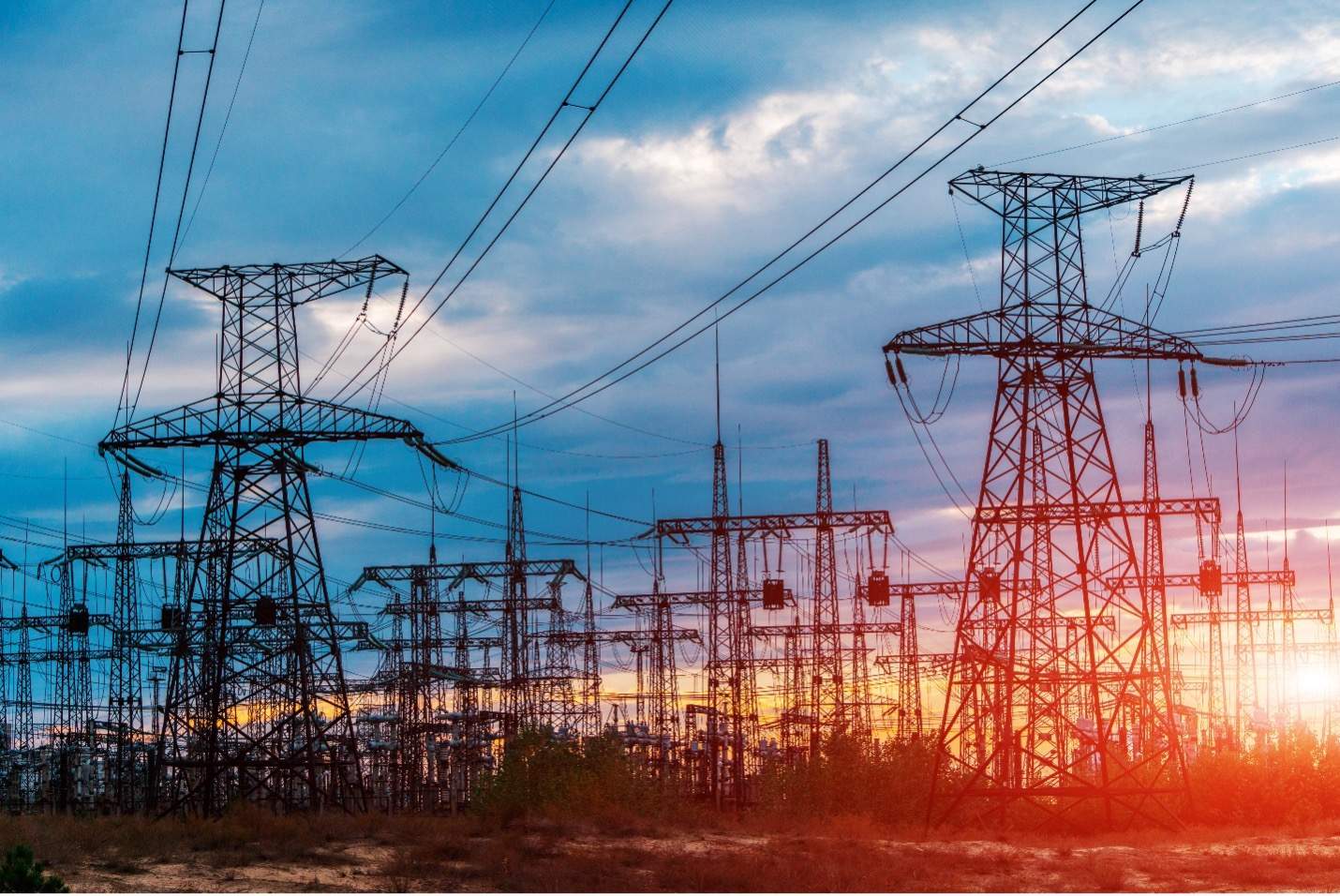
The formal accession of Nigeria to the World Energy Council and the simultaneous inauguration of its National Member Committee in Abuja mark a renewed diplomatic posture in the international energy arena. Chaired by Waltersmith Petroman Oil Chairman Abdulrazaq Isa, with former Nigerian National Petroleum Company Limited executive Bala Wunti as Chief Executive Officer, the new governing board promises to advance the council’s core Trilemma framework: balancing energy security, energy equity, and environmental sustainability. From international podiums to multilateral forums, state officials frame this membership as a decisive step toward unlocking international capital, deepening institutional technical exchange, and asserting African leadership ahead of major international summits. Yet, behind the official rhetoric lies a persistent domestic reality: over eighty million citizens remain completely disconnected from the electricity grid, while those connected endure chronic supply interruptions, systemic grid collapses, and spiralling tariff adjustments.
Energy diplomacy without domestic structural execution is little more than administrative performance. Joining international consultative bodies yields virtually no tangible improvements for domestic factories, micro-enterprises, or rural households unless accompanied by policy stability, regulatory independence, and bankable project structures. Private capital does not flow to an energy sector simply because a nation holds a seat at multilateral tables. Capital flows to environments where contracts are legally enforceable, tariffs reflect true cost structures, foreign exchange risks are mitigated, and off-take entities demonstrate creditworthiness. If Nigeria’s entry into the World Energy Council remains confined to high-level policy dialogues without addressing the deep financial paralysis of the domestic power sector, it will join a long line of decorative international engagements that alter nothing on the ground.
Leveraged Diplomacy: Converting Multilateral Access into Concessionary Capital
The primary test facing the newly established National Member Committee is whether it can translate international institutional access into direct financial flows for the country’s starved off-grid and mini-grid sectors. The World Energy Council brings together a vast network of development finance institutions, multilateral development banks, private equity funds, and international technology providers. For Nigeria, accessing this network effectively requires abandoning vague appeals for foreign direct investment in favour of structured, de-risked financial instruments that specifically target decentralised energy deployment.
Mini-grids and standalone solar systems present the most immediate pathway to expanding electricity access across rural and peri-urban communities where extending the centralised high-voltage transmission grid remains financially unviable. However, private developers operating in Nigeria’s off-grid space face prohibitive borrowing costs, with domestic commercial bank interest rates exceeding thirty percent and international debt instruments carrying severe foreign exchange exposure. To make these projects bankable, the committee must use its global platform to negotiate targeted blended finance facilities. These facilities must combine international concessional debt, sovereign credit guarantees, and local currency hedging mechanisms.
Unlocking this capital requires the Nigerian government to establish standardised, transparent procurement pipelines. International concessional funds do not deploy capital into fragmented, one-off projects with uncertain regulatory approvals. The Ministry of Power and the Rural Electrification Agency must present pre-packaged, aggregated clusters of mini-grid sites backed by standardized land titles, pre-cleared environmental impact assessments, and verified community demand data. By bundling hundreds of rural sites into single investment portfolios, Nigeria can lower transaction costs for international impact investors linked to the World Energy Council network, converting abstract global pledges into physical power generation across underserved communities.
Institutional Harmony: Integrating Centralised Transmission with Decentralised Renewables
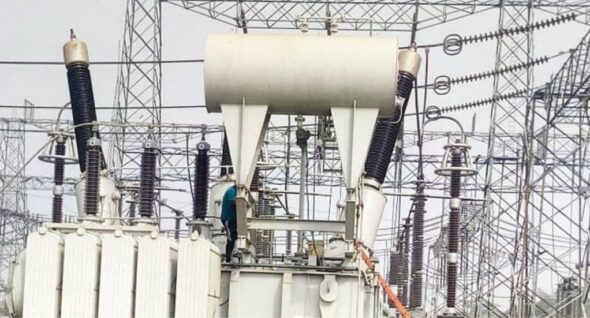
For decades, Nigerian energy policy operated under a single, flawed assumption: that national economic development requires a monolithic, centrally controlled transmission grid stretching from gas fields in the Niger Delta to every corner of the federation. This centralised paradigm has failed. The national grid, managed by the Transmission Company of Nigeria, suffers from outdated infrastructure, inadequate transformer capacity, frequent system collapses, and severe liquidity bottlenecks across the value chain.
The Ministry of Power must execute a decisive shift toward a modernised, hybrid energy model. Centralised grid expansion and decentralised renewable energy should no longer be treated as competing strategies or isolated policy silos. Instead, national planning must establish clear geographic and economic boundaries for grid extension versus off-grid deployment. In high-density industrial and urban corridors, the state must focus resources on reinforcing existing transmission corridors and enforcing disciplined, creditworthy distribution operations. In remote, rural, and low-density commercial regions, decentralised solar mini-grids and embedded power systems must take priority as primary generation sources.
Harmonising these two systems requires structural regulatory reform under the Electricity Act. The ministry must mandate clear “grid arrival” rules to protect private mini-grid developers who invest capital in off-grid areas. Under historical regulatory gaps, private mini-grid operators faced the constant threat of the national grid expanding into their operational areas, undercutting their tariffs and stranding their private capital without compensation. Clear regulatory protocols must establish that when the national grid reaches an established mini-grid zone, the private operator is granted the right to become an embedded distributor, sell bulk power to the main grid, or receive full financial buyout compensation backed by sovereign guarantees.
Furthermore, state governments, now empowered by constitutional amendments to regulate their internal electricity markets, must align their sub-national policies with national energy targets. Rather than duplicating administrative bureaucracy, state electricity regulatory commissions should adopt standardised licensing procedures, shared environmental standards, and unified tariff frameworks. Creating a seamless regulatory environment across state borders allows renewable energy developers to scale operations rapidly, integrating decentralised solar assets, biomass plants, and small hydro projects directly into localised distribution networks without waiting for central transmission lines that may take decades to arrive.
Social Equity in Transition: Protecting Vulnerable Populations from Energy Poverty
The global energy transition discourse championed in Western capitals often emphasises the immediate phase-out of fossil fuels. For Nigeria, where energy poverty remains widespread and domestic industry relies heavily on liquid fuels and natural gas for off-grid self-generation, adopting unadjusted international decarbonisation timelines presents severe economic risks. A rigid, top-down transition strategy risks deepening poverty for low-income households and micro-enterprises that cannot afford the upfront capital costs of immediate solar adoption.
Energy policy must treat natural gas as an indispensable, long-term transition fuel while building the infrastructure for long-term renewable expansion. Liquefied Petroleum Gas (LPG) represents the most viable immediate alternative to traditional biomass and kerosene for household cooking, directly mitigating the severe public health and environmental consequences of indoor air pollution and deforestation. Policy frameworks must avoid aggressive carbon taxation or broad fossil fuel subsidy removals that penalise poor households before accessible, affordable renewable alternatives exist.
To protect low-income consumers during the energy transition, the government must design targeted social safety mechanisms into tariff structures and technology deployment programmes. Rather than applying broad energy subsidies that disproportionately benefit wealthy urban consumers with high consumption volumes, state intervention should focus on direct capital subsidies for small-scale solar equipment, energy-efficient appliances, and clean cooking hardware targeting rural households and informal small businesses.
Cross-subsidisation models within the electricity tariff architecture must also be carefully managed. Under the current Band-based tariff system, high-volume commercial and residential consumers pay higher, cost-reflective rates to fund reliable supply, while lower-income bands receive lower tariffs. However, as wealthy consumers and industrial clients increasingly migrate off-grid using independent solar installations to escape high grid tariffs, the pool of cross-subsidising revenues shrinks rapidly. This dynamic leaves distribution companies with declining income, threatening their ability to maintain basic service to lower-income consumers. Energy policy must therefore balance cost-reflective pricing for commercial users with targeted public funding for universal service obligations, ensuring that lower-income households are not left stranded on deteriorating, underfunded distribution networks.
From Diplomatic Presence to Structural Execution
Nigeria’s return to the World Energy Council offers a valuable platform to shape global debates, challenge one-size-fits-all decarbonisation mandates, and build international partnerships. However, domestic energy transformation cannot be imported from international conferences or secured through diplomatic membership cards.
The metric of success for Nigeria’s energy policy will not be measured by the number of international forums attended or diplomatic communiqués signed by the National Member Committee. Success will be determined by concrete operational metrics: the reduction of total stranded generation capacity, the expansion of bankable mini-grid installations across rural communities, the financial stabilization of electricity distribution companies, and the steady reduction of the energy-poor population.
The Ministry of Power, the Nigerian Electricity Regulatory Commission, and the newly inaugurated governing board of the World Energy Council Nigeria must focus on hard administrative and regulatory work. They must enforce contractual discipline across the power value chain, eliminate administrative bottlenecks for private renewable developers, establish clear grid integration rules, and design social protection frameworks that insulate vulnerable citizens from energy price shocks. Only when international diplomatic engagements are tied directly to rigorous domestic reform will Nigeria convert its global energy presence into real, productive power for its people and economy.