
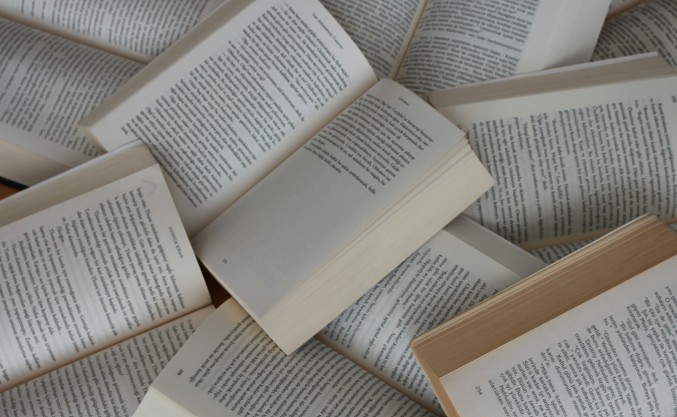
Physical books are finding new life among younger readers despite the rise of e-books, audiobooks and smartphones. Here is why readers are returning to print.
In a world where an entire library can fit inside a smartphone, physical books are making an unlikely comeback. For a growing number of readers, turning a page is becoming more appealing than swiping a screen. For years, the prediction seemed obvious.
Books would become digital. Libraries would shrink. Bookshops would disappear. The paperback would eventually become a relic of another era, much like CDs and DVDs. After all, why carry a book when a phone can hold hundreds?
Yet the story has not quite turned out that way. Physical books are still here — and, surprisingly, younger readers are helping to keep them alive. Recent research on Generation Z reading habits found that 65 per cent of Gen Z respondents had read at least one print book in 2025, up from 59 per cent in 2022. The same research found that more young people were visiting bookstores and libraries.
The generation that grew up surrounded by smartphones and social media is, in many cases, deliberately picking up something made of paper.
So, what is drawing readers back?
The appeal of something you can actually hold
Something is different about a physical book. It has weight. It has a smell. Its pages become creased with use. A reader can underline a sentence, fold a corner, place a bookmark between two chapters and eventually see evidence of how the book was read.
An e-book can provide the same words, but the experience is different. For some readers, the physicality of a book makes reading feel like an activity rather than another thing happening on a screen. And that distinction matters at a time when much of everyday life takes place digitally.
The phone is where people work, communicate, shop, watch videos, follow the news and scroll through social media. Reading on the same device can therefore make it difficult to separate reading from the constant stream of notifications competing for attention.
A physical book, on the other hand, does not vibrate when someone sends a message. It does not ask you to check Instagram. It simply sits there, waiting to be opened.
A break from the screen
The return of physical books is happening alongside a broader desire for offline experiences. Researchers studying Gen Z reading habits found that print books are particularly attractive partly because they offer an escape from the digital environment. Unlike phones and other connected devices, printed books do not constantly demand attention.
This may explain why the appeal of physical books extends beyond reading itself. A person sitting in a quiet corner with a paperback is doing something increasingly unusual: focusing on one thing. No notifications to clear and no algorithm deciding what should appear next.
For readers exhausted by the endless movement of digital content, that simplicity can be refreshing. BookTok changed the game. Ironically, social media has also helped physical books find new audiences. On TikTok, the BookTok community has turned reading into a highly visible online culture. Readers recommend books, react to plot twists, discuss characters and display their shelves to millions of viewers.
A book that might once have been discovered quietly in a library can now become an online sensation within days. The irony is hard to miss. A digital platform is helping people become interested in physical objects. Research into Gen Z reading has similarly found that printed books have a visual and social appeal that works particularly well in an age of social media.
Books are no longer simply something to read. For some young readers, they are also something to collect, photograph, exchange and talk about.
Bookshops are becoming more than places to buy books
The revival is also being felt in physical bookstores. In the United States, major booksellers and independent bookshops have been expanding after years when the future of physical bookstores appeared uncertain. Barnes & Noble, for example, has opened new locations while independent booksellers have also benefited from renewed interest in physical spaces.
The attraction is no longer simply purchasing a book. Bookshops can provide an experience. People browse shelves, discover books they were not searching for, attend literary events, meet other readers or spend time somewhere that is not home or work. The bookstore becomes a place to slow down. And in an increasingly connected world, places that encourage people to disconnect can become surprisingly valuable.
Nigeria’s relationship with physical books is more complicated
In Nigeria, however, the return of physical books comes with a major challenge: cost.
The country’s publishing and bookselling industry continues to face difficulties, including high production costs, expensive transportation, weak distribution networks and inadequate promotion. Booksellers and industry stakeholders raised these concerns at the 2025 National Conference on Reading. The rising printing costs also made books more expensive for readers. That creates a difficult contradiction.
There may be renewed interest in physical books, but many Nigerian readers still have to consider whether they can afford them. A reader who can download an electronic copy, sometimes free of charge, may find it hard to justify spending thousands of naira on a printed edition.
This is one reason the future of books in Nigeria is unlikely to be a simple choice between print and digital. It is more likely to be a mixture of both.
Digital is not disappearing
The return of physical books does not mean readers have abandoned technology. E-books remain convenient. Audiobooks let people consume stories while commuting, exercising or doing household chores. Phones and tablets provide instant access to books that might otherwise be difficult to find.
Nigeria’s bookselling industry is already adapting to this reality, with booksellers exploring online platforms and new ways of reaching readers. The future, therefore, may not belong exclusively to the paperback or the e-book.
It may belong to readers having both. Someone might listen to an audiobook during a morning commute, read an e-book while travelling and still purchase a physical copy of a favourite novel to keep at home.
Read Also: How Nigerian Publishing Is Navigating the Digital Age
Why the physical book still matters
The strongest argument for physical books is not technological at all. It is emotional. People remember the books they owned. A childhood novel with a torn cover. A textbook covered in notes. A novel borrowed from a friend. A book received as a gift. A favourite story sitting on a shelf years after it was first read.
Physical books can carry memories in a way that a file on a phone often does not. They can also be passed from one person to another. You can lend a book. You can sign it. You can give it as a present. You can discover a previous owner’s handwritten note inside a second-hand copy.
The book becomes more than its words. It becomes an object with a history.
The book was never really gone
Perhaps, then, the “return” of physical books is not really a return at all. The printed book never disappeared. It simply had to coexist with new ways of reading. And now, after years of being told that everything would eventually become digital, readers are discovering that convenience is not the only thing they value.
Sometimes they want to put the phone down, sit quietly, or turn a page. And perhaps that is the real lesson behind the resurgence of physical books: Technology may change how we access stories, but it has not eliminated our desire to hold them.