
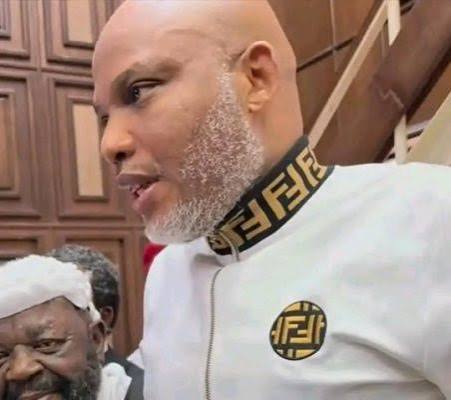
The Indigenous People of Biafra has declared a total political boycott of the ruling All Progressives Congress, accusing the Federal Government of frustrating the appeal filed by its detained leader, Nnamdi Kanu, against his conviction.
In a statement issued by its Media and Publicity Secretary, Emma Powerful, the proscribed group said it would shun the party’s rallies and reject its insignia until Kanu’s appeal is listed for hearing, declaring: “No listing, no participation.”
IPOB accused the government of failing to facilitate the hearing of the appeal against the November 20, 2025 judgment, alleging that the case remained unlisted at the Court of Appeal and that the government had yet to file its respondent’s brief. The group argued that the appeal raises fundamental constitutional questions concerning Kanu’s conviction under a law it claims had been repealed, and it urged the relevant authorities to ensure that the appeal proceeds, insisting that the courts should determine the legal issues rather than allow procedural delays to persist.
The group also raised concerns over what it described as the disappearance of the court file relating to Kanu’s alleged 14-month detention without trial following his discharge by the Court of Appeal on October 13, 2022, calling for the restoration of the file and accusing the authorities of frustrating efforts to secure judicial redress.
The boycott announcement marks an escalation of the group’s earlier threats. In a statement issued on September 1, IPOB gave the Federal Government 14 days to list and hear the appeal, warning that failure would force it to consider boycotting elections across what it calls Biafraland and beyond. “A government that cannot face its Court of Appeal has no right to demand our votes,” the earlier statement said. “A country that rushed to convict is now too frightened to defend the conviction.”
Beyond the legal battle, IPOB accused the Federal Government of applying double standards in its security operations, alleging that military operations, arrests and detentions targeting people in the South-East contrasted with the handling of armed groups in other parts of the country.
The group also criticised former Ebonyi State Governor and Minister of Works, David Umahi, over his role in the 2017 decision by South-East governors to proscribe IPOB, alleging that the move contributed to subsequent security crackdowns in the region. It further warned South-East politicians aligned with the APC against what it described as sacrificing the interests of the Igbo people for political benefits.
The group, however, directed its supporters to pursue the boycott peacefully, warning against harassment or threats against citizens because of their political affiliations. It reiterated its demand for Kanu’s immediate and unconditional release, the listing of his appeal and the restoration of the allegedly missing court file.
The APC and the Federal Government had yet to respond to the allegations as of the time of filing this report.
The boycott call lands in a charged pre-election environment. The 2027 general election is scheduled for January 16, with campaign activities already under way, and the South-East remains a contested political ground for the major parties. Whether the group’s directive carries weight with voters in the region is likely to become one of the questions the campaign answers, and the Federal Government’s response, or silence, on the alleged delays will shape that argument.