
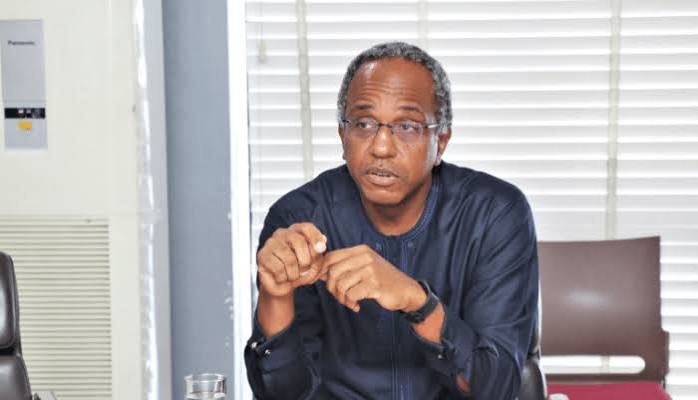
The governorship candidate of the Nigeria Democratic Congress in Lagos State, Funso Doherty, has demanded an apology from the organisers of Sunday’s Lagos governorship debate after their fact-checkers disputed his claim that Lagos earns more internally generated revenue than 31 other states put together. Doherty insists the official figures prove him right, and a separate review by an independent coalition of fact-checkers has since sided with him.
During the debate, which was organised by the Nigeria Debate Consortium ahead of the February 6, 2027 governorship poll, Doherty argued that Lagos does not suffer from a shortage of money but from a failure to turn its wealth into better services. He said the state generated N1.77tn in revenue in 2025, more than the N1.73tn earned by 31 states combined, citing data from the National Bureau of Statistics. The debate’s fact-checkers challenged the comparison during the exchange.
In a post on X on Sunday, Doherty said the checkers had got it wrong and that an apology was in order. He restated that, by the bureau’s figures, Lagos earned more than 31 states combined, and shared a breakdown of the states and their revenue, pointing to the NBS microdata portal as his source.
The official figures align with his central claim. The National Bureau of Statistics, in its 2025 report on internally generated revenue at state level, put Lagos at about N1.77tn, the highest of the 36 states and the Federal Capital Territory and roughly 34 per cent of the N5.15tn generated nationally. That figure was made up of N1.48tn in tax revenue and N292.64bn from the state’s ministries, departments and agencies.
The Nigerian Fact-checkers’ Coalition later published its own breakdown, putting the combined revenue of the 31 lowest-earning states at about N1.574tn, and rated Doherty’s central claim that Lagos out-earns 31 states combined as correct. The gap between his N1.73tn and the coalition’s N1.574tn does not change the outcome, since both fall below Lagos’s N1.77tn.
The wider data underline how concentrated Nigeria’s subnational revenue has become. The bureau’s report showed that the states and the FCT generated N5.15tn in 2025, a 40.93 per cent jump from N3.65tn in 2024, yet Lagos alone accounted for more than a third of it. Rivers followed at N428.42bn and Enugu at N406.77bn, both far behind, and by the bureau’s count Lagos earned more than the 22 lowest-ranked states put together.
Doherty, a former investment banker who has built his campaign around transparency and accountability, used the comparison to question how Lagos spends its earnings. He argued that despite the state’s large income, residents still contend with inadequate healthcare, weak schools and poor services, and that the problem lies in management rather than money.
This is not the first time he has pressed the state on its finances. He previously raised concerns about the transparency of the N4.237tn 2026 Lagos budget and called for its full details to be published before approval. He contested the 2023 governorship election and passed through the Peoples Democratic Party and the African Democratic Congress before emerging as the NDC candidate, with Tolani Animashaun as his running mate, for the 2027 race.
The row has sharpened attention on the debate itself, one of the first major platforms of the Lagos contest. It pits Doherty against the governing All Progressives Congress, which with its predecessor parties has controlled Lagos since 1999, and a field of other opposition candidates. With the poll set for February 2027, the quarrel over one set of revenue figures points to the argument likely to define the campaign: not whether Lagos is rich, but whether its wealth reaches its people.