
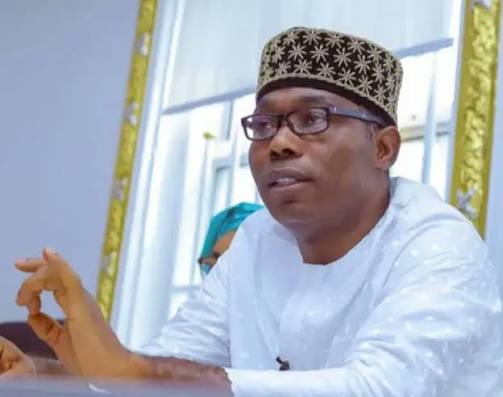
The presidential candidate of the Social Democratic Party, Prince Adewole Adebayo, has promised to build the equivalent of 20 Dangote refineries within four years and to force the pump price of petrol down to N200 a litre if he wins the 2027 election. He made the pledge on Nigeria Info’s Road to 2027 programme, placing cheaper fuel at the heart of an economic plan that leans heavily on local refining and exports.
Adebayo said a government under him would create “even 20 Dangotes for exports,” arguing that Nigeria’s long coastline makes large refineries built beside the water a natural fit. His idea, he explained, is to back refineries that sell abroad and earn foreign exchange for the country, while keeping ordinary Nigerians at home shielded from international pump prices. A teacher who does not earn an international salary, he argued, should not be made to pay an international price for petrol.
To pull in that investment, he said refiners would be offered long-term tax rebates, regulatory certainty and 90 days to pay for crude supplied by the government, a window he described as twice the time a plant needs to refine and sell a cargo. He also pledged that the four state-owned refineries would run, and that private refiners willing to serve the domestic market would be handed local crude at no cost.
Separately, Adebayo has said he would hold the price of petrol, cooking gas and aviation fuel at no more than N200 a litre within his first year, insisting Nigeria’s refineries remain serviceable and pointing to century-old plants in the United States that are still in use. That target sits far below today’s reality. National Bureau of Statistics figures put the average pump price at about N1,035 a litre in January 2026, climbing to roughly N1,533 by April, after President Bola Tinubu ended the fuel subsidy on 29 May 2023 and prices rose from under N200 to well above N1,000.
The scale of his comparison is worth weighing against the plant he invokes. The Dangote refinery in Lekki, the world’s largest single-train facility, took more than a decade and upwards of 19 billion dollars to build before it reached its full designed capacity of 650,000 barrels a day in February 2026, the first refinery anywhere to hit that mark in a single train. By the company’s own account it can supply up to 75 million litres of petrol a day to the domestic market, and its owner, Aliko Dangote, has since announced plans to roughly double capacity to 1.4 million barrels a day by 2028.
Adebayo’s confidence in the state refineries also runs against their recent record. The plants at Port Harcourt, Warri and Kaduna carry a combined installed capacity of about 445,000 barrels a day, yet they have produced little for more than a decade despite billions of dollars poured into repairs. The NNPC group chief executive, Bayo Ojulari, said in February 2026 that the corporation had shut them after assessments exposed what he called value leakage, and the company has since been hunting for private technical partners, reaching a preliminary agreement in April 2026 with two Chinese firms to overhaul the Port Harcourt and Warri facilities.
The pledges form part of a wider policy document Adebayo has titled “Farewell to Poverty and Insecurity,” which also commits to 36 modular refineries and electricity generation of between 50,000 and 75,000 megawatts. He enters the race having contested in 2023, and will line up against an incumbent in Tinubu who defends subsidy removal as the foundation of Nigeria’s recovery, alongside opposition heavyweights Atiku Abubakar of the African Democratic Congress and Peter Obi, all three chasing the same voters worn down by the cost of living. How Nigerians weigh his targets, as a credible route to cheaper fuel or a promise beyond reach, will help decide how far his message carries before the polls.