
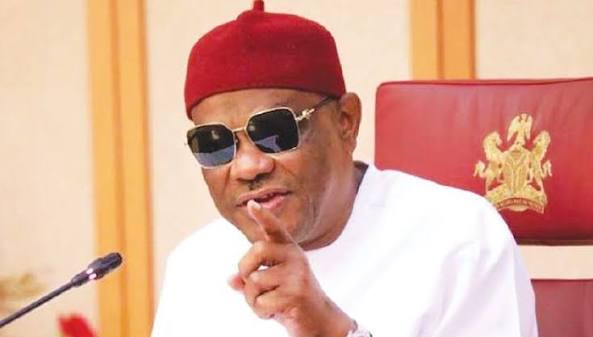
The political atmosphere in Rivers State is becoming increasingly competitive ahead of Nigeria’s 2027 general elections, with the African Democratic Congress (ADC) and allies of Minister of the Federal Capital Territory, Nyesom Wike, exchanging remarks over the likely direction of the contest.
The latest disagreement followed comments attributed by the ADC to Wike during a civic reception in Omagwa, Ikwerre Local Government Area of Rivers State, where the minister was reported to have expressed confidence that Rotimi Amaechi, the party’s vice-presidential candidate, would be defeated on election day.
The Rivers State chapter of the ADC responded by arguing that electoral victories are determined by voters through the ballot process rather than political declarations or public confidence from individual politicians.
The exchange highlights the growing political attention surrounding Rivers State, a strategically important state in Nigeria’s South-South region, as political parties begin positioning themselves ahead of the 2027 elections.
In a statement issued in Port Harcourt, Rivers ADC Chairman Chukwudi Dimkpa criticised what he described as excessive confidence from political opponents.
Dimkpa argued that elections are ultimately decided through voting, counting and the declaration of results by the Independent National Electoral Commission (INEC), rather than predictions made before polling day.
“Elections are not won by boasts, intimidation or political strongmen announcing results in advance. Rivers people will vote, the votes will be counted, and INEC, not Wike will declare the winner,” he was quoted as saying.
The statement represented the ADC’s response to what the party viewed as comments directed at Amaechi, a former Rivers State governor and a prominent figure in the state’s political landscape.
However, the comments and interpretations surrounding the reception remain part of competing political narratives ahead of the election cycle.
Rivers State has historically played an influential role in Nigeria’s national politics because of its economic importance, population and strategic position in the Niger Delta.
The state has also experienced intense political competition among major actors, particularly over control of political structures and influence at both state and federal levels.
The 2027 elections are expected to bring renewed competition as political parties seek support across Nigeria’s states.
INEC has announced preparations for the 2027 general elections, with the commission responsible for managing the electoral process, including timelines, party participation requirements and election administration.
The disagreement between the ADC and Wike reflects a broader pattern in Nigerian politics where political parties and influential figures often test public narratives ahead of elections.
Political observers generally note that early claims of strength by parties and candidates do not determine electoral outcomes, which depend on multiple factors including party organisation, candidate acceptance, campaign strategies, voter participation and the credibility of the electoral process.
The ADC statement also criticised the timing and setting of the event where Wike’s comments were allegedly made, claiming that the occasion coincided with activities surrounding the burial of Amaechi’s mother.
The party described the situation as inappropriate, while urging Rivers residents not to be influenced by political pressure.
These claims represent the position of the ADC and have not independently established the intentions of those involved.
A central point raised in the ADC’s response was the role of INEC in determining election outcomes.
Under Nigeria’s electoral system, INEC is responsible for conducting elections and announcing official results after voting procedures have been completed.
Political parties may express confidence, criticise opponents or promote their candidates during campaigns, but the final determination of winners comes through the legally established electoral process.
As preparations for 2027 continue, political activities are expected to increase nationwide, with parties seeking to build alliances, promote candidates and persuade voters.
While political exchanges often dominate public discussions before elections, the eventual outcome of the 2027 contest will depend on the choices of voters and the administration of the electoral process.
For Rivers State, where political competition has remained particularly visible, the coming months are likely to bring more debates over leadership, development priorities and political representation.
The latest ADC-Wike disagreement is therefore one episode in a wider political process that will continue to unfold as parties prepare for the 2027 elections.