
A fresh political fault line has opened over who should carry the blame for Nigeria’s worsening kidnapping crisis, with the Presidency insisting that state governors and local council chairmen, not the Federal Government, must answer for abductions that happen on their soil.
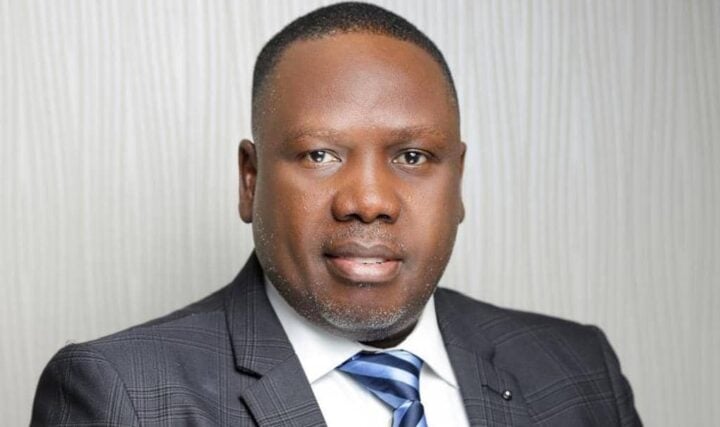
The position was laid out by Daniel Bwala, Special Adviser to President Bola Tinubu on Policy Communication, during an appearance on The Morayo Afolabi-Brown Show on Wednesday. Pressed on the Federal Government’s handling of the Oyo State schoolchildren abduction and the broader wave of insecurity, Bwala argued that responsibility rests closest to where the crimes occur. “Every kidnapping and abduction that takes place in any state of Nigeria, hold that governor responsible. All the kidnappings have taken place in local government,” he said.
His intervention comes at a raw moment. On May 15, 2026, gunmen stormed three schools, Baptist Nursery and Primary School, Yawota, Community Grammar School and L.A. Primary School, in the Esiele and Yawota communities of Oriire Local Government Area, seizing 39 pupils and seven teachers, including a principal. The victims, some as young as two years, have now spent more than 50 days in captivity. A mathematics teacher, Michael Oyedokun, was beheaded a day after the raid, while a second teacher and other individuals died during the attack and subsequent rescue efforts. The Nigerian Army has attributed the assault to Boko Haram, marking an alarming spread of the insurgency into the South West, long considered one of the country’s safest regions.
Bwala pointed to the Safe Schools Initiative, a federal programme designed to fund perimeter fencing, early warning systems and security checks in schools, and urged citizens to demand answers from state authorities. “There was this thing called the Save the School Initiative, in which monies were given to states to create perimeter fencing, early warning signs and all of those checks in schools. Ask your governor where that money went to,” he said.
That programme carries a troubled record. Conceived after the 2014 Chibok abduction, it began with a 20 million dollar commitment, split evenly between the Federal Government and private partners, and was later reinforced by the National Plan on Financing Safe Schools covering 2023 to 2026, with a projected requirement of N144.86bn and a N15bn allocation in 2023. Yet Senate investigations indicate that more than 1,680 schoolchildren have been kidnapped and about 180 schools attacked since 2014. A 13-member Senate ad hoc committee, chaired by Orji Uzor Kalu, was set up to probe how roughly 30 million dollars earmarked for the scheme was spent, but is yet to submit its findings.
Bwala further alleged that local governments are being starved of funds meant for them, citing Oyo. “In three local governments in Oyo, I said this local government has 600 million coming here every month, and that’s how it is across Nigeria,” he said, arguing that direct funding could strengthen maternal healthcare, basic education and community vigilante security.
He tied the Federal Government’s limited reach to constitutional design, noting that the President holds no direct authority over governors. “The unfortunate part of the democracy we are practising today is that it does not place the President as a head boy or prefect of the governors,” he said, contrasting Tinubu’s approach with former President Olusegun Obasanjo’s confrontations with state governors.
On the abducted pupils, Bwala said the priority remained a safe release. “The number one responsibility of government in a hostage-taking situation is to rescue them and rescue them alive. If you use force carelessly, you may end up jeopardising the lives of the people that are kidnapped,” he said.
His remarks feed directly into the long-running debate over state policing and the sharing of security responsibility across Nigeria’s three tiers of government, a conversation the National Assembly has revived as abductions multiply from the North East to the South West.