
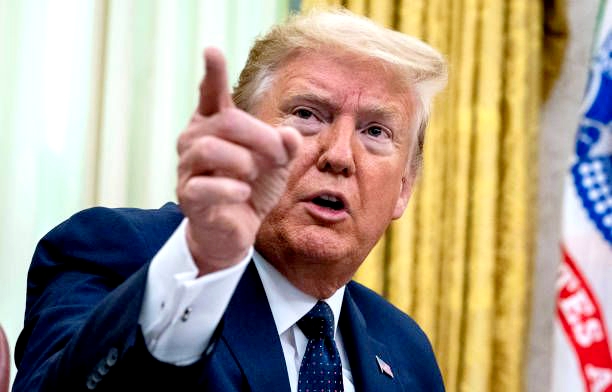
By banning major news networks and altering the historic TV pool system, the White House not only triggers a First Amendment legal battle, but sets a dangerous precedent for press freedom globally.
A long-standing democratic tradition broke down in the heart of Washington when the executive branch altered the mechanics of presidential news gathering. In a decision that rewrites the ground rules of American press access, the White House stripped CNN of its scheduled duty as the principal television pool representative for the United States press corps, creating ripple effects that threaten to reshape media independence and government accountability across the globe.
The administrative manoeuvre represents far more than an isolated corporate dispute between a cable news network and an administration. By removing an assigned primary broadcast network from the collective pool rotation, the executive branch has disrupted a decade-old structural apparatus designed to guarantee independent public observation of the head of state – setting a precedent that authoritarian regimes worldwide are already watching closely.
The fallout was immediate. Journalists representing CNN, alongside colleagues from MS NOW and Politico, found themselves turned away at the gates of the White House complex. In response, affected media organisations began preparing First Amendment legal filings to challenge the administration’s restrictions in federal court, setting up a high-stakes constitutional showdown over freedom of the press and executive authority.
Dismantling a Historic Compromise
For generations, presidential press coverage in the United States has relied on a shared cooperative mechanism known as the press pool. Because physical space inside the White House, on Air Force One, and at global summits is inherently restricted, news organisations formed a press consortium. Under this framework, a rotating group of journalists records the president’s daily public activities and immediately distributes the raw footage, audio, and written dispatches to the entire global media landscape.
The television component of this framework has historically rested on five major broadcast networks: ABC, CBS, CNN, NBC, and Fox News. Each day, one network assumes financial and logistical responsibility for providing a full technical crew – a camera operator, an audio technician, and a field producer – to follow the president. This single crew serves as the eyes and ears for thousands of local television stations, international channels, and digital platforms worldwide.
The standard rotation was set to place CNN in charge of primary broadcast pool coverage on a Monday, coinciding with the president’s high-profile travel to New York for the annual United Nations General Assembly.
That institutional routine dissolved when the administration issued its official daily press schedule on Sunday evening. The White House email conspicuously omitted any primary television network for the day’s events. Instead, Hearst – an operator of local television stations – was designated as a secondary crew for Washington events, while Real America’s Voice, a smaller conservative outlet, was named secondary crew for the New York trip.
By replacing the primary television network with secondary outlets that typically lack full pool distribution responsibilities, the administration disrupted the operational link through which the broader international public views elected U.S. leadership.
The Escalation on the Digital Front
Confirmation of the systemic lockout came directly from the executive branch. The president publicly affirmed the ban on social media, posting a message declaring that CNN, MS NOW, and Politico were excluded from White House access.
The digital announcement underscored the political nature of the dispute. The decision to strip a network of its pool duties came after explicit public statements signalling an intent to bar specific news outlets from official briefings and presidential travel.
The exclusion has created severe logistical and financial uncertainty surrounding the UN General Assembly coverage. Operating a presidential press pool requires substantial financial expenditure, with multi-day domestic and international trips regularly costing media organisations tens of thousands of dollars in shared travel costs, equipment freight, and satellite transmission fees.
Beyond the immediate administrative confusion, the ban places the remaining broadcast networks in a delicate diplomatic position. Media analysts and press freedom advocates immediately raised questions regarding how ABC, CBS, NBC, and Fox News would navigate the exclusion of their consortium partner, with prominent commentators urging a unified response to preserve the integrity of global pooling standards.
Constitutional Resistance and Legal Battles Ahead
Faced with physical exclusion from the White House compound, affected media organisations signalled that they would not yield to administrative pressure. CNN issued a statement affirming its commitment to news gathering regardless of official barriers, emphasising that its mandate to report on government activities remains unchanged despite physical access restrictions or official attempts to impede journalistic work.
The network further stated that its access rights are protected under the United States Constitution, describing the administration’s unilateral exclusion as an unlawful assault on fundamental democratic protections.
Legal scholars anticipate that the upcoming First Amendment lawsuit will centre on established constitutional precedents regarding equal access and arbitrary exclusion. While the executive branch retains wide latitude over internal security, historical legal rulings have consistently held that government officials cannot selectively grant or revoke press credentials based on editorial perspective or critical reporting.
Erosion of Global Press Freedom Norms
The crisis in Washington reverberates far beyond the borders of the United States. For decades, Western democracies – particularly the United States – have held up the press pool system as the international gold standard for state-level transparency and media protection.
When the leader of the world’s prominent democracy selectively bans media organisations and dismantles collective pooling mechanisms, it fundamentally weakens global norms. Across developing democracies and regions where independent reporting faces constant pressure – including West Africa, South America, and Eastern Europe—autocratic leaders frequently mirror Washington’s media tactics.
By weaponising press credentials and state access, the U.S. administration provides a dangerous playbook for regimes eager to justify restricting local journalists, shutting down foreign news bureaus, or replacing independent press pools with state-sanctioned outlets. The White House confrontation demonstrates how quickly global journalistic standards can erode when executive power operates without democratic restraint.