
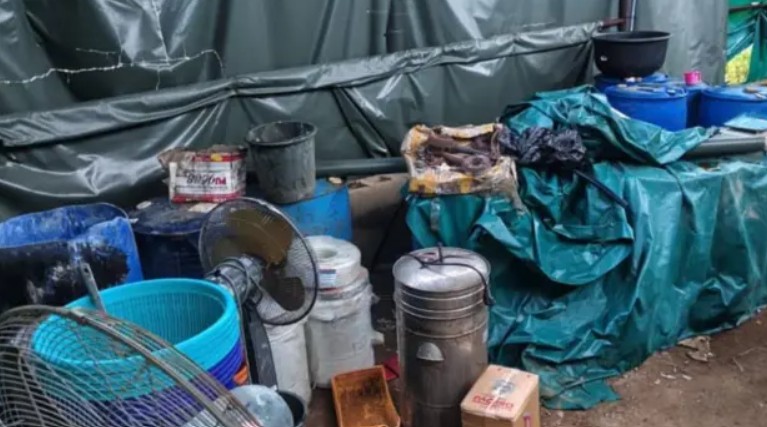
The Federal High Court in Lagos has ordered the remand of three Mexican nationals and seven Nigerian accomplices following the discovery of an industrial-scale methamphetamine laboratory. The National Drug Law Enforcement Agency arraigned the ten defendants on an 11-count charge bordering on illegal drug manufacturing, chemical diversion, and international narcotics trafficking. The anti-graft agency values the seized 2.67 tonnes of crystal meth and precursor chemicals at an estimated 363 million dollars, or roughly ₦480 billion. Abuja is confronting an aggressive expansion of South American drug cartel operations within its rural borders.
The defendants pleaded not guilty to all counts presented before the court. Justice Ayokunle Faji rejected an immediate verbal request for bail, directing that the suspects remain in the custody of the Nigerian Correctional Service. The prosecution argued fiercely against their release, highlighting the sophisticated, transnational profile of the network and the severe flight risk posed by the foreign nationals. The court has scheduled specific dates in mid-July to hear formal bail applications and commence a rapid trial.
The judicial showdown follows a series of highly coordinated, multi-state raids executed by specialized anti-narcotics strike teams. Investigators spent months tracking the syndicate before storming a highly concealed factory site located deep within the Abidagba forest of Ogun State. Simultaneous operational sweeps hit two luxury residential properties in an upscale neighborhood of Lagos State, which the cartel utilized as administrative command centers. The sophisticated laboratory layout represents the largest single industrial drug manufacturing facility ever uncovered in West African history.
The presence of South American cartel specialists signals a dangerous tactical evolution in the domestic narcotics trade. Executive Chairman of the anti-drug agency, Buba Marwa, noted that local syndicates are actively importing technical expertise from Mexican cartels to scale up domestic production. The three Mexicans allegedly acted as production consultants, utilizing advanced chemical processes that bypass traditional precursor controls. By manufacturing the synthetic drugs locally, the cartel sought to eliminate the logistical risks of importing finished products before shipping them to lucrative Asian and European markets.
The scale of the ₦480 billion bust underscores the massive financial volumes driving the global illicit drug economy. The synthetic manufacturing process utilized at the forest site was built to generate massive weekly yields, far outstripping the capacity of previous domestic labs. Apart from the finished crystal meth, the state seized thousands of litres of highly toxic chemical waste that threatened to permanently poison local water tables. The presidency has directed intelligence agencies to widen their tracking web to identify the formal financial institutions laundering the cartel’s immense profits.
Abuja must now prove its judicial capacity to deliver swift, maximum penalties to foreign cartel operatives. For years, international drug enforcement networks have warned that West Africa’s porous borders and weak regulatory systems make it an attractive hub for global syndicates. A sluggish or compromised prosecution will only invite bolder incursions by international syndicates. The state must use this landmark trial to send an unequivocal message to global syndicates: Nigeria will not serve as a safe production floor for the international drug trade.