
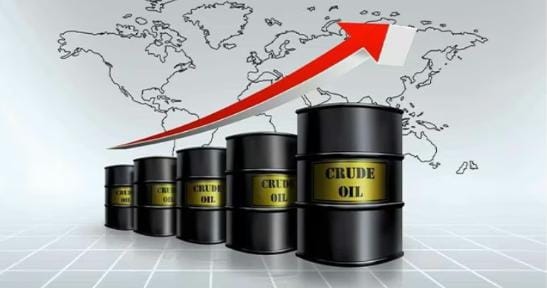
Global crude prices surged above 107 dollars per barrel on Thursday, dealing a direct blow to fuel consumers worldwide. Brent crude jumped by 6.1 per cent to 107.40 dollars in London, while West Texas Intermediate climbed 6.2 per cent to cross 102 dollars in New York. The sudden rally marks the return of triple-digit oil prices for the first time since May. Energy traders reacted swiftly to a worsening supply crunch across the Middle East. Escalating combat around the Strait of Hormuz and the Red Sea has choked essential tanker routes. That shipping freeze quickly cascaded into domestic markets thousands of miles away. In Nigeria, pump prices for diesel and petrol reached historic highs overnight. The global energy crisis has arrived with brutal force.
The primary engine of this price shock sits in the maritime corridors of the Persian Gulf. Commercial traffic through the Strait of Hormuz has slowed to a crawl as American and Iranian forces trade direct strikes. Daily crude outflows through the channel recently plunged below two million barrels, down from normal flows of roughly nine million barrels. Shipping intelligence confirms that no supertankers have braved the waterway over the past week. Simultaneously, Yemen’s Houthi rebels seized the strategic Red Sea port of Mocha, tightening their grip on the Bab al-Mandeb strait. Jason Tuvey of Capital Economics warned that regional fighters are systematically seizing the strategic initiative. A maritime corridor that moves a fifth of the world’s petroleum now resembles a naval combat zone. Insurance underwriters have effectively abandoned the route.
The resulting price ripples hit Nigerian cities with devastating speed and scale. Automotive Gas Oil, commonly known as diesel, reached 2,000 naira per litre in commercial hubs like Lagos and Warri. Marketers in Port Harcourt quoted diesel as high as 2,100 naira per litre on Thursday. Petrol prices followed suit, climbing past 1,400 naira per litre in northern and eastern states. The landing cost of imported fuel jumped to 1,311 naira per litre within hours of the crude price surge. Domestic retailers now treat 1,300 naira for petrol and 2,000 naira for diesel as minimum benchmarks for new stock. Higher fuel costs will soon filter directly into food markets and bus fares. Household budgets will bear the full brunt.
Rising pump prices expose a painful paradox inside the Nigerian economy. Domestic refining capacity expanded significantly this year, led by the giant Dangote Petroleum Refinery in Lekki. Marketers had hoped that local refining would insulate Nigerian motorists from global energy storms. That hope failed to survive contact with market reality. Dangote held its wholesale petrol price at 1,266 naira per litre on Thursday, yet replacement costs keep rising. Refineries must pay international market rates for their crude feedstock, whether they buy from domestic wells or foreign suppliers. Distribution networks still run on imported parts and expensive lorry transport. Domestic processing softens the blow, but it cannot cancel the laws of supply and demand.
The broader industrial fallout threatens to derail fragile economic growth across the country. Manufacturers rely on industrial diesel generators to keep factory floors humming amid chronic national power failures. Logistics firms burn millions of litres of diesel every day to move goods across long road corridors. Business owners cannot absorb these energy spikes without raising wholesale prices on consumer basics. Bread, cement, and packaged staples will quickly register the rising cost of a barrel of crude. Smaller transport operators face immediate cash crunches as commuters push back against higher bus fares. Factory closures and job losses often follow sudden energy shocks. Running an industrial enterprise on diesel power now borders on commercial ruin.
Financial analysts warn that the current energy rally represents an enduring shift rather than a temporary spike. S&P Global Energy announced that it no longer expects Middle East production to return to pre-war volumes before late 2027. The rating agency revised its price model, projecting crude to fluctuate between 80 and 100 dollars for the foreseeable future. That projection shatters early assumptions that the Washington-Tehran standoff would end within months. Meanwhile, the Organisation of the Petroleum Exporting Countries cut its global demand growth forecast for a fifth straight month. Weaker global demand matters little when physical barrels cannot safely cross the sea. Traders care only about the tankers that can actually deliver fuel to port. Supply fears outweigh every other economic calculation.
Central bankers across the globe now confront a sharp resurgence of imported inflation. In the United States, average retail diesel prices passed six dollars a gallon for the first time in history. Higher transport costs feed directly into headline consumer price indices across Europe, North America, and Asia. Central banks that recently began lowering borrowing rates may have to pause or reverse monetary easing. Higher interest rates in Western capitals will strengthen the dollar and weaken developing currencies like the naira. A weaker naira makes replacing refined fuel shipments even more expensive for domestic marketers. Financial markets must prepare for higher inflation and higher borrowing costs. Cheap energy will not return anytime soon.