
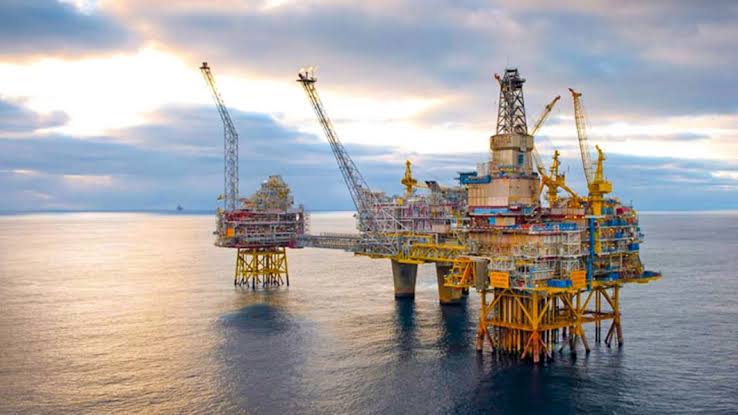
Nigeria Stakes $50bn Offshore Bet On New Deep Water Tax Order
Nigeria is pinning fresh hopes on its deep offshore fields to lift crude output and shore up strained public finances, after President Bola Tinubu approved a tax incentive that the upstream regulator says could draw as much as $50 billion in investment and add about one million barrels per day to national production.
The Deep Offshore Oil and Gas Projects Incentives (Tax Remission) Order, 2026, also referred to as Executive Order 9, was approved on 11 August 2026. According to a statement from the State House, the framework replaces the older practice of negotiating terms project by project with a single set of transparent eligibility rules, a move Abuja says will give investors greater certainty and speed up decisions on stalled developments. The State House said the order also allows the Nigerian National Petroleum Company Limited, as the government’s counterparty under Production Sharing Contracts, to amend eligible agreements.
The Nigerian Upstream Petroleum Regulatory Commission, NUPRC, has set out what it expects the policy to achieve. Its Commission Chief Executive, Mrs Oritsemeyiwa Eyesan, speaking through the Executive Commissioner for Development and Production, Engineer Enorense Amadasu, said the order could unlock up to $50 billion in new capital and raise crude oil and condensate output by nearly one million barrels per day within four to five years. The projections were made during an appearance on the Nigerian Television Authority and confirmed in a statement by the commission’s spokesperson, Eniola Akinkuotu.
These are forecasts by the regulator rather than confirmed inflows, and their delivery depends on international oil companies taking Final Investment Decisions on projects that have so far remained on the drawing board. The commission said nine developments already carry approved Field Development Plans and are awaiting those decisions. The most cited is the Shell operated Bonga South project, valued at about $10 billion, which the NUPRC expects to come on stream in 2027. That field has been held up in pre investment limbo for years over fiscal disagreements, and its progress is widely viewed as the first real test of the new order.
The renewed focus reflects a long standing structural problem. According to the NUPRC, Nigeria currently produces about 1.7 million barrels per day of crude oil and condensate, with deep offshore operations accounting for roughly 24 per cent of oil output and 19 per cent of gas. The commission said the country has produced more than 4.6 billion barrels from its deep offshore assets to date, a volume it likened to about 5,000 tanker cargoes.
That contribution has become more important as international majors divest from onshore and shallow water fields, where theft, pipeline vandalism and community disputes have eaten into output for years. Deep offshore projects sit far from those pressures but require enormous capital and long lead times, which is why fiscal terms weigh so heavily on whether they proceed.
The order is not the first attempt at this. On 28 February 2024, President Tinubu signed three executive orders aimed at improving the economics of deep offshore and non associated gas developments. Those measures have yet to reverse the wider production trend, which underlines why the 2026 order ties its tax relief to measurable output and includes local content conditions requiring that engineering, fabrication and marine logistics be carried out within Nigeria to access the fuller benefits.
The numbers explain the urgency. Nigeria’s 2026 budget, signed into law as the N68.32 trillion Appropriation Act, rests on an oil benchmark of $64.85 per barrel and a production assumption of 1.84 million barrels per day. Actual output has consistently fallen short of that budget target even when it clears the country’s OPEC quota of 1.5 million barrels per day.
Production data through 2026 show the volatility. Output stood at about 1.459 million barrels per day in January, slipped to 1.31 million in February, then recovered through the second quarter. By June it reached a level described as the highest monthly crude production since April 2020, before easing to around 1.505 million barrels per day of crude in July, the third consecutive month above the OPEC quota. Combined crude and condensate output in July was about 1.67 million barrels per day.
Even so, the country underproduced its budget benchmark. An analysis of NUPRC data showed liquids output averaged about 1.626 million barrels per day in the first half of 2026, some 213,000 barrels per day below the budget target. That translates to a shortfall of about 38.4 million barrels and an estimated gross revenue gap of roughly $2.49 billion, a figure that feeds directly into the fiscal deficit. With Brent trading above the benchmark for much of the period, the true value of the lost barrels is likely higher.
Against that backdrop, the government’s stated ambition is to raise crude production to two million barrels per day by 2027 and three million by 2030, targets set by the NNPC. The extra one million barrels the NUPRC associates with deep offshore would go a long way toward the nearer goal, if the investment materialises.
The midstream and downstream regulator has echoed the emphasis on stability. Speaking at an industry event, an official of the Nigerian Midstream and Downstream Petroleum Regulatory Authority said investors were generally willing to manage commercial risk but found regulatory uncertainty far harder to accept, describing predictable rules as central to attracting long term capital.
What is confirmed is that the order has been signed and that deep offshore remains a growing share of national output. What remains uncertain is whether the incentive will convert approved plans into firm investment quickly enough to close the gap between Nigeria’s production promises and its budget arithmetic. That answer will come not from Abuja’s projections but from the boardrooms where the next round of Final Investment Decisions is taken.