
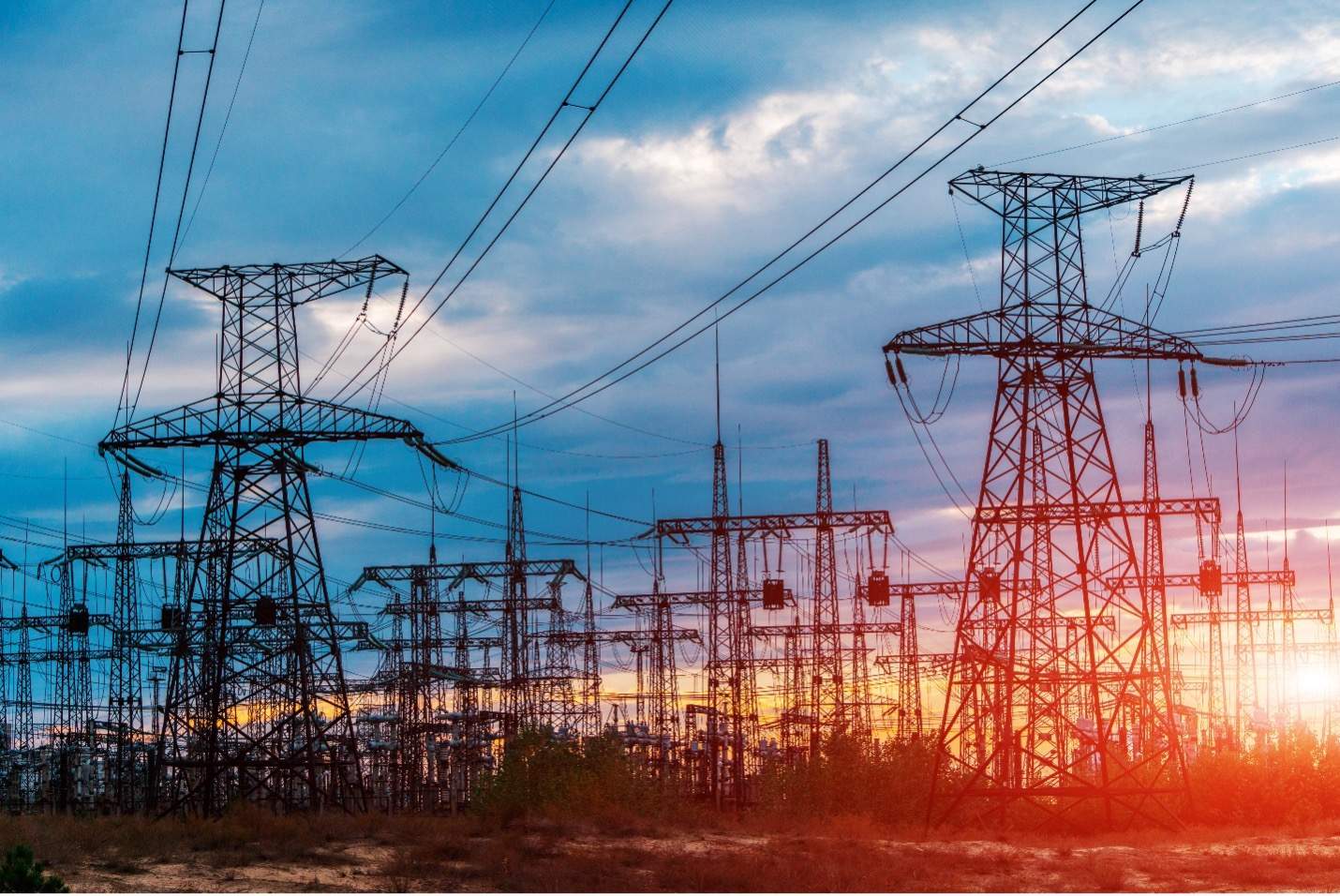
The Federal Government has launched a campaign to ring-fence industrial clusters with continuous electricity, starting with a 50-megawatt captive power project for the Idu Industrial Estate in Abuja. Minister of State for Industry John Owan Enoh announced the initiative during a groundbreaking ceremony in the capital on Thursday. The programme marks a quiet admission of defeat regarding the national grid. Rather than waiting for thousands of miles of dilapidated transmission lines to improve, policymakers are decoupling industrial parks from the general network entirely. The administration hopes to cut factory operating expenses and generate 180,000 jobs through targeted captive energy schemes.
The engineering reality behind the announcement reveals the enormous chasm between official rhetoric and current output. Private developer Welbeck Electricity Distribution Limited will initially supply only 10 megawatts from a generation site near the Ajaokuta-Kaduna-Kano gas pipeline in Zuba. A 33-kilovolt line will wheel that initial trickle to factories inside the Idu hub. The remaining 40 megawatts will only materialise after state contractors physically extend the gas pipeline into the industrial zone itself. Even when the full 50-megawatt plant goes live, it will barely dent local demand. The Idu cluster alone requires between 300 and 400 megawatts to run at full capacity.
Nigerian manufacturers spend disproportionate capital on private diesel generators to survive recurring blackouts. Those off-grid costs inflate wholesale prices, stifle export margins, and price domestic goods out of regional markets. Owan Enoh linked the intervention directly to President Bola Tinubu’s target of building a one-trillion-dollar national economy. That macro ambition cannot survive on raw commodity exports and expensive private power generation. Welbeck intends to sell initial supply allocations to local small and medium-sized enterprises. Whether tiny firms can afford bespoke commercial gas tariffs remains an open question.
Technical audits are also underway across three other major manufacturing corridors. Federal planners have singled out the Lagos industrial belt, the Abuja-Kaduna route, and the Enugu-Onitsha axis for immediate ring-fenced supply. The Lagos corridor alone accounts for roughly 40 per cent of total national electricity demand. The Ministry of Power expects grid interventions along that single southwestern corridor to salvage or create 180,000 industrial jobs within six months. Similar promises have greeted Nigerian boardrooms for two decades without altering factory closures.
Decentralised energy generation solves the immediate transmission bottleneck, but it introduces severe upstream risks. Gas producers routinely choke feedstock deliveries to domestic power plants because wholesale buyers fail to pay bills on time. Gas pipelines also face constant sabotage and tapping across transit states. Generating electricity right at the wellhead and wheeling it short distances shields manufacturers from distant grid collapse. Yet that model still requires secure, uninterrupted pipeline pressure to turn turbines every morning. Physical security around pipeline infrastructure remains the true weak link in the chain.
The administration is effectively establishing a two-tier electricity market. Privileged industrial corridors receive captive generation and ring-fenced distribution networks, while residential neighbourhoods contend with load-shedding and frequent system collapses. That economic triage makes commercial sense given Nigeria’s urgent need for jobs and foreign exchange. Factories create payrolls; residential living rooms merely consume subsidies. Even so, the policy shifts political friction to ordinary consumers who watch power diverted to industrial enclaves.
Private capital will only back captive generation if distribution firms collect cash cleanly from commercial tenants. In the past, industrial estates suffered from unmetered consumption, illegal line tapping, and chronic tariff defaults. Welbeck and its state partners must enforce rigid payment controls from the first day of transmission. Investors cannot service equipment loans if commercial tenants treat captive power as an entitlement. Sustainable private generation requires ruthless metering and immediate disconnections for non-payment.
Breaking the economy out of its low-growth trap demands reliable kilowatt-hours, not ministerial ceremonies. The Idu project represents a sensible retreat to localised pragmatism after decades of wasteful central grid expenditure. If Welbeck keeps the gas burning and machines humming across the industrial zone, the model will spread quickly to other commercial centres. If the turbines fall silent over gas debts or tariff disputes, Nigeria will have merely added another white elephant to its vast museum of abandoned infrastructure.