
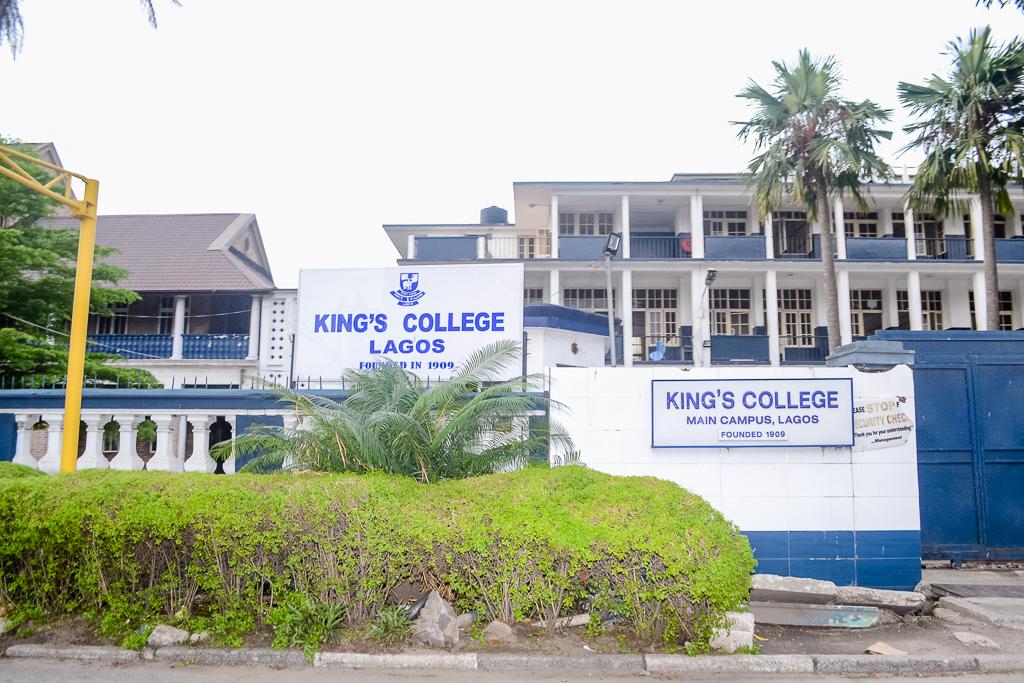
The Federal Government moved on Monday, 15 September 2026, to calm one of the fiercest disputes yet over its education reforms, giving a firm assurance that no worker at King’s College, Lagos, would lose their job because of a controversial arrangement handing management of the 117-year-old school to its alumni association.
The Minister of Education, Dr Maruf Tunji Alausa, gave the pledge after a high-level meeting in Abuja with the Trade Union Congress and other stakeholders. He said all academic and non-academic staff would continue to be treated under the Public Service Rules, particularly in matters of deployment, and that there would be “no demonisation or punishment” of any member of staff over the dispute. At the same time, he confirmed that the arrangement allowing the King’s College Old Boys’ Association to run the institution would go ahead.
The meeting produced a temporary truce. TUC General Secretary, Comrade Nuhu Toro, announced the suspension of the industrial action the congress had directed against its affiliates, and academic activities were ordered to resume in Federal Unity Colleges. A seven-member committee was constituted to re-examine the concerns raised by the unions and review the agreement already signed. It is drawn from two representatives of the Federal Ministry of Education, including the Minister of State for Education and the Acting Permanent Secretary, one from the Federal Ministry of Labour and Employment, two senior TUC representatives, and two from KCOBA, and is expected to conclude within one to two weeks. Toro was careful to stress the limits of the ceasefire. “Suspending an action is not calling off,” he said, warning that the unions could resume immediately if dissatisfied with the committee’s findings.
The climbdown followed a nationwide shutdown that had left students at home at the start of the school year. The dispute centres on a decision, communicated in a letter dated 4 September 2026 from the Federal Ministry of Education, to hand management of King’s College to KCOBA under a 35-year Public-Private Partnership concession. The letter directed the school’s principal to begin the handover, with a transition committee to complete the transfer within six months, after which federal funding of the college from the Federation Account would cease. It also asked the principal to submit a list of staff willing to remain in the Federal Civil Service, a request that fed directly into the fear of job losses.
The reaction was swift. On 10 September, the Joint Congress of Unions of the Federal Ministry of Education, which brings together the recognised staff unions, directed that no student should resume for the first term in any Federal Government College, Federal Government Girls’ or Boys’ College, or Federal Technical College until the decision was reversed. The Association of Senior Civil Servants of Nigeria described the move as an “assault and affront” on national unity and warned that thousands of workers could lose their jobs. The Nigeria Union of Teachers protested at the ministry’s Abuja headquarters, and workers barricaded the entrance to the building. The effect on the ground was substantial. Various counts put the number of unity colleges affected at between 112 and 155, out of a federal network generally cited at around 115 institutions, with schools across the six geopolitical zones standing empty when the term was due to begin.
The government’s core defence has been that the school is not being sold. In a statement on Friday, 11 September, issued through the ministry’s Director of Press and Public Relations, Folasade Boriowo, Alausa said the arrangement transfers neither ownership nor proprietary interest to KCOBA. “Let me assure Nigerians, particularly the King’s College community, that this concession is not a sale of King’s College,” he said. “Government has retained legal title to the institution and will continue to exercise its oversight responsibilities.” Under the agreement, the alumni body takes on financing, rehabilitating, modernising, operating and maintaining the school, covering classrooms, hostels, staff quarters, laboratories, libraries and sporting facilities, while the government keeps its statutory regulatory, monitoring, inspection and enforcement powers, along with corrective and step-in rights in cases of persistent underperformance or serious default. KCOBA would be barred from selling or otherwise disposing of concession assets.
The ministry has also set out what it describes as a Staff Transition and Protection Framework. Existing employment obligations, arrears, pensions and gratuities arising before the transition would remain the responsibility of the Federal Government unless expressly assumed by KCOBA. In earlier talks, the Acting Permanent Secretary, Dr Folake Olatunji-David, said affected staff would remain civil servants and could choose either to continue at King’s College or transfer to other schools within Lagos. Alausa has said the concession passed through technical, economic, financial, legal, environmental and social assessments, as well as value-for-money and risk-allocation reviews, before receiving regulatory and Federal Executive Council approvals.
The unions and parents remain unconvinced on the substance. Their objection is less about the promise on jobs and more about the model itself. The clause ending Federation Account funding after handover, the length of the concession and the precedent it sets are the recurring concerns. Parents’ representatives in the South-West warned that a successful concession at King’s College would be extended to the other unity colleges, which were established to widen access to quality secondary education across the country rather than to be run as commercial concerns. That worry explains why a dispute over a single Lagos school was able to close institutions nationwide.
King’s College carries particular weight in that debate. Founded on 20 September 1909 with ten students on Lagos Island, it is one of Nigeria’s oldest and most prominent public secondary schools and has educated a long line of figures in public life. Both sides accept that its physical condition has declined. Toro himself called the state of the school dilapidated and said the status quo could not continue, describing the meeting’s outcome as a “win-win” in which workers secured assurances on their members while the government showed willingness to revisit contested areas. The disagreement is not over whether the college needs rescuing, but over who should run it and on what terms.
What is settled for now is narrow. The strike is suspended rather than ended, students are back in class, and no immediate job losses will follow. What is unsettled is larger. The concession proceeds while the committee reviews it, the funding-cessation clause and the 35-year term stand, and the unions have kept the option of resuming action. Alausa framed the intervention as part of the administration’s broader push to improve public schools under President Bola Tinubu’s Renewed Hope Agenda. Whether that framing holds will depend on what the seven-member committee produces in the coming fortnight, and on whether the government’s assurances on ownership and jobs are matched by terms the unions and parents are prepared to accept.