
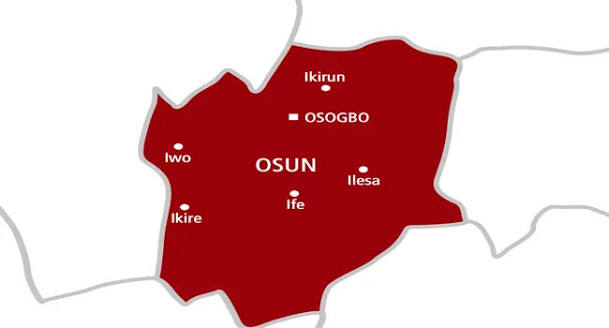
Osun State’s 30 local government councils have not received their statutory allocations from the federation for more than 16 months, an interruption that has stalled routine spending at the tier of government closest to residents.
An analysis of Federation Account Allocation Committee records shows that about N216 billion meant for the councils was not released between March 2025 and June 2026. The figure combines N131.5 billion withheld across the ten months from March to December 2025 and N85.3 billion held back over the first half of 2026.
The FAAC records set out the monthly entitlements. The councils were due N11.9 billion in March 2025, N11.2 billion in April, N11.7 billion in May and N12.1 billion in June, with the monthly figure climbing to N15.8 billion by October before easing to N13.09 billion in December.
The pattern continued into this year. The councils were owed N14.06 billion in January 2026, N14.5 billion in February, N12.8 billion in March, N13.7 billion in April, N15.4 billion in May and N14.9 billion in June. Allocations for July to September had not been determined at the time of filing.
The freeze traces back to the local government elections Governor Ademola Adeleke’s administration conducted in February 2025 after dissolving councils elected under his predecessor, Gboyega Oyetola. The All Progressives Congress, which had won the earlier polls, challenged the process, and the Federal Government responded by withholding the councils’ allocations, saying it would release the funds only to officials it recognised as validly elected.
The dispute moved through the courts and reached the Supreme Court, which ruled on the matter in May 2026. In the lead judgment, Justice Mohammed Idris held that withholding the allocations was unconstitutional and amounted to a “grave breach of the 1999 Constitution”.
Justice Idris said “the hand of the federal government was soiled” by the decision and directed that the funds be channelled directly to the councils’ accounts. The court also dismissed a contempt claim the Attorney-General of the Federation had brought against the Osun government, with the judge holding that the Attorney-General was “in more contempt than Osun by not paying the fund as required by law”.
The judgment was not a clean win for the state. By a six to one majority, the court struck out Osun’s suit, faulting the state’s Attorney-General for filing on behalf of the councils without showing he had their consent. Justice Idris held that there was “no evidence that the Osun Attorney-General was briefed by the local governments”, and that only duly elected and inaugurated council officials could sue or be sued directly.
In a dissent, Justice Emmanuel Agim took the view that the state Attorney-General had the power to bring the case. He described the Federal Government’s action as “in bad taste because it was capable of crippling the activities of the councils”.
The split outcome has left both sides claiming vindication. The Federal Government has pointed to the striking out of the suit as a ruling in its favour, while the Osun government and its allies have pointed to the finding that the seizure itself was unconstitutional. The funds have not been released.
The standoff carries into a changed political setting. Adeleke was re-elected on 15 August 2026, polling 511,067 votes to defeat the APC candidate, Bola Oyebamiji, who scored 444,815, a margin of 66,252 votes. He contested on the platform of the Accord Party, having first won office in 2022 under the Peoples Democratic Party, and took 19 of the state’s 30 councils.
Local governments in Nigeria depend heavily on FAAC transfers to pay staff and run basic services, so a sustained gap at that level tends to show up quickly in salaries, sanitation, primary healthcare and rural road upkeep. The Supreme Court’s 2024 ruling in a separate case affirmed direct allocation to local councils as a means of protecting that tier, which is part of why the continued withholding in Osun has drawn attention.
Comparisons have also been drawn with Edo State, where allocations continued to flow even after elected council officials were removed, prompting accusations of inconsistency against the Federal Government. Those are contested characterisations rather than settled findings.
What remains unresolved is whether the outstanding N216 billion, and the months since June still being tallied, will be paid, and on what terms. The Supreme Court found the seizure unconstitutional but struck out the suit that sought to compel payment, leaving the parties to interpret the outcome for themselves. Until the funds are released or a fresh legal step is taken by validly inaugurated councils, the position on the ground is unlikely to shift.