
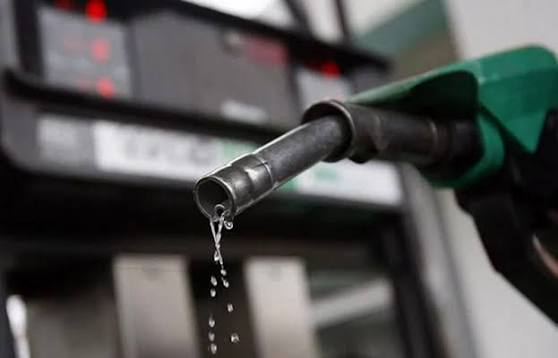
The Federal Competition and Consumer Protection Commission has accused operators in Nigeria’s downstream petroleum sector of possible consumer exploitation, warning that pump prices have refused to fall in step with a steep collapse in global crude oil prices.
In a statement issued on Sunday by its Director of Corporate Affairs, Ondaje Ijagwu, the commission said its ongoing market surveillance found that local refiners, depot operators, marketers and filling station owners had implemented only “token reductions” that were “not commensurate with the steep fall in crude prices in the global market.”
The figures tell the story. Brent crude fell to around $72 a barrel on Friday, the lowest since February 27, as shipping transits through the Strait of Hormuz accelerated following progress toward a US-Iran peace deal. That is a dramatic reversal from April, when crude climbed to about $120 per barrel amid fears of supply disruption from the Middle East crisis. Yet the FCCPC noted that petrol still sells at an average of about N1,200 per litre nationwide, while some local refiners post gantry prices ranging from N1,025 to N1,075 per litre.
The commission’s Executive Vice Chairman, Tunji Bello, said the response to crude movements appeared one-sided. “We are concerned that while dealers often respond swiftly by hiking pump prices whenever crude prices rise, it is curious that it is taking forever for consumers to benefit significantly when crude prices fall. Competitive markets must work fairly in both directions,” he said.
Bello was careful to mark the limits of the commission’s mandate. “To be clear, the Commission does not regulate or approve petroleum prices in a deregulated downstream market,” he said, adding that its duty under the Federal Competition and Consumer Protection Act, 2018, is to prevent anti-competitive conduct and protect consumers from “unfair, deceptive and exploitative business practices.”
The backdrop is a war that reshaped the oil market. Brent surpassed $100 per barrel on March 8 for the first time in four years, peaking at $126, in what became the largest disruption to world energy supply since the 1970s energy crisis after Iran blocked the Strait of Hormuz from late February. An accord to end the US-Israeli war with Iran has since allowed traffic to resume through the strait, driving prices back to pre-war levels.
The surge had bitten hard at home. Petrol that sold for between N800 and N900 per litre in February jumped to between N1,350 and N1,500 in several areas at the height of the crisis, while diesel touched about N2,000 per litre. Consumers say the descent has been far slower than the climb.
This is not the FCCPC’s first intervention. In March, the commission deployed monitors nationwide to track price movements, with Bello warning suppliers against keeping prices high. The agency has also pointed to a track record of enforcement. It said cumulative recoveries for consumers exceeded N20 billion as of March 2026, up from N10 billion in October 2025.
Bello signalled that scrutiny could harden into action. “Where credible evidence indicates conduct that undermines competition, exploits consumers or otherwise contravenes the Federal Competition and Consumer Protection Act, the Commission will investigate and take appropriate enforcement action,” he said, urging Nigerians to report suspected price manipulation through its complaint channels.
The warning is likely to reignite debate over whether full deregulation, in place since the 2023 subsidy removal, is delivering the competitive pricing it promised. For now, the gap between the global market and the Nigerian pump remains the question operators have yet to answer.