
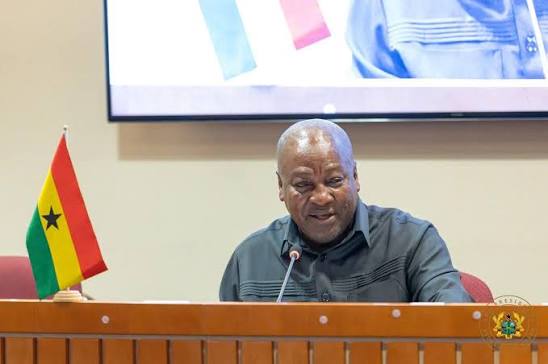
Ghana has taken its firmest step yet toward reshaping the presidency, after the government endorsed a proposal to lengthen the president’s term from four to five years and open the ballot to younger contenders. The decision, announced in Accra on Thursday, sets in motion a long constitutional process that will ultimately be settled not by politicians but by voters at a referendum.
Presenting the government’s White Paper on the report of the Constitution Review Committee, Attorney General and Minister for Justice Dominic Ayine confirmed the shift. “The government has accepted the recommendation to extend the term of office of the president from four years to five years,” he said, adding that Parliament’s tenure would be stretched to match, keeping both arms of government on the same electoral cycle.
The reform also touches who may run. The committee proposed cutting the minimum age for presidential candidates from 40 to 30, but the government settled on 35. “The minimum age will be 35 years, not 30 years,” Ayine said, describing the figure as a balance between widening opportunity for young Ghanaians and preserving the experience the office demands.
What is driving the change? The committee argued that the present four year cycle gives an administration barely two years of real governing, since the opening months are consumed by appointments and the final year by campaigning. A longer term, it said, would let governments deliver on their programmes and “strengthen democratic accountability.”
Crucially, the extension will not benefit the current occupant. Felix Kwakye Ofosu, Minister for Government Communications, moved quickly to stress that the amendment would not apply to President John Dramani Mahama, who returned to power after winning the December 2024 election and governs under the existing four year rule.
None of this is settled. The clauses in question sit among the constitution’s entrenched provisions, the foundational rules that a parliamentary majority alone cannot touch. Under Article 290 of the 1992 Constitution, any such change must clear two thirds of all lawmakers, sit in the Gazette for six months, and then pass a national referendum in which at least 40 percent of registered voters turn out and at least 75 percent vote in favour. The government says a fresh committee will draft two amendment bills by October 2026, with the referendum expected in 2027.
Those thresholds are deliberately high, and recent history shows why they matter. The last attempt to amend an entrenched provision, a 2019 vote on partisan local elections, was cancelled by then President Nana Akufo-Addo days before polling after the main opposition withdrew support, leaving officials convinced the 75 percent mark was unreachable. Ghana has not successfully amended an entrenched clause through referendum since the Fourth Republic began in 1992.
The current review is the work of an eight member Constitution Review Committee chaired by constitutional scholar Professor Henry Kwasi Prempeh, inaugurated in February 2025 to confront long standing concerns about the concentration of executive power. Ghana, one of Africa’s leading gold and cocoa producers, has held regular elections and peaceful transfers of power for more than three decades, a record that has made its constitution a reference point across West Africa.
For now, the proposals remain just that. Whether Ghanaians trade their four year rhythm for a five year one, and whether a 35 year old may one day occupy Jubilee House, will turn on turnout and consensus at a referendum still more than a year away.