
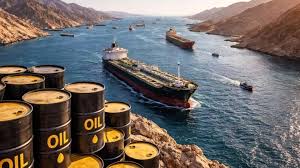
Global oil markets recorded sharp gains on Monday following the collapse of planned peace negotiations between the United States and Iran, prolonging an eight-week military standoff that continues to disrupt international shipping. US President Donald Trump abruptly cancelled a scheduled diplomatic mission to Pakistan over the weekend, citing a lack of substantial progress, while Iranian officials pursue alternative alliances in Russia.
The current impasse centres on crucial maritime routes. Washington is demanding uninterrupted transit through the Strait of Hormuz—a vital checkpoint facilitating a fifth of global oil and gas—while Tehran protests an ongoing US blockade of Iranian ports. Consequently, benchmark Brent North Sea Crude climbed 2.1 per cent to $107.51 a barrel, and West Texas Intermediate rose 1.9 per cent to $96.18.
Explaining his decision on Fox News, President Trump stated there was no justification for US envoys to take 18-hour flights to “sit around talking about nothing.” He asserted that Washington holds “all the cards” and can be contacted at any time. Despite the cancellation, Trump clarified it does not necessarily signal a resumption of hostilities, noting his administration has not “thought about it yet.” He also revealed that within 10 minutes of his cancellation, Iran submitted a revised, “much better” negotiating document.
Conversely, before the official US withdrawal, Iranian state television maintained that Foreign Minister Abbas Araghchi had no intentions of holding direct meetings with American representatives, positioning Islamabad strictly as a conduit. However, a report from Axios, citing an unnamed US official, indicated Tehran had proposed reopening the Strait of Hormuz in exchange for postponing discussions on its nuclear programme to a later date.
Amid a flurry of regional diplomacy that included recent visits to Oman and Islamabad, Foreign Minister Araghchi arrived in Saint Petersburg on Monday for consultations with Russian President Vladimir Putin. Araghchi attributed the diplomatic failure to “excessive demands” from the United States, reiterating that safe passage through the Hormuz waterway remains a significant global concern.
Financial analysts warn of continued market volatility. Fawad Razaqzada of Forex.com noted that while lingering hopes for a resolution have slightly tempered oil price gains, the risk of a “sharper spike” into open conflict remains high. He projected that a push beyond $110 is “increasingly plausible” as long as shipping constraints persist.
Broader equity markets reacted unevenly to the geopolitical tension and corporate developments. Asian tech shares rallied following strong revenue forecasts from US semiconductor giant Intel, pushing Tokyo’s Nikkei 225 up 1.4 per cent to 60,537.36, with Seoul, Taipei, Shanghai (up 0.2 per cent to 4,086.34), Mumbai, Bangkok, and Jakarta also posting gains. Conversely, Hong Kong’s Hang Seng Index dipped 0.3 per cent to 25,911.28, alongside declines in Sydney, Singapore, and Manila.
In European markets, London’s FTSE 100 opened lower by 0.2 per cent at 10,362.72, while Paris and Frankfurt advanced. On Wall Street, the Dow Jones closed down 0.2 per cent at 49,230.71, even as the S&P 500 and Nasdaq ended Friday at fresh record highs. Investors are currently awaiting crucial earnings reports from Alphabet, Meta, Microsoft, Amazon, and Apple, alongside a highly anticipated Federal Reserve policy meeting where interest rates are expected to remain unchanged.
In the currency market, the Euro rose to $1.1727 from $1.1717, and the Pound advanced to $1.3537 from $1.3530. The Euro edged up against the Pound to 86.63 pence from 86.60 pence, while the US Dollar slipped against the Yen to 159.30 from 159.42.
AFP