
As federal audit queries reveal multi-billion Naira discrepancies in poverty alleviation payments, an independent expert probe vows to follow the digital money trail to discover whether Nigeria’s poorest ever received their promised relief.
Consider the basic mathematics of survival in contemporary Nigeria. When a family’s daily meal ticket, bus fares, and domestic power expenses multiply overnight, the difference between stability and distress shrinks to a few thousand Naira. Into this precarious reality came the official promise of a safety net – a financial cushion designed to soften the blow of nationwide economic reforms. Yet, deep within the formal accounting sheets of state disbursements lies an extraordinary riddle: billions of Naira marked for the nation’s most vulnerable citizens appear to have dissolved into a bureaucratic mist before reaching a single physical palm.
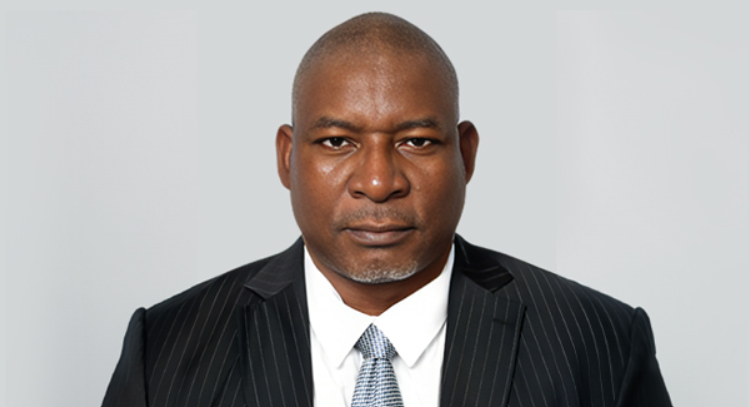
The tension began not in the noisy political arena, but inside the quiet chambers of the nation’s supreme auditing authority. When Shaakaa Chira took office as the Auditor-General of the Federation in late 2023, his constitutional mandate demanded a rigorous review of public expenditures. What emerged from his examination was an unsettling portrait of public finance: ₦33.75 billion allocated to support 3.29 million households was shrouded in accounting queries and could not withstand basic evidentiary checks.
To grasp the human scale of these balance sheets, one must look closely at the underlying arithmetic. Dividing the full ₦33.75 billion allocation across the stated 3.29 million target families yields ₦10,258 per household. In an economy where transport tariffs have soared, staple foods remain costly, and basic utility bills press hard against monthly earnings, this modest payout was intended as an emergency lifebuoy. Instead, the accounting breakdown suggests that even this minimal allowance faces fundamental verification hurdles.
The audit queries extend beyond a single master entry. Investigators highlighted an additional ₦36.74 billion released without passing mandatory pre-payment audit protocols, alongside ₦4.62 billion in disbursements completely missing their corresponding payment vouchers. In total, tens of billions of public funds, designated specifically to shield citizens from severe cost-of-living adjustments, remain unaccounted for by formal verification standards.
This growing discrepancy has ignited a profound debate regarding state accountability and financial transparency. Opposition figure and former Vice-President Atiku Abubakar, speaking through his Senior Special Assistant on Public Communication, Phrank Shaibu, framed the issue as an ethical crisis within public administration.
“This is beyond a bookkeeping scandal,” Atiku observed. “The intervention is insultingly small, yet even that small amount cannot be cleanly accounted for. If money meant for hungry Nigerians cannot be satisfactorily traced, and access to records required for accountability is frustrated, then we are witnessing an unapologetic wickedness against the poor. You cannot punish people with hardship and then play hide-and-seek with money appropriated in their name.”
The controversy deepens when measuring public statements against official documentation. Federal announcements previously claimed that well over ₦600 billion had been distributed to upwards of 10 million households, following earlier public mentions of a 15-million-household target. This shifting statistical landscape has raised fundamental questions about the reliability of national social registers.
“A ministerial announcement is not proof of payment,” Atiku noted. “A name on a social register is not a bank alert.”
In response to these discrepancies, the opposition leadership has announced plans to form an independent team comprising financial analysts, auditors, digital technology experts, and public accounting professionals. Their stated mandate is to bypass political rhetoric and conduct a forensic examination of payment gateways, transaction ledgers, digital processing systems like Remita, and reconciliation filings.
“My team will constitute an independent group of financial, audit, technology and public-accounting experts to interrogate the available records surrounding these cash-transfer payments,” Atiku stated. “We will follow the money as far as the available public and institutional records permit. We will examine the beneficiary figures, payment channels, reconciliation records, audit queries and every material inconsistency that has emerged. When that work is completed, we will furnish Nigerians with the findings.”
He added that complete operational transparency must be maintained across all payment networks: “There must be no black box around the poor man’s money. If Remita processed these transactions, the relevant records should be available for scrutiny. If beneficiaries received the money, there should be evidence. If access to records was obstructed, Nigerians deserve to know by whom and why.”
The debate also highlights a fundamental divide in economic philosophy. Critics argue that direct, poorly tracked cash handouts are inherently flawed mechanisms for poverty alleviation, proposing instead structural interventions focused on domestic production, energy price reduction, and local refining capabilities.
“Our intervention will follow production,” Atiku explained, advocating for systemic reforms over temporary palliatives. “It will support domestic refining, increase local supply, reduce the cost of energy and ensure that the benefit reaches Nigerians through lower prices. When fuel costs fall, transportation costs ease; when transportation costs ease, pressure on food prices and household budgets reduces.”
Beyond the political back-and-forth, the core demand remains fixed on institutional accountability and judicial consequences if irregularities are proved. The Auditor-General’s willingness to publish these findings has been cited as a vital, if rare, instance of institutional duty overriding political convenience.
“That is what institutions are supposed to do – protect the public purse, not the political comfort of those in power,” Atiku remarked. He emphasised that if any public officer is found to have diverted or mismanaged funds meant for citizens, full legal prosecution and asset recovery must follow.
As the public awaits the outcome of independent verifications and official responses, a central question hangs over the nation’s financial institutions: Can a system that easily levies taxes and removes public subsidies build an equally efficient mechanism to account for every Naira promised to its poorest citizens?