
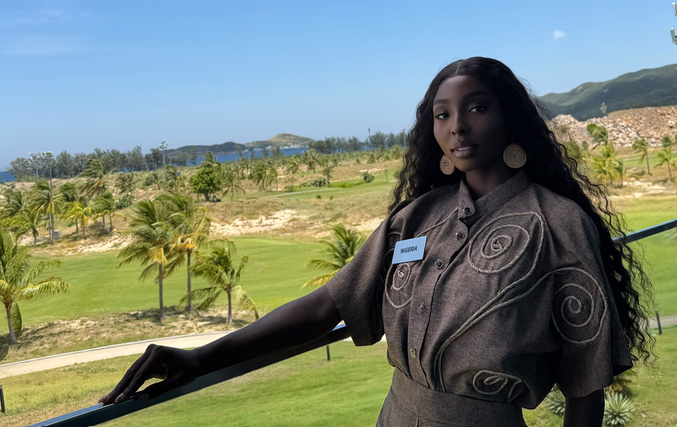
Nigeria’s representative Tamunosoye Karibi-George won the Miss World Top Model Africa crown on Thursday, 27 August 2026, during the ongoing global pageant festival in Vietnam. The victory earns the 26-year-old beauty queen an automatic spot in the Top 40 quarterfinal stage of the competition. Contest organisers announced the continental results following the runway show at the Vietnam Beauty Fashion Fest XVII. Karibi-George outshone strong competitors from Botswana, Equatorial Guinea, Kenya, and South Africa to claim the African title. She joins continental winners from France, the Dominican Republic, and Vietnam in the global model finals. The overall winner among the four continental champions will advance straight to the Top 20 round. Decisive runway victories simplify the journey to the final crown. Pageant judges demand poise, structure, and stage command.
The victory in the fashion segment marks a swift recovery after a narrow miss in the earlier Head-to-Head challenge. While Karibi-George reached the African regional finals in the public debate category, South Africa’s Romanda Hombir took the top slot. Rather than slow down her campaign, the Rivers State native doubled down on the fashion runway to secure direct advancement. Contestants face brutal elimination cycles if they fail to win specialised fast-track events. Winning a major fast-track contest shields a delegate from erratic early judging rounds. Pageants reward contestants who quickly bounce back from tactical losses. Persistence often counts for more than early acclaim. Karibi-George turned a missed speaking spot into a decisive modelling victory.
The 73rd Miss World Festival gathered over one hundred national delegates in Vietnam when events opened on 9 August. Organisers will crown the global winner during the grand coronation ceremony on 5 September. Contestants face daily assessments across charity work, athletic fitness, media interviews, and stage presentations. Karibi-George also attracted heavy attention for her vocal talent after pageant organisers shared clips of her singing online. Social media buzz creates vital momentum, but formal judges still control the scoring sheets. Fast-track wins remove mathematical uncertainty ahead of the live broadcast. Securing an early quarterfinal place eases pressure on the national camp. A calm mindset delivers sharper performances during live finals.
Karibi-George earned the right to carry the Nigerian flag after winning the domestic contest in Lagos on 6 June. She defeated nineteen other regional finalists at the Federal Palace Hotel to take the national title. Beyond the glamour of the runway, she runs a charity project titled Beyond Labels. The initiative provides educational tools, classroom access, and social support for children living with disabilities. The Miss World organisation places heavy scoring weight on such community projects through its Beauty with a Purpose segment. Delegates must prove that their social advocacy creates real change in poor neighbourhoods. Pageant titles mean very little without measurable civic impact. Sustainable charity work sets serious competitors apart from ordinary models.
Nigeria holds a rich history at the global event, having produced Africa’s first black winner in 2001 through Agbani Darego. That historic victory established Nigeria as a perennial force in international beauty competitions. Subsequent delegates struggled to match that benchmark, often exiting before the final interview rounds. Recent Nigerian contestants frequently lost ground in the early athletic and fast-track modelling stages. Karibi-George’s win in the fashion category breaks that cold streak and restores national competitive pride. Pageant analysts view her strong runway walk and poise as rare assets in modern judging formats. History creates pressure, but it also lights the way. Nigerian fans expect a deep run into the final stages.
The domestic creative and fashion industry gains valuable international exposure whenever a local delegate excels on global runways. Nigerian designers, stylists, and textile artisans supply the elaborate gowns and cultural outfits that delegates wear in Vietnam. Winning the continental model prize shines a bright light on African design craftsmanship. International buyers follow these global fashion broadcasts to discover new design talent and fabric houses. The commercial value of beauty contests extends far beyond individual crowns and sash collections. Pageants serve as live trade fairs for local apparel makers and makeup brands. Creative industries need global showcases to grow export earnings. Cultural exposure generates real business orders for domestic studios.
Karibi-George and her management team must now turn their focus to the remaining fast-track segments and the final interview rounds. While a Top 40 spot is secure, entering the Top 12 requires exceptional clarity during live questioning. Contestants must articulate clear views on international development, public health, and social equity without sounding rehearsed. Judges look for natural confidence and warmth rather than stiff memorised speeches. The Nigerian camp must prepare for unpredictable panel questions while keeping her energy high through long rehearsal days. Physical endurance matters as much as elegance during month-long competitions. The final week in Vietnam will test both mental grit and stage presence. A global crown demands flawless execution until the final curtain falls.