
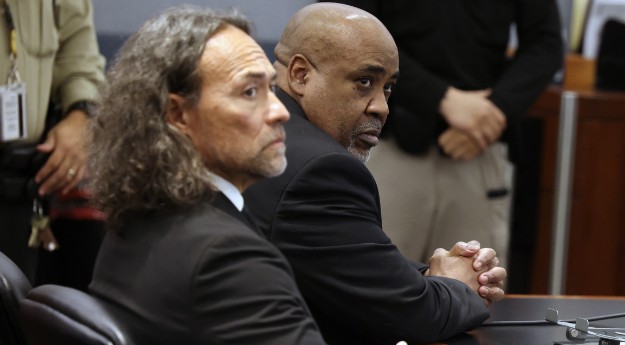
A Nevada judge sentenced former street gang leader Duane “Keffe D” Davis to forty years to life in prison on Tuesday, 13 October, closing the legal book on the 1996 drive-by murder of hip-hop star Tupac Shakur. Clark County District Court Judge Carli Kierny handed down the term in Las Vegas after a jury found the sixty-three-year-old guilty of orchestrating the deadly ambush off the Las Vegas Strip three decades ago. Street vanity carries a terrible final bill. The sentence ensures that the former South Side Compton Crip boss will spend the rest of his life behind bars for procuring the pistol and leading the car convoy that gunned down the twenty-five-year-old musician.
Davis secured his own life sentence by trading street silence for book sales and television royalties. For two decades, police treated the Las Vegas killing as an impenetrable gang feud until Davis published a boastful 2019 memoir and gave repeated broadcast interviews detailing how he handed the murder weapon to the back seat of a white Cadillac. Egotism ruins the most disciplined criminals. Chief deputy district attorney Marc DiGiacomo told the court that Davis would never have faced a murder indictment if the ageing gangster had not chosen to monetise an unsolved drive-by shooting for YouTube clicks and book advances.
The trial laid bare the lethal gang politics that tore through American rap music during the middle of the nineties. Prosecutors proved that Davis organised the retaliation after Shakur and his Death Row Records entourage beat up his nephew, Orlando Anderson, in the lobby of the MGM Grand hotel following a Bruce Seldon and Mike Tyson boxing match. Blood vendettas settle nothing in the end. Anderson and the two other men who rode in that white Cadillac died in unrelated gang shootings years ago, leaving Davis as the sole living conspirator to stand trial for the ambush.
Defence counsel Michael Sanft tried to portray his client as a penniless teller of tall tales who invented murder confessions to feed his family, but jurors rejected the excuse after three hours of deliberations. Modern courts treat videotaped boasts as sworn confessions when the details match thirty-year-old ballistics evidence. Words spoken for cameras carry heavy weight. Judge Kierny noted that Davis chose to reopen ancient wounds for cheap fame, showing that criminal vanity eventually catches up with those who confuse notoriety with immunity.
The Las Vegas verdict strips away the romantic mythology that has enveloped the violent feud between West Coast Crips and Bloods for an entire generation. Hip-hop culture spent decades spinning vast conspiracy theories around Shakur’s death, yet the actual murder boiled down to petty street revenge orchestrated by middle-aged hoodlums in a rented saloon car. Legend gives way to squalid reality. By sending an ailing gang veteran to die in a desert penitentiary, Nevada justice proves that time and celebrity provide no lasting cover for suburban slaughter.