
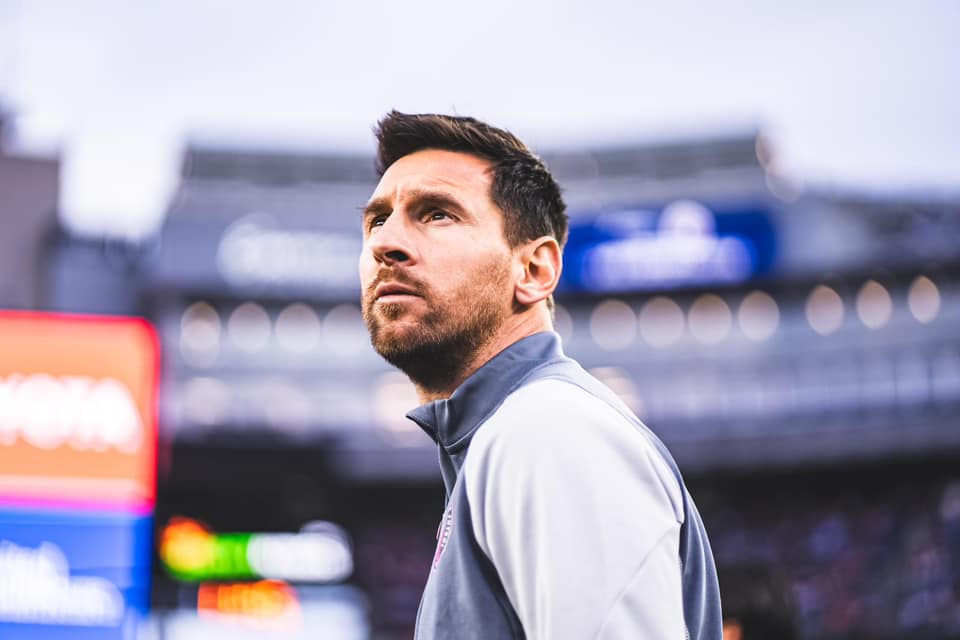
Lionel Messi officially announced his retirement from international football on Monday, 31 August 2026, closing the most celebrated chapter in modern sports history. The 39-year-old Argentine captain confirmed his departure after guiding his country to a second successive World Cup final. The decision brings down the curtain on a senior international career that spanned more than twenty-one years. Messi exits the national team having won every major honour available in global football. His final tournament run sealed his standing as the central figure of Argentina’s football renaissance. The announcement shifts the focus of his playing days entirely to domestic club duties in North America. Great sporting eras conclude quietly when champions achieve total fulfilment. Messi leaves the international arena on his own terms.
The Argentine playmaker made his senior debut in August 2005, enduring years of painful tournament heartbreak before claiming ultimate glory. Early exits and four lost finals in major tournaments once fueled fierce criticism from domestic supporters and local media. That narrative changed when he led Argentina to the Copa América title in 2021 against Brazil in Rio de Janeiro. He followed that breakthrough by lifting the Finalissima in London and the World Cup trophy in Qatar in December 2022. Reaching another global final in 2026 proved that his tactical influence remained decisive even as his physical speed slowed. He transformed an anxious national squad into a ruthless tournament machine. Legacy in sports rests on perseverance through bitter public scrutiny. Messi turned early national disappointment into historic international supremacy.
The timing of the departure allows the Argentine Football Association to build a fresh tactical foundation ahead of the next continental qualifying cycle. Head coach Lionel Scaloni must now build an attacking system that does not rely on Messi’s playmaking vision. Young talents like Julián Álvarez and Enzo Fernández must shoulder the tactical burden of leading the national forward line. For two decades, Argentine managers designed defensive shapes and attacking transitions to maximise Messi’s creative genius. Removing that focal point forces a complete rethink of how the national team controls possession. National teams struggle whenever an irreplaceable icon steps away from the dressing room. Argentina now enters a demanding tactical reconstruction without its talisman.
Messi’s decision to step away from international football protects his physical conditioning for his club commitments with Inter Miami in Major League Soccer. Heavy transatlantic flights and gruelling South American qualifiers exact a heavy physical toll on veteran athletes. By cutting out international travel, the forward can manage his match minutes and recover between domestic fixtures. His presence in American domestic football continues to draw record television ratings and commercial sponsorships. American football fans will now enjoy the exclusive privilege of watching his final professional matches. Preserving his body extends his commercial and sporting value in domestic leagues. Elite players must ration their physical energy as retirement approaches. Longevity requires knowing when to put down national duties.
The economic and cultural impact of Messi’s departure will test the commercial strength of the Argentine federation. Match organisers and international promoters paid premium match appearance fees whenever Messi was in the travelling squad. Broadcast networks paid top dollar for regional qualifiers because global audiences tuned in to watch him wear the number ten shirt. The national football federation must now market a squad of talented collective workers rather than a single global superstar. Corporate sponsors will evaluate their commercial contracts as the post-Messi era begins in Buenos Aires. Global brands pay for star power rather than national emblems. Argentine football commercial planners must adapt to a less lucrative marketplace.
Beyond the numbers and commercial revenue, Messi’s international journey rewrote the modern understanding of athletic leadership. He rarely relied on aggressive speeches or media confrontation to motivate his teammates. He led by exceptional technical discipline, sharp game reading, and an unshakeable will to win under intense public pressure. His teammates worked tirelessly to cover defensive ground because they trusted his ability to decide matches with a single touch. That mutual trust created one of the most cohesive dressing rooms in international football history. Quiet leadership often commands deeper loyalty than loud authority. Messi showed that calm authority can conquer the most hostile football grounds.
The global football community now reflects on an international career that produced hundreds of unforgettable moments across five continents. Opposing defenders spent two decades constructing complex double-marking schemes that failed to contain his sudden bursts of acceleration. Tributes from national heads of state, rival managers, and fellow world champions poured in within minutes of his announcement. His exit marks the definitive end of an exceptional generation that dominated international tournaments for over a decade. Young footballers across South America will study his balance, decision-making, and passing precision for generations to come. True greatness leaves a blueprint that outlives individual careers. International football bids farewell to its most extraordinary artist.