
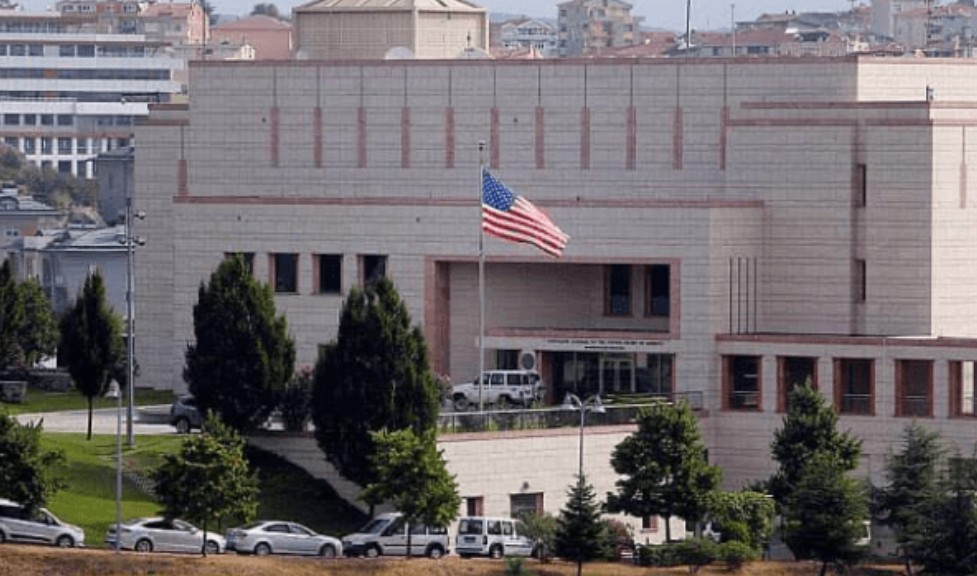
The United States Embassy in Abuja clarified on Monday, 31 August 2026, that its consular section continues to process diplomatic and official visas despite the suspension of routine visa interviews in the federal capital. American consular officials confirmed that qualifying state emissaries, international civil servants, and official transit delegations can still submit applications directly at the Abuja diplomatic compound. The clarification settles weeks of confusion among Nigerian ministries following the decision to shift all standard tourist, business, and immigrant visa processing to the Consulate General in Lagos. Diplomatic staff can drop off official passports from Monday to Thursday between two and four in the afternoon. The policy maintains an open consular channel for senior state officials who need swift clearance for bilateral summits in Washington. Ordinary citizens, by contrast, must now travel hundreds of miles to Lagos to queue for non-immigrant interview dates. Official privilege preserves convenience for rulers while ordinary travellers bear the brunt of consular cuts.
The special arrangement covers A-category visas for accredited diplomats, G-category stamps for international agency staff, and C-3 transit permits for state officials passing through American airspace. Applicants must present formal diplomatic notes from the Ministry of Foreign Affairs before consular clerks accept their application dossiers. Consular officers in Abuja retain full discretion to reject submissions that lack verifiable state sponsorship or proper credentials. The mission created this dedicated window to prevent diplomatic friction with Nigerian government agencies ahead of major United Nations gatherings. Foreign ministries always protect the comfort of government delegates while tightening border checks on common folk. The administrative split creates a stark two-tier consular system inside the country. Civil servants enjoy quiet drop-off desks while private citizens scramble for distant appointment slots in Lagos. Elite mobility continues uninterrupted behind heavy embassy gates.
The consular restructuring in Abuja stems from broader State Department efforts to streamline overseas staff and cut overheads across large missions. Managing thousands of daily non-immigrant visa interviews in Abuja required extensive security cordons and heavy administrative machinery. Consolidating routine immigrant and visitor visa processing in Lagos allows American diplomats to centralise fraud detection and biometric screening operations. The sprawling Lagos consulate on Victoria Island already handles the vast bulk of commercial and student travel applications from southern commercial hubs. Yet stripping the national capital of standard visa services imposes high financial costs on applicants from the nineteen northern states. A university lecturer from Sokoto or a merchant from Kano must now buy expensive domestic flight tickets to attend a five-minute visa interview in Lagos. Shifting consular workloads to the coast simply offloads institutional costs onto Nigerian travellers. Centralisation saves money for the embassy while bleeding local pockets dry.
The decision also reflects the growing diplomatic caution that shapes American foreign policy toward Nigeria this year. Washington recently reaffirmed its scrutiny of Nigerian internal security and religious freedom conditions during high-level bilateral talks. American lawmakers continue to press the State Department to demand strict governance benchmarks before expanding consular services. Keeping official channels open in Abuja allows the Pentagon and State Department to maintain vital counter-terrorism dialogues with Nigerian security chiefs. National Security Adviser Nuhu Ribadu and defence chiefs still rely on swift travel clearances to attend joint security summits in the United States. Washington protects military-to-military links even as it restricts general immigrant pathways. Strategic security partnerships survive every diplomatic chill.
Nigerian officials have accepted the split arrangement with little public protest because it protects their personal travel privileges. Permanent secretaries, lawmakers, and state governors rarely experience the chaotic visa queues that frustrate ordinary citizens. The Ministry of Foreign Affairs routinely secures expedited visa waivers and VIP appointments for political officeholders and their immediate families. If political leaders had to endure the exhausting flight to Lagos for standard visa interviews, the federal government would demand immediate reciprocal action. Instead, Abuja diplomats quietly accommodate foreign mission adjustments that do not threaten official perks. Nigerian foreign policy often serves the convenience of the governing class rather than the welfare of the broader public. Ruling elites rarely fix public problems that do not affect their private routines. Comfortable officials feel no urgency to demand better consular treatment for common citizens.
The surge in Nigerian travel demand to North America continues to overwhelm existing consular capacity across West Africa. Tens of thousands of young professionals, healthcare workers, and students apply for American visas each month to escape domestic economic hardship. Private visa booking syndicates exploit this desperation by hoarding online appointment dates and selling them for extortionate fees. The American mission has tried to curb black-market booking rings by upgrading its online scheduling software and banning automated bot accounts. Yet closing the Abuja visa hall for routine travellers concentrates massive crowd pressure on the Lagos consulate gates. Lagos consular staff now face enormous interview backlogs that stretch into late next year. Scarcity always creates profitable black markets around administrative checkpoints. Limiting consular capacity worsens the very booking corruption the embassy seeks to eliminate.
The diplomatic visa exception in Abuja underscores how foreign embassies manage international statecraft through selective privilege. Envoys understand that isolating the political leadership of a host country creates unnecessary diplomatic retaliation against foreign investments. By keeping the doors open for ministers and military commanders, Washington preserves its access to the corridors of power in Aso Rock. Meanwhile, ordinary Nigerians navigate higher visa application fees, scarce appointment dates, and long domestic journeys. A balanced diplomatic relationship requires mutual respect for the travel rights of ordinary citizens as well as state officials. The Nigerian government must invest in domestic economic stability so its citizens do not view foreign visas as their only path to prosperity. Real national dignity begins with building a prosperous home economy that keeps talent within its borders. Strong nations command respect at foreign consular desks through domestic success.