
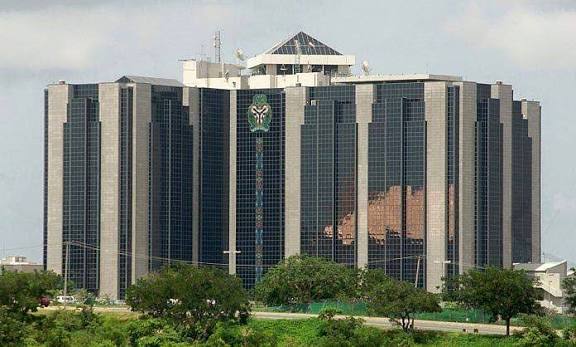
Microfinance banks filed more than eight of every ten security claims registered against Nigerian borrowers in the first quarter of 2026, cementing their place as the busiest lenders in the country’s movable assets credit market, even as total filings across the financial system rose by more than half from a year earlier.
Data from the Central Bank of Nigeria, collated from the National Collateral Registry, show that microfinance banks registered 22,977 financing statements between January and March 2026, up 38.4 per cent from the 16,600 recorded in the same period of 2025. The filings climbed month on month within the quarter, from 6,110 in January to 8,045 in February and 8,822 in March.
A financing statement is the record a lender enters when it takes a security interest over a borrower’s movable property, such as equipment, vehicles, inventory, livestock or receivables. It signals that credit has been advanced and that specific assets stand as security for it. The registry, established by the Central Bank in 2016 with support from the International Finance Corporation and given legal force by the Secured Transactions in Movable Assets Act of 2017, was designed to let micro, small and medium enterprises borrow against assets other than land, the collateral most Nigerian businesses do not hold.
Across all creditor categories, total registrations reached 27,170 in the quarter, a 53.9 per cent increase on the 17,650 filed a year earlier. Microfinance banks accounted for 84.6 per cent of that total. Their share, though still dominant, was lower than the 94.1 per cent they held in the first quarter of 2025, a decline that reflects faster growth among commercial lenders rather than any slowdown in microfinance activity.
Deposit money banks recorded the sharpest rise in volume, lifting their registrations to 2,870 from just 272 a year earlier. Finance houses filed 566, up from 155, while other non-bank financial institutions registered 757, compared with 622. Development finance institutions filed a single statement in the quarter, in March, the same total they recorded across the whole of the first quarter of 2025.
The value attached to the filings tells a steeper story. The Central Bank data put the total value of registered financing statements at N2.55 trillion in the first quarter of 2026, against N350.58 billion a year earlier, an increase of 628.8 per cent. Because volume rose far more slowly than value, the average size of each registered claim climbed from about N19.9 million to roughly N94 million over the twelve months.
That jump was driven almost entirely by a small number of large transactions. Non-bank financial institutions accounted for N2.04 trillion of the quarterly value, up from N22.2 billion in the same period of 2025. Most of it fell in a single month, with these institutions registering N1.77 trillion in February 2026 alone, compared with N3.77 billion in February 2025, the largest monthly value in any creditor category in the dataset. Deposit money banks recorded N425.85 billion, up from N168.88 billion, while microfinance banks registered N278.16 billion, up from N157.88 billion.
The gap between who files most often and who commits the most money captures the structure of the market. Microfinance banks deal in large numbers of small loans to traders, farmers, artisans and low income households, borrowers conventional banks have long found too small or too risky to serve. Commercial and non-bank lenders file far fewer statements but back much larger sums. The result is a registry busy with microfinance entries by count but weighted toward big ticket lending by value.
The stronger microfinance numbers came against a backdrop of tighter regulation. On 1 July 2026, the Central Bank revoked the operating licences of 46 microfinance banks under Sections 12 and 13 of the Banks and Other Financial Institutions Act of 2020. In a statement by its Acting Director of Corporate Communications, Hakama Sidi Ali, the bank said the approval was given by the Governor, Olayemi Cardoso, and that the affected institutions had failed to meet requirements for continued operation. The reasons cited included insolvency, assets falling below liabilities, prolonged inactivity, closure without approval, failure to begin operations within the stipulated period and inability to maintain the minimum capital base. The Nigeria Deposit Insurance Corporation was named statutory liquidator, with eligible deposits protected under the deposit insurance scheme.
The action was not the first of its scale. In May 2023, the Central Bank withdrew the licences of 179 microfinance banks in one of the largest clean up exercises the sub sector has seen. Taken together, the two rounds point to a regulator trying to remove weak institutions while keeping intact the channel that reaches the smallest borrowers.
The figures carry weight beyond the balance sheets of individual lenders. Micro, small and medium enterprises make up the great majority of registered businesses in Nigeria and employ a large share of the workforce, yet access to credit remains one of their most persistent constraints. A rising count of financing statements suggests more of that lending is being formally secured and recorded, which lowers risk for lenders and, over time, should widen the pool of borrowers able to raise money against what they already own.
Several risks still sit over the trend. High funding costs, thin borrower information, weak digital infrastructure and low financial literacy continue to limit how far microfinance credit can stretch, and repayment risk remains real in a period of elevated prices. Whether the first quarter’s momentum holds will depend on the next tranche of registry data and on how the surviving institutions perform under closer supervision. What the current numbers establish is clear enough. More claims are being registered, they are worth far more than before, and microfinance banks remain the lenders keeping the movable assets market moving.