
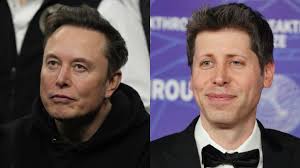
Jury selection has begun in a closely watched US court case that places Elon Musk and Sam Altman at the centre of a legal dispute over the original purpose of OpenAI and its evolution into a commercial powerhouse.
Proceedings taking place near San Francisco mark the formal start of a trial driven by Musk’s claim that OpenAI’s founding vision as a non-profit entity focused on public benefit was later abandoned. The case also reflects growing tensions in the global artificial intelligence race, where Musk’s xAI and its Grok chatbot now compete directly with OpenAI’s ChatGPT.
Court filings indicate that Altman persuaded Musk in 2015 to support the creation of OpenAI as a non-profit research lab, with the stated aim that its technology “would belong to the world.” Musk invested millions of dollars before exiting the organisation. The company later created a commercial arm, citing the need for substantial funding to build data infrastructure required for advanced AI systems.
That transition attracted major backing from Microsoft, which has invested billions into OpenAI. Microsoft’s chief executive, Satya Nadella, is expected to testify during the trial, underscoring the scale of corporate interest tied to the outcome.
Musk argues that OpenAI misrepresented its intentions and deviated from its original altruistic mission. In contrast, OpenAI maintains that the split with Musk was driven by disagreements over control rather than governance structure. In a public statement posted on X, the company described the lawsuit as “a harassment campaign” motivated by “ego, jealousy and a desire to slow down a competitor.”
The dispute has drawn wider attention because it touches on a broader policy question: whether artificial intelligence development should prioritise public benefit or commercial returns. This debate has intensified as investment requirements for AI infrastructure continue to rise globally.
The presiding judge, Yvonne Gonzalez Rogers, is expected to rely on an advisory jury to determine whether OpenAI breached any commitments to Musk. A decision is anticipated by mid-May, after which the judge will determine any remedies.
Musk had initially sought damages of up to $134 billion but has since stated that any financial award would be redirected to OpenAI’s non-profit foundation. He is also asking the court to compel the company to revert fully to a non-profit model and to remove Altman and president Greg Brockman from leadership positions.
OpenAI currently operates under a hybrid structure, where a non-profit entity retains control over a for-profit subsidiary. The company argues that this model allows it to balance public interest goals with the financial demands of large-scale AI development.
The outcome of the case is expected to have implications for governance standards in the AI sector, particularly as competition intensifies among major technology firms seeking leadership in the field.