
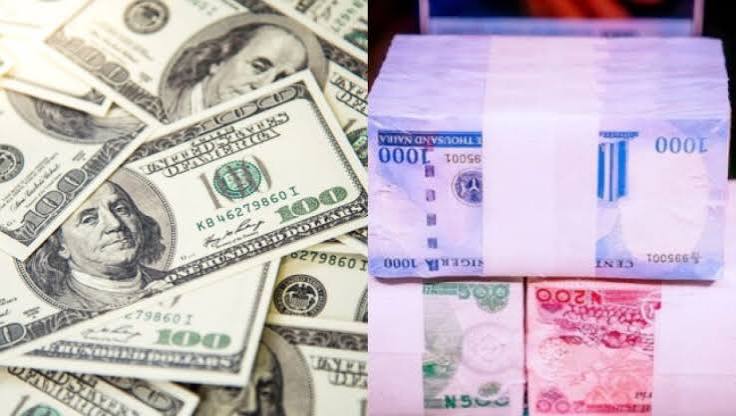
The naira opened trading on Thursday, September 10, 2026, at about ₦1,322.72 to the United States dollar in the Nigerian Foreign Exchange Market, holding close to its strongest official level in two years while dealers in the unregulated parallel market continued to quote the currency considerably weaker, at roughly ₦1,380 to buy and ₦1,390 to sell.
On those numbers, a dollar bought outside the formal banking system cost about ₦67 more than the official reference rate, a premium of roughly 5 per cent. For a Nigerian paying school fees abroad, settling an import invoice or buying travel allowance, that difference translates into thousands of naira on every hundred dollars, depending entirely on where the transaction is executed.
But the daily quote is the least interesting part of the story. What sits behind it is a run of currency data that has no close parallel since Nigeria overhauled its exchange rate system in June 2023, when the Central Bank of Nigeria collapsed its multiple official windows into a single market determined rate.
Two figures anchor that shift. The first is the exchange rate itself. Central Bank data published in early September showed the naira quoted at ₦1,315.67 to the dollar on Thursday, September 3, a gain of ₦11.02, or 0.84 per cent, from the ₦1,326.69 recorded the previous day, and its strongest reading in about two years. Market rate trackers list the same date as the naira’s twelve month peak, against a low of about ₦1,430.85 on January 2, 2026. Between August 14 and September 1, the currency gained a cumulative ₦29.25 in the official window, an appreciation of roughly 2.15 per cent, and it closed August up about 1.5 per cent for the month.
The second figure is the buffer standing behind it. Nigeria’s gross external reserves reached $54.13bn as of September 4, 2026, according to data published on the Central Bank’s website and reported by BusinessDay, the highest level in about 18 years. Reserves stood at $45.56bn on January 2, meaning an increase of roughly $8.52bn, or 18.7 per cent, in a little over eight months. The figure is about 30.31 per cent above the $41.54bn recorded in the same period of 2025, and it exceeds the Central Bank’s own forecast of $51.04bn for the end of 2026 by around $3.04bn. The last time reserves were higher was in December 2008, when they touched $54.21bn during the previous oil boom.
Reserves matter more than any single day’s rate because they determine how much room the Central Bank has to supply dollars into the market and meet external obligations without exhausting its capacity to do so. A currency level is a price on one trading day. Reserves are the balance sheet position that makes that price sustainable or fragile.
Officials have attributed the accumulation to stronger inflows rather than restricted outflows. Central Bank Governor Olayemi Cardoso has pointed to improved receipts from crude oil related taxes and third party inflows. Remittances are the other visible driver. Inflows through international money transfer operators reached $947m in July 2026, described as the highest monthly total ever recorded through formal channels, and $3.8bn over the first seven months of the year, a 50.2 per cent increase on the same period in 2025. Speaking on the July figure, Cardoso said: “When we set a clear ambition to reach $1 billion a month in remittance inflows through formal channels nearly two years ago, some people thought we were dreaming. At $947 million in July, we are now approaching that milestone.”
Liquidity has followed. Turnover in the official window rose to $14.68bn in August, reported as the highest in five months, and a deeper market allows the rate to clear without the Central Bank spending as heavily to defend it. On one September trading day, turnover at the window rose 14.63 per cent to $658.46m from $574.42m.
The parallel market, however, has not moved in step. While the official rate appreciated about 1.5 per cent in August, parallel market movement over the same period was reported at 0.06 per cent, essentially flat. That divergence is why the gap has persisted through the naira’s rally: the official rate has strengthened faster than street pricing has adjusted, and the premium has fluctuated roughly between ₦60 and ₦80 per dollar through early September.
Two cautions belong with these numbers, and they apply to almost all daily naira reporting. The first is that quoted parallel market rates are indicative, not fixed. Trackers such as AbokiFX, NairaToday and TalentBase frequently publish different figures for the same day, and actual rates vary by dealer, location, transaction size and time of day. On September 9, for instance, available quotes ranged from ₦1,385 to ₦1,410. The second is that the official figure circulating on any given morning is often the latest available rate rather than a confirmed closing rate for that day, because the Central Bank’s dated entries lag live trackers. Reported official figures for early September also varied across outlets, with some publishing ₦1,329.12 for September 3 against the ₦1,315.67 reflected in Central Bank data for the same session. Readers comparing sources should treat single day differences of a few naira as a reporting artefact rather than a market event.
What comes next is forecast, not fact. Analysts at four investment firms have projected the naira strengthening to around ₦1,290 per dollar before the end of 2026, and analysts cited by Bloomberg have suggested the currency could post its strongest annual performance since 2018, with a gain approaching 12 per cent. Those are projections contingent on oil prices, sustained remittance flows and continued foreign portfolio interest, any of which can reverse.
For now the verifiable position is narrower and more useful: as of September 10, 2026, the naira traded at about ₦1,322.72 officially and up to ₦1,390 in the parallel market, sitting near a two year peak, supported by reserves at an 18 year high, with a gap between the two markets that has narrowed but not closed.