
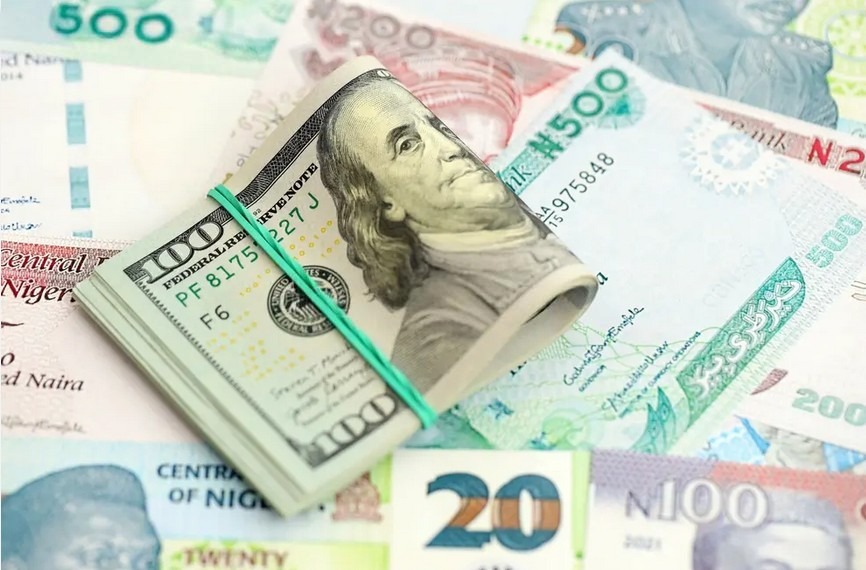
The Nigerian naira opened the trading week steady against the United States dollar on Monday, 24 August 2026, changing hands at N1,348.85 at the official Nigerian Autonomous Foreign Exchange Market. Daily trading figures published by the Central Bank of Nigeria showed the currency consolidating within a tight band after touching an intra-day peak of N1,351.50 late last week. Parallel market operators in Lagos and Abuja traded spot dollars between N1,385 and N1,392, keeping the premium between official and street rates near historic lows. The modest spread reflects improved foreign currency liquidity flowing through authorised dealer banks and licenced bureaus de change. Total turnover across official windows consistently topped $350 million daily over the past five sessions, supported by non-deliverable forwards and autonomous corporate inflows. The stability offers brief relief for industrial manufacturers who suffered through years of unpredictable currency volatility. A predictable exchange rate remains the bedrock of sensible business planning.
+-----------------------------------------------------------------------------------+
|                   NAIRA FOREIGN EXCHANGE SNAPSHOT (24 AUGUST 2026)               |
+-----------------------------------------------------------------------------------+
| Official Window (NAFEM / NFEM Spot):  N1,348.85 per US Dollar                     |
| Previous Official Close (21 August):  N1,345.50 per US Dollar                     |
| Parallel / BDC Market Range:          N1,385.00 - N1,392.00 per US Dollar         |
| Unofficial Market Spread / Premium:   Approximately N36.15 - N43.15 (Sub-3% Gap)  |
| Official Interbank Daily Turnover:    $371.78 Million (Recorded 20 August)        |
| Year-to-Date FX Trajectory:           12.36% Appreciation Against 2025 Troughs    |
| Core Macro Driver:                    Orthodox Monetary Tightening & OMO Sales    |
+-----------------------------------------------------------------------------------+
The convergence between official and parallel market pricing marks a sharp departure from the chaotic multi-tier regime that previously distorted the economy. For nearly a decade, politically connected arbitrageurs exploited wide currency gaps to make fortunes without creating productive value. The unified price discovery mechanism implemented under monetary chief Olayemi Cardoso has largely closed those lucrative speculative loopholes. Foreign portfolio investors now repatriate dividends through transparent banking desks without fearing sudden administrative freezes. Commercial banks clear import letters of credit at market-determined rates rather than waiting in bureaucratic queues for central bank allocations. That structural transparency reduces the risk premium international lenders attach to Nigerian corporate paper. A single exchange rate cleanses the financial system of hidden subsidies.
Behind this hard-won currency stability lies an aggressive programme of monetary tightening designed to mop up surplus domestic liquidity. The Monetary Policy Committee pushed benchmark borrowing rates above 27 per cent while raising cash reserve requirements for commercial lenders. High-yielding Open Market Operations bills attracted billions of dollars in offshore portfolio funds into local fixed-income vaults. These sovereign debt yields, often exceeding 22 per cent on one-year paper, provide a compelling carry-trade return for foreign asset managers. The inflows helped replenish gross external reserves, which now provide over five months of import cover. Yet high interest rates extract a punishing toll on domestic manufacturers who borrow at commercial bank rates exceeding 33 per cent. Crushing inflation with expensive credit inevitably chokes factory floor expansion.
Sustaining the naira’s present trading level will require genuine expansion in non-oil export earnings and crude production volumes. The Nigerian Upstream Petroleum Regulatory Commission continues to battle legacy wellhead decline and pipeline vandalism across onshore production belts. Nigeria still relies on crude oil sales for roughly eighty per cent of its sovereign foreign currency revenues. When global oil prices drop, or domestic pipeline theft rises, the central bank’s external buffer thins out rapidly. The government has attempted to broaden export revenues by offering tax rebates on agro-allied shipments and solid minerals. However, poor road logistics and chaotic port inspections keep export volumes far below their national potential. A currency cannot stay strong on borrowed foreign portfolio inflows alone.
The narrowing of the parallel market spread has transformed retail money transfer channels used by millions in the diaspora. International remittance corridors that once bypassed commercial banks now settle transactions directly into domestic accounts at prevailing market rates. Global money operators like Wise and Xe route family transfers through licenced local deposit banks without applying punitive exchange haircuts. This formalisation of remittance inflows injects hundreds of millions of dollars into autonomous banking reserves every month. Families receiving funds from abroad get real domestic purchasing value without patronising unlicensed street brokers. Transparent currency pricing turns private remittances into a formal balance-of-payments cushion. The informal dollar economy shrinks whenever official banking rates reflect true market value.
Import-dependent businesses now navigate a retail pricing environment that has begun to stabilise after years of sudden shocks. Importers of raw pharmaceuticals, industrial chemicals, and heavy machinery can budget future shipments without hedging against twenty per cent overnight devaluations. Stable import costs help slow down the headline inflation figures that have eroded household purchasing power across the country. Yet the current baseline of N1,348 per dollar still represents an expensive reality for firms that operated when the greenback traded under N800. Consumer demand remains weak because wages have not kept pace with the cumulative devaluations of recent years. Retail distributors find it difficult to pass higher replacement costs onto cash-strapped urban workers. Economic stability brings calm, but it does not instantly restore lost prosperity.
The central bank must maintain its policy independence to protect the credibility of the foreign exchange market through upcoming political cycles. Fiscal authorities face constant temptation to pressure the monetary authority into lowering interest rates to cheapen sovereign deficit borrowing. Yielding to political calls for early rate cuts would trigger rapid capital flight among foreign portfolio investors and destabilise the currency. The bank must instead focus on automating market surveillance and expanding liquidity desks for small and medium enterprises. Policymakers should also work with customs authorities to eliminate non-tariff barriers that slow down physical port clearance. A modern financial market demands consistent rules rather than sudden regulatory reversals. Disciplined monetary management remains the nation’s best defence against future currency collapse.