
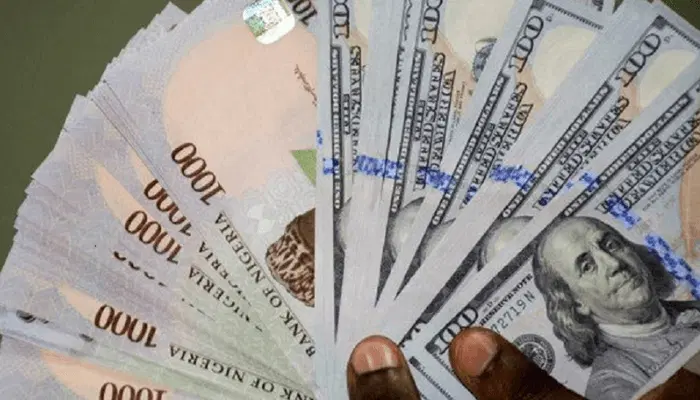
The Nigerian naira opened the trading week at 1,326.84 to the American dollar on the official window on Monday, 14 September 2026. Central bank records show that the spot rate held steady near the 1,326.52 recorded over the weekend at the Nigerian Foreign Exchange Market. Street traders in Lagos, Abuja, and Kano quoted the greenback between 1,385 and 1,410 naira for cash retail sales. That disparity leaves an unofficial premium of roughly 83 naira, or about six per cent above the central bank’s electronic fixing. The narrow spread shows that recent liquidity injections have tamed the frantic volatility that once crippled corporate planning. Importers no longer crowd street desks to buy greenbacks at panic rates. Governor Olayemi Cardoso currently commands the foreign reserves needed to hold speculative runs in check. The official desk retains its grip on market volume.
The relative calm on the trading floor reflects steady petroleum receipts flowing into state accounts throughout the third quarter. External reserves held by the Central Bank of Nigeria hover comfortably around 54 billion dollars, their highest point in almost two decades. Higher crude output from the Niger Delta and triple-digit international oil benchmarks have supplied the hard currency required to meet commercial demand. Commercial lenders now clear routine letters of credit for industrial inputs without turning away corporate clients. Portfolio investors have also committed fresh capital to local treasury bills, drawn by high domestic yields. That steady inflow of cash keeps the official window liquid enough to satisfy institutional purchase orders. Nigeria finally possesses the cash buffer to defend its currency desk without draining emergency reserves. Deep vaults discourage short sellers.
The street market continues to mirror retail realities that official electronic portals cannot reach. Small traders, overseas students, and holiday travellers still rely on informal Bureau de Change operators for quick cash. Parallel market dealers buy dollars at 1,385 naira and sell to walk-in buyers at 1,410 naira to lock in safe trading margins. While that retail markup remains modest by historical standards, it shows that retail access to bank counters remains bureaucratic and slow. Individuals seeking modest currency sums often find bank documentation rules tedious and time-consuming. Street stalls in commercial centres bridge that administrative gap by charging a cash premium for immediate delivery. A six per cent premium proves that structural friction still exists between retail demand and official supply. Cash on the street commands an unavoidable convenience tax.
Global financial cross-currents threaten to disturb this fragile domestic stability in the coming days. The American Federal Reserve, the Bank of England, and the Bank of Japan prepare to take crucial interest rate decisions this week. Central bankers in Washington face renewed pressure as international oil prices surge past 100 dollars per barrel following maritime skirmishes in the Middle East. If the Federal Reserve raises borrowing costs to tame energy-driven inflation, institutional capital could retreat from emerging markets. A stronger dollar index would pull foreign portfolio funds out of local sovereign debt auctions. That flight of capital would test the central bank’s resolve to defend the 1,326 naira peg. Nigerian monetary policy cannot isolate itself from interest rate decisions made in Washington. Capital flows follow global yields.
The wider domestic economy has yet to convert this exchange rate stability into affordable grocery shelves. Headline inflation remains high, with analysts warning that the August consumer price index will likely exceed July’s 15.43 per cent. Food prices continue to climb in urban wholesale markets because expensive fuel and poor transit routes inflate distribution expenses. Manufacturers celebrate predictable foreign exchange quotes, but high electricity charges and double-digit borrowing costs still squeeze factory margins. Importers pass their elevated operating expenses down to ordinary consumers who have little spare cash left. A stable currency prevents sudden price spikes, but it cannot reverse structural domestic inflation overnight. Households judge monetary performance by the price of rice, not by central bank bulletins. Economic relief moves at a frustrating crawl.
Federal industrial policy continues to send mixed signals to businesses trying to replace foreign goods. The country spent 18 trillion naira on imported manufactured goods during the first six months of the year, underscoring its chronic dependence on foreign factories. While stable conversion rates allow industrialists to buy foreign machinery with confidence, they also make finished imports surprisingly affordable. Local fabricators struggle to compete against foreign consumer items produced with cheaper commercial loans and steady power. The government has introduced selective tax incentives, but heavy port charges and multiple levies erase much of that fiscal support. Long-term currency stability requires domestic factories that can turn local farm harvests into packaged goods for regional export. Nigeria cannot build monetary strength on oil receipts alone. Factories must replace foreign trade manifests.
The coming weeks will determine whether the monetary authority can defend this trading range without raising lending costs again. The central bank’s Monetary Policy Committee must decide whether to hold the benchmark interest rate at 26.5 per cent or tighten further to choke inflation. Commercial banks complain that punitive cash reserve ratios constrain their ability to lend to employment-generating businesses. Governor Cardoso must balance the demand for cheap enterprise credit against the need to keep foreign investors invested in naira paper. If Middle Eastern conflicts widen and global shipping disruptions push energy prices higher, imported price pressures will mount. For now, the naira trades with quiet discipline on both official and street counters. Lasting currency health requires domestic industrial production, not just tactical central bank interventions.