
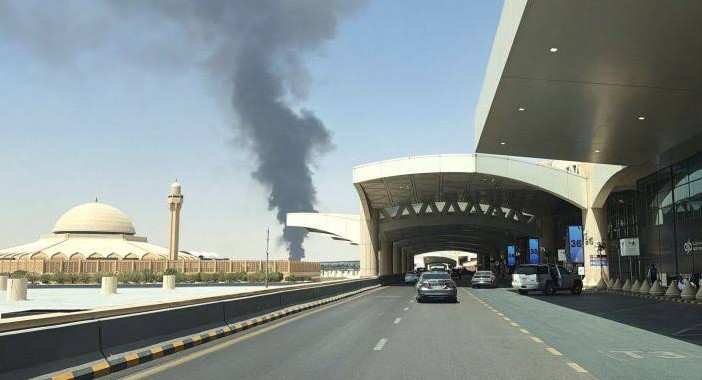
Western and Asian governments warned their citizens on Monday, 12 October, to avoid travelling to Saudi Arabia after five deadly missile and drone strikes hit commercial aviation hubs within a single week. Australia and New Zealand joined the United States, Britain, Canada, Japan, and South Korea in urging their nationals to scrap non-essential journeys and steer clear of major airport terminals across the Gulf state. Air corridors no longer guarantee safety. A devastating weekend bombardment of King Khalid International Airport in Riyadh killed fourteen people, injured more than three hundred travellers, and forced aviation authorities to shut down runway operations in both the capital and Dammam.
Yemen’s Houthi movement demonstrated that low-cost ballistic hardware can systematically evade the kingdom’s expensive Western air defence batteries and reach vital civil infrastructure. A projectile strike on Sunday killed one foreign worker and wounded eleven people at the Riyadh airfield, just twenty-four hours after a mass volley delivered the deadliest single attack on Saudi soil in over a decade. Cheap drones routinely defeat high-tech radars. The resulting flight chaos quickly spread to King Abdulaziz International Airport in Jeddah, where regional airlines cancelled over one hundred and fifty flights and delayed hundreds more as air corridors across the peninsula closed.
The diplomatic advisories strike at the heart of Crown Prince Mohammed bin Salman’s economic vision to remake the kingdom into a global tourism and transport centre. Foreign executives and holidaymakers will not buy airline tickets to transit hubs where passenger lounges double as ballistic missile targets. Tourism requires real physical safety. Britain’s Foreign Office ordered its citizens to stay away from Jeddah and Dammam entirely, while South Korea told its nationals to leave Saudi territory unless urgent corporate business demands their presence.
The closure of primary runways in Riyadh and Dammam cuts off vital air routes between Europe, Asia, and the wider Middle East when regional shipping lanes through the Red Sea and the Persian Gulf already face naval blockades. Regional aviation analysts observe that prolonged airport closures will force international carriers to redraw long-haul flight paths around the Arabian Peninsula, sharply increasing airline fuel bills and global ticket prices. Geography turns into an economic trap. Riyadh’s ambition to rival Dubai as a premier aviation hub faces sudden collapse as international underwriters raise insurance rates for airlines operating in Saudi airspace.
The diplomatic fallout proves that regional conflicts will dismantle Saudi Arabia’s modernisation programmes unless the monarchy finds a durable political settlement with its southern neighbours. Western travel warnings will choke foreign direct investment and stall multi-billion-dollar infrastructure projects far faster than diplomatic disputes ever could. Sovereign prestige crumbles under shrapnel fire. Until Saudi air defences can protect commercial passenger jets from cheap regional drones, the kingdom will remain an active war theatre rather than a reliable international business destination.