
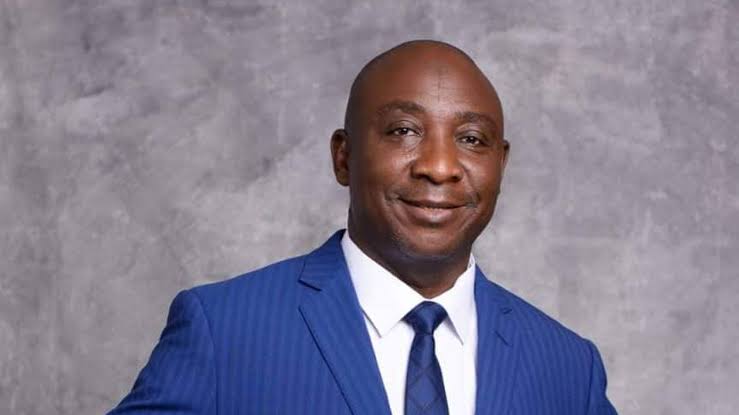
The President of the Nigeria Football Federation, Ibrahim Musa Gusau, and other members of the NFF board have resigned, according to reports on Thursday, after weeks of pressure over results, administration and the use of public funds.
Gusau has led the federation since 11 October 2022, when the 78th elective congress chose him as the 40th NFF president, succeeding Amaju Pinnick. The executive committee has 13 members. THISDAY reported at the weekend that at least nine had already signalled they would quit. Vanguard reported that Gusau and remaining board members had now stepped down. Posts circulating on Thursday said National Sports Commission officials had confirmed a full board exit to journalists, including Colin Udoh and Osasu Obayiuwana. An official NFF statement had not been widely published at the time of writing.
The immediate sporting trigger was the Super Falcons’ failure to reach the 2027 FIFA Women’s World Cup in Brazil, the first miss since the tournament began in 1991. Nigeria had appeared at every previous edition. The Falcons, ten-time African champions, lost 1-0 to Cameroon in the quarter-finals of the 2026 Women’s Africa Cup of Nations, ending their title defence and automatic qualification. They then lost 2-1 to South Africa in the play-off. The Super Eagles have also missed consecutive FIFA World Cups, including the 2022 and 2026 tournaments.
Those results followed years of unpaid bonuses, delayed camps and public rows over coaching and logistics. In 2024 President Bola Tinubu approved a N17 billion special intervention to clear outstanding wages and bonuses owed to national teams. The Department of State Services has joined other agencies in examining how that money was used. A Vanguard source described the exercise as a normal review of documents relating to funds sent to the NFF’s Glass House and dismissed claims of a witch-hunt. The Guardian has reported that the DSS and the National Intelligence Agency are also looking at alleged sabotage of national interests. The House of Representatives has separately opened an inquiry into the handling of FIFA and CAF grants. No court has established criminal liability. The NFF has been asked to account for the intervention, not convicted of stealing it.
The board had already been weakened. More than half of its members were reported to have left before the latest wave. Fanny Amun resigned as head of an NFF fact-finding committee. Earlier in August, reports said the Federal Government or the National Sports Commission had given the Gusau board 24 hours to step down. Those accounts were not accompanied by a published presidential directive.
An elective congress had been scheduled for 27 September in Lafia, Nasarawa State. A mass resignation could delay or recast that vote. In past NFF crises FIFA has installed a normalisation committee to run the federation until a new congress. Whether that happens now depends on the NFF statutes, the sports ministry and FIFA’s response.
Nigerian football administration has a long record of boardroom fights, delayed elections and disputes over grants. Gusau’s tenure will be judged against that history: two World Cup absences for the men in succession, a historic miss for the women, and unanswered questions over a N17 billion rescue fund. Resignation closes one chapter. It does not, by itself, restore qualification, pay players or settle the probe.