
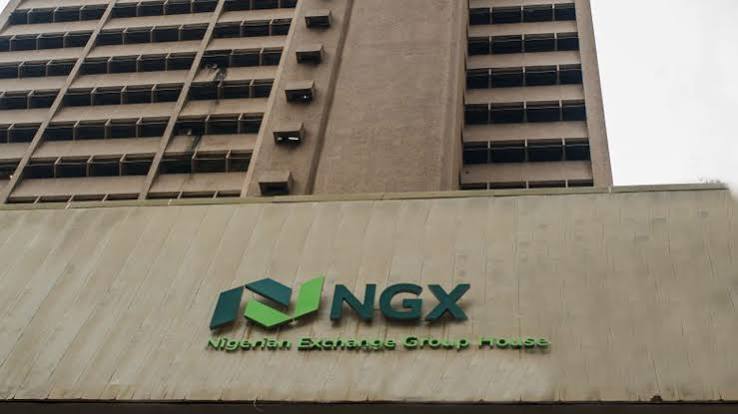
Nigeria’s segment of the stock market reserved for young, fast-growing companies has recorded its strongest year yet, a performance that is changing how ambitious businesses think about raising money.
The NGX Growth Index, which tracks companies listed on the Growth Board of Nigerian Exchange Limited, rose 257.81 per cent in 2025, climbing from 7,762.86 points to 27,776.22 points by the close of the year. The rally outpaced the wider market and has renewed attention on the role of the capital market in financing the companies expected to become Nigeria’s next generation of corporate institutions.
The gain did not occur in isolation. Data from the Nigerian Exchange shows the benchmark All-Share Index returned 51.19 per cent in 2025, its strongest annual showing in years, while total equity market capitalisation expanded by more than N36 trillion to close the year at N99.38 trillion, or about 68.74 billion dollars. That placed Nigeria among the best performing equity markets in the world, well ahead of the roughly 20 per cent gain recorded by the MSCI All Country World Index. The Exchange also facilitated N6.49 trillion in capital raising during the year.
The Growth Board, launched in 2020, was built on a simple proposition: companies should not have to wait until they become large corporations before they can tap the capital market. Its Entry Segment accommodates businesses with market capitalisation of between N50 million and N500 million, a minimum free float of 10 per cent and at least 25 shareholders. The Standard Segment is designed for firms valued at between N500 million and N4 billion, with a 15 per cent free float and at least 51 shareholders. Companies entering the Standard Segment through the established business route are also expected to show cumulative revenue growth of at least 20 per cent over the preceding two years and to appoint a Designated Adviser.
MeCure Industries offers the clearest illustration of what the pathway can produce. The pharmaceutical manufacturer listed on the Growth Board in November 2023, floating four billion shares at N2.96 each for a market value of about N13 billion. By the 2025 financial year it reported revenue of N77.69 billion, up 69 per cent from N46.03 billion the previous year, while profit after tax rose 177 per cent to N6.46 billion. Its market capitalisation had climbed to roughly N252 billion by April 2026, far above the ceiling associated with the Standard Segment. The company entered the market as a growing enterprise and has continued to expand, the kind of graduation that a functioning growth segment is meant to produce.
Nigeria’s corporate history shows where such journeys can lead. Groups such as Dangote and BUA did not begin at their present scale. They grew over time, strengthening their systems and accessing progressively more sophisticated forms of capital. Some of the companies that could become the country’s next champions may already be trading, only at an earlier stage. The question is whether they have financing pathways that can grow with their ambitions.
For most firms, that journey begins with retained earnings and bank debt, later drawing in private equity or strategic investors. Equity markets offer something different: long-term capital without the repayment obligations of debt, alongside a transparent platform on which ownership can be valued and traded. Historically, however, listing has been associated with businesses that had already achieved significant scale.
Analysts caution that the strong 2025 figures reflect broad market conditions, including macroeconomic reforms, banking sector recapitalisation and the gradual return of foreign investors, rather than the Growth Board alone. Not every high-growth business needs to list, and the capital market is not the appropriate route at every stage. Capital is also only part of what the transition requires. As companies expand, reporting systems, board oversight and shareholder accountability must strengthen, reducing dependence on a small number of individuals.
Building a deeper pipeline will depend on more than a single good year. It will require issuing houses, investment banks, stockbrokers, accountants and lawyers working to prepare emerging businesses for the responsibilities that come with a public listing. For companies with the fundamentals and ambition to become major Nigerian institutions, the lesson of 2025 is that the conversation about the capital market need not begin only after they have already grown large.