
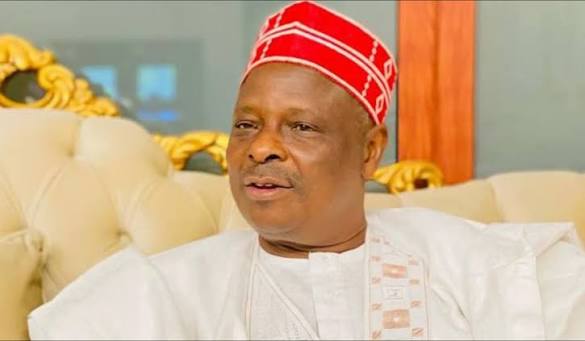
Barely 48 hours after President Bola Tinubu unveiled the team meant to drive his re-election, the opposition has opened an early line of attack, with the Vice-Presidential candidate of the Nigerian Democratic Congress, NDC, Rabiu Kwankwaso, faulting the composition of the All Progressives Congress campaign structure and urging its Director-General to step aside.
In a statement posted on X on Sunday, Kwankwaso questioned the decision of Abdulaziz Yari, a former Zamfara State governor and senator, to lead the campaign for Tinubu’s second term. He argued that the council was dominated by figures already tied to the current government. “The council brings together many of the same political actors who have supported, defended or participated in the present administration,” he said, adding that their coming together raised “a fundamental question: what exactly are they asking Nigerians to vote for in 2027, a new beginning, or the continuation of the same system that has brought severe hardship to our people?”
The former Kano governor made a direct appeal to Yari, whom he addressed as a brother, to reflect deeply and reconsider accepting the role. He said Yari, having governed a state repeatedly hit by banditry, should understand the weight of insecurity, poverty, unemployment and displacement in the North West and beyond. He also raised concern over the reported inclusion of the Executive Chairman of the Nigeria Revenue Service, Zacch Adedeji, and the Director-General of the Budget Office of the Federation, Tanimu Yakubu Kurfi, in the campaign’s fundraising and finance structures, saying the leadership of critical public institutions demanded neutrality, integrity and public confidence. He called on the government and the APC to explain how such involvement was compatible with those principles. There has been no official response from the two officials or the party to that specific charge.
The exchange marks one of the first public skirmishes of a race still more than a year from the polls. The APC council was constituted on Saturday, 22 August 2026, in a statement by presidential spokesman Bayo Onanuga. Tinubu chairs the body, with Vice-President Kashim Shettima and APC National Chairman Nentawe Yilwatda as vice chairmen. Yari serves as Director-General and Imo State Governor Hope Uzodimma as secretary, while veterans such as Bisi Akande, Segun Osoba and Rochas Okorocha sit on an advisory council.
In his charge to members, Tinubu said the administration had “delivered on our campaign promises” and placed the country “out of the dark tunnel,” urging the team to showcase its record. Party figures have defended the choices. An APC chieftain in Oyo State, Kazeem Akinola, described Yari’s appointment as well deserved and reflective of the confidence the leadership placed in his experience.
Kwankwaso’s intervention should be read against the realignment now reshaping the opposition. He and Peter Obi, who split the opposition vote in 2023 while running on separate platforms, are now on a joint ticket. According to the Independent National Electoral Commission’s official 2023 results, Tinubu polled about 8.8 million votes to win, while Obi, then of the Labour Party, secured roughly 6.1 million and Kwankwaso, then of the New Nigeria Peoples Party, about 1.5 million. Their combined tally fell short of Tinubu’s, a gap opposition strategists have long cited as an argument for unity.
That unity was sealed this year. After leaving the African Democratic Congress in May over internal disputes, both men joined the NDC. Obi was affirmed as the party’s presidential candidate at a special convention in Abuja on 30 May 2026 and named Kwankwaso as his running mate. The Peoples Democratic Party, meanwhile, is fielding former President Goodluck Jonathan, setting up a three-way contest for the presidential election scheduled for January 2027.
Kwankwaso framed the coming vote as a choice between continuity and change, and pointed to recent electoral outcomes as evidence that incumbents could be unseated. “If Osun people can do it, so can all other parts of the country,” he said, urging Nigerians to reject what he called continued oppression in favour of accountable, people-centred governance.
The questions he has raised about the neutrality of public officials in partisan campaign work are likely to recur as the season intensifies. Nigerian law bars public servants from active politicking, though the line is often tested during election cycles. For now, the confirmed development is the early activation of the APC machinery and the opposition’s swift response. Whether the appeals to Yari and to institutional neutrality gain traction will depend on how both camps navigate the long months ahead.