
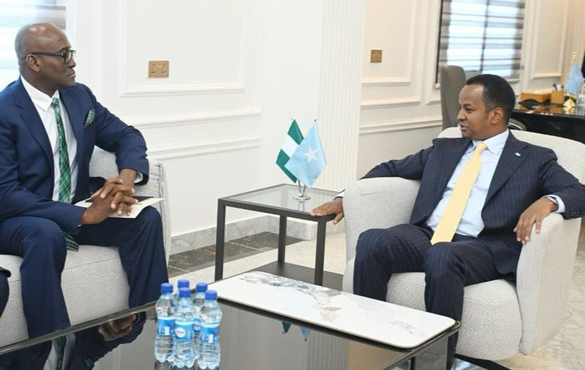
Nigeria and Somalia agreed on Tuesday, 25 August 2026, to expand bilateral cooperation across security, trade, education, and diaspora management. Somali diplomats met their Nigerian counterparts in Mogadishu to hammer out fresh frameworks for mutual assistance. The Ambassador-Designate of Nigeria to Kenya with concurrent accreditation to Somalia, H.E. Danlami Ibrahim, and Minister of Foreign Affairs and International Cooperation of Somalia, H.E Abdisalam Abdi Ali, held official talks focused on creating formal channels for intelligence sharing and cross-border commercial investment. Both countries also explored cultural partnerships, creative arts exchanges, and university link programmes. The diplomatic push comes as both nations navigate parallel domestic security emergencies and economic shifts. Abuja reaffirmed its support for the central government in Mogadishu and its sovereign authority. Diplomatic communiqués sound fine, but execution will test both civil services. African diplomacy often excels at broad intent while faltering at delivery.
The logic behind this security pact rests on painful domestic experience. Both nations spend vast state resources fighting persistent Islamist insurgencies on their home soil. The Nigerian military battles Boko Haram and Islamic State splinters across the Lake Chad basin. Somali security forces fight an endless war of attrition against Al-Shabaab cells in the Horn of Africa. Both rebel groups use similar asymmetric tactics, suicide bombings, and clandestine financial networks to survive. Nigerian commanders can offer valuable battlefield lessons in joint air-ground sweeps and psychological messaging. In return, Somali officers bring deep expertise in countering urban bomb rings and tracking illicit maritime logistics. Sharing operational data makes sense for two states fighting the same ideological menace.
Turning diplomatic handshakes into genuine commercial trade presents a far steeper hurdle. Direct trade between West Africa and the Horn of Africa remains negligible despite grand continental free-trade treaties. Exporters in Lagos and Mogadishu face high freight costs, poor maritime links, and complex currency clearing desks. A lack of direct flights forces travellers and cargo to route through costly Gulf transit hubs. Both economies rely heavily on informal markets that bypass formal banking networks. Nigerian fintech firms and agricultural exporters could find untapped markets in Mogadishu if basic legal safeguards exist. Somali livestock traders could similarly access West Africa’s massive consumer base. Real commerce demands physical shipping lines rather than ministerial declarations.
Education offers one of the most practical avenues for immediate institutional cooperation. Somali universities, rebuilding after decades of civil war, face acute shortages of qualified lecturers and scientific laboratories. Nigeria possesses dozens of established federal universities, teaching hospitals, and research institutes. Expanding scholarship programmes and faculty exchanges would allow Somali students to acquire technical degrees in Nigerian lecture halls. The Nigerian government can deploy its Technical Aid Corps to send volunteer teachers and medical doctors to Mogadishu. These academic exchanges build lasting cultural goodwill across generations of young professionals. Educated youths form the best bulwark against extremist recruitment networks in both countries. Building schools protects borders far better than buying more guns.
The diaspora dimension reflects the changing demographics of both mobile populations. Millions of Nigerians and Somalis live, work, and invest across North America, Europe, and the Gulf states. These overseas communities remit tens of billions of dollars home every year to support relatives and build small businesses. Both governments struggle to tap this diaspora wealth for long-term sovereign infrastructure bonds. Sharing policies on diaspora voting, tax incentives, and skill repatriation will help both foreign ministries. Somali traders in East Africa have built sophisticated commercial distribution rings that Nigerian traders admire. Learning how to protect and tax these overseas networks remains a shared priority. Remittances keep both home economies afloat during severe foreign currency shortages.
Geopolitical solidarity forms the silent foundation of this diplomatic engagement. Somalia faces persistent external threats to its territorial unity and maritime boundaries. The authorities in Mogadishu view Nigeria as an influential continental heavyweight capable of defending African Union norms. Nigeria has consistently backed the sovereignty and territorial integrity of the Somali state in international forums. Nigerian diplomats oppose foreign efforts to recognise breakaway enclaves or partition sovereign African states. This unwavering diplomatic stance gives Mogadishu critical political cover in continental debates. In return, Somalia offers Nigeria a reliable diplomatic ally in East Africa and the Arab League. Small diplomatic alliances matter when global multilateral bodies drift into paralysis.
The success of this bilateral initiative depends entirely on administrative discipline. Previous bilateral agreements between African states often ended up gathering dust in forgotten ministerial cabinets. The joint commission must set firm quarterly targets for trade volumes, student visas, and joint security briefings. Civil servants in both capitals need to cut the red tape that delays business visas and cargo clearances. Without sustained political backing from the presidency, this pact will slip into quiet irrelevance. Both nations face too many internal fires to waste time on decorative foreign policy. Genuine partnership requires hard work, cash, and consistent follow-through. Only measurable results will prove whether this agreement holds real value.