
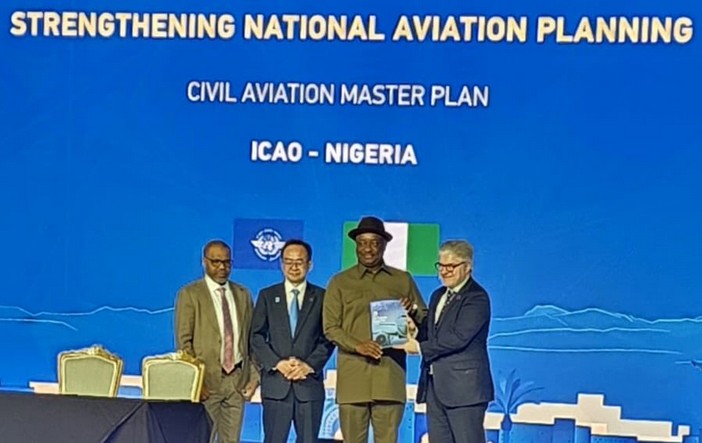
The International Civil Aviation Organisation (ICAO) has delivered a comprehensive Civil Aviation Master Plan (CAMP) to Nigeria, providing a twenty-year blueprint for the country’s aerospace development. Festus Keyamo, Minister of Aviation and Aerospace Development, received the document during the ICAO Global Implementation Support Symposium in Marrakech. The plan, spanning 2025 to 2045, aims to move the industry beyond its current stagnation through structured infrastructure and technology upgrades. It aligns with broader national economic goals to ensure aviation contributes more robustly to the treasury.
Work on the master plan began in September 2024 through ICAO’s Capacity Development and Implementation unit. The strategy focuses on modernising airports to handle a projected surge in passenger and cargo traffic. Key to this shift is the deployment of advanced technologies, including unmanned aerial systems. By integrating drones into the national airspace, the government hopes to catch up with global logistical trends. The document provides the technical framework required to attract serious international investment.
Safety remains the central pillar of the new roadmap as Nigeria attempts to maintain a zero-fatality record in its commercial sector. The plan mandates strict adherence to international security standards to keep Nigerian skies competitive. Beyond safety, the minister intends to transform major airports into aerotropolis hubs. These aviation cities should, in theory, drive job creation and turn idle airport land into productive economic zones. This shift reflects a move away from seeing airports as mere transit points.
The workforce remains a significant bottleneck, a point Keyamo raised during a ministerial round table in Morocco. The CAMP prioritises human capital development to bridge the widening skills gap in the domestic ecosystem. Building a future-ready workforce is essential if the country is to sustain its own maintenance, repair, and overhaul (MRO) facilities. Without local expertise, Nigerian airlines will continue to bleed foreign exchange on overseas repairs. The plan sets targets for domesticating these high-value technical services.
Private sector participation is the intended engine for this transformation. The government is courting investors to build modern cargo terminals and regional MRO centres. By offering a twenty-year horizon, the state hopes to provide the policy stability that long-term capital requires. The roadmap also incorporates green initiatives, aligning Nigeria’s growth with global environmental mandates. It is an ambitious attempt to professionalise a sector often hampered by political interference.
Implementation now rests on the ministry’s ability to follow the ICAO guidelines without deviation. The global body’s involvement lends the plan a degree of international credibility that previous domestic efforts lacked. Success will be measured by the arrival of new infrastructure and the reduction of operational costs for local carriers. For now, the handover in Marrakech marks the end of the planning phase and the beginning of a difficult execution.